A.I: What It Is, How It Works, And Why It Suddenly Matters So Much
Artificial intelligence went from a niche computer science topic to a global phenomenon in less than three years. Between ChatGPT’s November 2022 launch and early 2025, AI moved from research labs into your phone, your inbox, and your workflow. If you’re feeling overwhelmed by the constant stream of model announcements, product launches, and breathless predictions, you’re not alone. This guide is for professionals, students, and anyone interested in understanding the fundamentals and real-world impact of AI. AI is rapidly transforming industries and daily life, making it essential to understand its capabilities and limitations. This guide cuts through the noise to explain what AI actually is, how it works under the hood, and why it suddenly matters so much for your work and daily life.
The Broad Impact of AI on Daily Life and Industries
AI is integrated into daily life through personalized recommendations, voice assistants, and navigation apps. Its influence is vast and growing, touching nearly every aspect of our lives and industries-from healthcare and finance to entertainment and manufacturing. AI has potential benefits and risks, and its deployment must be guided by ethical considerations to minimize harm and maximize societal benefits. The societal impact of AI includes both potential benefits, such as increased efficiency, and risks, such as job loss and ethical concerns.
Key Takeaways
Artificial intelligence enables computers to perform tasks that normally require human intelligence-reasoning, learning from data, understanding language, and perceiving images or sounds.
The 2020s “AI boom” is driven by generative AI (ChatGPT in 2022, DALL·E 3 and Sora in 2023–2024) and smaller, cheaper models that run on phones and laptops.
AI is already embedded in daily life: Google Search summaries, Netflix recommendations, bank fraud detection, real-time translation, smartphone photo tools, and workplace assistants like Microsoft Copilot.
Most AI systems today are “narrow AI”-Narrow AI, also known as weak AI, is designed to perform a specific task or a set of tasks. These systems are excellent at specific tasks but lack general understanding. Artificial general intelligence (AGI), also known as strong AI or general AI, possesses the ability to understand, learn, and apply knowledge across a wide range of tasks at a level equal to or surpassing human intelligence. AGI remains a research goal, not a deployed reality.
KeepSanity AI filters the noise with one ad-free weekly email covering only major model releases, product launches, regulations, and research-so you stay informed without burning out.
What Is Artificial Intelligence (AI)?
Artificial intelligence (AI) is technology that enables computers and machines to simulate human learning, comprehension, problem solving, decision making, creativity, and autonomy.
Artificial intelligence is the ability of computers to perform tasks that normally require human intelligence. This includes understanding natural language, recognizing images, making decisions based on data, and generating new content like text, code, or images.
The term “AI” gets thrown around as a marketing buzzword, but it’s rooted in real computer science. The field was formally launched at the 1956 Dartmouth Conference, where John McCarthy coined the term “artificial intelligence” alongside pioneers like Marvin Minsky and Claude Shannon. Their initial optimism predicted human-level intelligence within decades-a timeline that proved wildly optimistic.
Core abilities associated with AI mirror aspects of human intelligence:
Capability | What It Means | Example |
|---|---|---|
Learning | Improving performance from data over time | AlphaFold predicting protein structures with 92.4% accuracy |
Reasoning | Working through logical problems step by step | OpenAI’s o1 model boosting math benchmark scores from 50% to 83% |
Perception | Processing visual or auditory inputs | Tesla’s cameras detecting pedestrians at 300 meters |
Language Understanding | Comprehending and generating human language | GPT-4 passing the bar exam with top 10% scores |
The 2020–2024 period saw an explosion of capable AI systems. OpenAI released GPT-4 in March 2023, estimated at 1.76 trillion parameters and outperforming humans on 26 out of 32 tested tasks. Google launched Gemini 1.5 in February 2024 with a 1-million-token context window-enough to process hour-long videos. Anthropic’s Claude 3 Opus (March 2024) beat GPT-4 on coding benchmarks. Meta open-sourced Llama 3.1 in July 2024, offering 405 billion parameters at roughly 1/10th the cost of closed models.
This rapid progress creates an overwhelming firehose of announcements. Over 100 major models launched between 2023 and 2025. Keeping up with daily updates became a full-time job-which is exactly why KeepSanity exists as an AI-focused news filter.
How Does AI Actually Work?
Modern AI learns patterns from enormous datasets using algorithms and powerful hardware rather than following hard-coded rules. Instead of programming explicit instructions for every scenario, engineers feed AI systems examples and let them figure out the underlying patterns.
The typical AI pipeline looks like this:
Data collection: Gathering petabytes of text, images, or sensor readings (Common Crawl contains 3+ petabytes of web text; autonomous vehicles generate 1 terabyte per hour)
Training: Optimizing model parameters via gradient descent to minimize errors on the training data
Evaluation: Testing performance on benchmarks like GLUE for language understanding or ImageNet for vision
Deployment: Integrating models into products, scaling to billions of daily inferences
Data quality and scale proved transformative. The 2012 ImageNet competition catalyzed modern deep learning when AlexNet achieved an 85% error reduction over previous methods. The 2017 “Attention Is All You Need” paper introduced transformers-now cited over 100,000 times-which revolutionized how AI models weigh relevant information dynamically.
Think of it this way:
Traditional programming: Rules + Data → Answers
Machine learning: Data + Answers → Rules (the model)
Machine Learning (ML) is a subset of AI where computers learn from data without being explicitly programmed.
Post-deployment, continuous improvement happens through techniques like reinforcement learning from human feedback (RLHF), which aligned ChatGPT’s responses to user preferences. Fine-tuning can boost task accuracy by 20–30%. Retrieval-augmented generation (RAG) injects fresh data from company databases, reducing hallucinations by up to 40% in enterprise setups.
Types of AI You Should Know
“Types of AI” usually refers to either capability (what it can do) or function (what it’s used for). Understanding both helps you navigate the constant stream of announcements.
Capability-based categories distinguish between narrow AI (today’s systems focused on specific tasks) and aspirational artificial general intelligence (AGI) that could perform most cognitive tasks humans can. Narrow AI, also known as weak AI, is designed to perform a specific task or a set of tasks. General AI, also known as strong AI or artificial general intelligence (AGI), possesses the ability to understand, learn, and apply knowledge across a wide range of tasks at a level equal to or surpassing human intelligence.
Functional categories describe what systems actually do:
Perception systems: Computer vision, speech recognition
Decision systems: Recommendations, fraud detection, algorithmic trading
Generative systems: Text, images, code, video creation
Agents: Multi-step, goal-directed tools combining AI with external APIs
Most headline-grabbing tools since 2022 are generative AI models. Rather than just classifying inputs or making predictions, they create new content that statistically resembles their training data.
KeepSanity’s weekly email groups AI news by type-models, tools, business, research, regulation-so readers can quickly see which kind of AI a story belongs to and skip what’s not relevant.
Capability-Based Types of AI
Current AI systems are “weak” or “narrow AI.” A chess engine like Stockfish evaluates 100 million positions per second but can’t play checkers. GPT-4o generates code 30% faster than humans on benchmarks but still confabulates facts 10–20% of the time on unfamiliar topics. These systems excel at specific tasks but don’t truly understand the world.
AGI is a hypothetical system with human-level versatility across domains-able to learn a new field with minimal data, the way a human scientist might pivot from biology to economics. As of early 2026, AGI remains a research goal, not a deployed reality. Stanford HAI experts predict no AGI by 2030, though narrow AI capabilities continue scaling rapidly.
Superintelligence-hypothetically surpassing human capability across all domains-fuels safety research at labs like Anthropic, which developed “Constitutional AI” approaches in 2022. But grounded assessments from McKinsey project $13–25 trillion in GDP impact by 2030 from narrow AI automation alone, far outweighing AGI speculation in near-term importance.
Functional Types of AI
Perception systems include:
Computer vision powering iPhone Face ID (99.6% accuracy, 1-in-1-million false positive rate)
Factory inspection systems like Cognex reducing defects by 50%
Speech recognition in tools like Deepgram achieving 99% accuracy in noisy environments
Language systems include:
Google Translate supporting 133 languages with neural machine translation since 2016
Transcription services like Otter.ai hitting 95% accuracy in meetings
Large language models like ChatGPT and Gemini drafting emails, summarizing documents, and answering questions
Natural Language Processing (NLP) enables AI to understand, interpret, and generate human language.
Decision and prediction systems power:
PayPal blocking 90% of fraud attempts via unsupervised anomaly detection
Netflix recommendations driving 80% of viewer hours through deep learning
Algorithmic trading at firms like Renaissance Technologies
Generative systems create:
Midjourney v6 (2024) producing photorealistic images via diffusion
OpenAI’s Sora (2024) generating 1080p, 20-second video clips
GitHub Copilot serving 20 million developers with 55% code acceptance rates
AI agents integrate language models with tools for multi-step execution. Devin from Cognition Labs (2024) completes 13.8% of end-to-end GitHub issues autonomously according to SWE-Bench. This agentic AI trend-systems that can browse, execute code, and interact with APIs-is projected to accelerate through 2026.
Core Technologies: From Machine Learning to Generative AI
The technology hierarchy flows from broad to specific: AI (the field) → machine learning (data-driven learning) → deep learning (neural networks with many layers) → generative AI (models that create content).
Most progress since 2012 came from deep learning. Deep Learning is a complex type of machine learning that uses multi-layered neural networks to process information. Transformers since 2017 enabled the wave of large language models from 2018 onward. Understanding this progression helps you interpret new announcements and distinguish genuine breakthroughs from incremental updates.
Neural networks are used in many advanced AI systems and are inspired by the human brain to process complex information.
Here’s the mental model:
Traditional programming gives a computer rules and data, and it produces answers
Machine learning gives a computer data and answers, and it learns the rules
KeepSanity prioritizes covering major shifts at this tech layer: new model families like GPT-4o or Gemini 2.5, significant benchmark improvements, or major open-source releases like Llama 3-filtering out the daily noise of minor updates.
Machine Learning Basics
Supervised learning trains models on labeled examples. A bank might train a fraud detection system on 10 million labeled transactions (fraud / not fraud), achieving 99% recall via techniques like XGBoost combined with neural networks. The model learns to flag suspicious payments by finding patterns in the labeled data.
Unsupervised learning finds structure without labels. E-commerce platforms segment millions of customers into behavior clusters using k-means on purchase history-enabling personalization without manually categorizing every user.
Reinforcement learning optimizes for rewards through trial and error. DeepMind’s AlphaZero (2017) mastered Go and chess in 24 hours of self-play, gaining 4.9 Elo points per day. This approach now powers robotics systems at companies like Boston Dynamics.
Deep Learning and Neural Networks
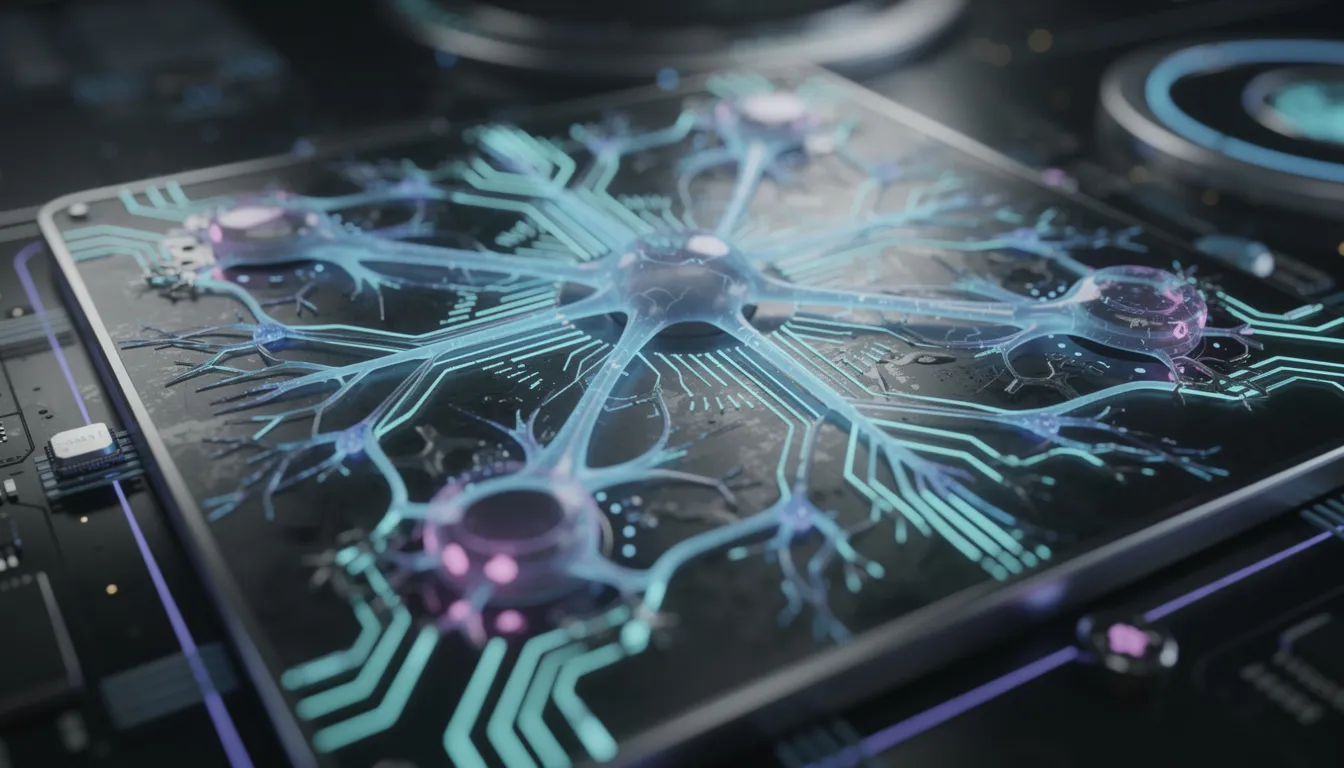
An artificial neural network stacks layers of mathematical functions loosely inspired by the human brain. Each “neuron” transforms and passes information forward through multiple layers. A deep neural network simply has many layers, enabling it to learn complex patterns that shallow networks cannot.
Key historical anchors:
2012: AlexNet wins ImageNet, slashing error rates and sparking modern deep learning
2017: “Attention Is All You Need” paper introduces transformers, enabling parallel processing of sequences
2020: GPT-3 demonstrates that scaling to 175 billion parameters unlocks emergent capabilities
GPUs (and later TPUs) enabled training models with billions of parameters. This requires massive computing power-GPT-3 training used over 1,000 NVIDIA A100 chips over weeks.
The 2023–2025 trend shifted toward smaller, efficient models. Microsoft’s Phi-3 mini packs 3.8 billion parameters while scoring 68.8% on MMLU benchmarks-running on smartphones. This broadens access beyond big tech labs with million-dollar compute budgets.

Generative AI and Foundation Models
Generative AI learns from large corpora and then generates new content that statistically resembles the training distribution. A text model learns word relationships from trillions of tokens; an image model learns visual patterns from billions of image-text pairs.
Foundation models are large, general-purpose systems trained on internet-scale data that can be adapted to many downstream tasks. LLMs handle text; diffusion or transformer models handle images and video; multimodal models combine text, image, and audio.
Key milestones in generative AI applications:
Date | Milestone |
|---|---|
August 2022 | Stable Diffusion public release democratizes image generation |
November 2022 | ChatGPT launches, reaching 100 million users in two months |
March 2023 | GPT-4 release with multimodal capabilities |
December 2023 | Google Gemini launches |
February 2024 | OpenAI demos Sora video generation |
September 2024 | OpenAI o1 introduces “reasoning models” with 50% AIME math scores |
The development pipeline includes:
Pre-training: Expensive ($100M+), often done by a few large labs
Fine-tuning: Adapting to specific tasks (much cheaper via techniques like LoRA)
Alignment: Using human feedback and safety constraints to shape behavior
What Can AI Do Today? Real-World Applications
AI has quietly run in the background of products for over a decade-spam filters since the 2000s, recommendation engines since the 2010s. What changed in 2022 is AI moving into front-and-center roles via chat interfaces and agentic systems that take actions on your behalf.
Real world applications span consumer products, workplace tools, and industry-specific solutions. Let’s break them down.
Everyday Consumer Uses
Search and recommendations now use AI extensively:
Google’s AI Overviews (2024) summarize queries with cited sources for over 1 billion monthly queries
TikTok’s recommendation algorithm (estimated 1.5 trillion parameters) drives its 1 billion-user engagement
Spotify’s personalization increases engagement by 30%
Communication tools leverage AI for:
Smart replies and autocomplete in Gmail (since mid-2010s)
Writing aids like Grammarly for grammar and tone
On-device text prediction on iOS and Android
Media and photo tools use computer vision for:
Portrait modes with depth estimation
Background removal in one tap
AI-powered noise reduction in Zoom and Teams
Translation and accessibility include:
Real-time translation in Google Translate (1 billion daily uses, 95% accuracy in common scenarios)
Automatic captioning on YouTube and video calls
Virtual assistants handling natural language queries
Workplace Productivity and Coding
AI coding assistants have transformed software development:
GitHub Copilot (launched 2021) serves 20 million developers
Studies show 55% code acceptance rates and 46% faster task completion
Amazon CodeWhisperer and Google’s code models offer alternatives
Office copilots now handle knowledge work:
Microsoft Copilot (2023 launch) automates email drafting and data analysis
Google Workspace AI features summarize meetings and generate presentations
RAG-powered tools search internal documents, providing chat-style answers instead of static search results
These generative ai tools enable workers to analyze data faster, draft communications quickly, and focus on higher-value problem solving rather than repetitive tasks.
Industry-Specific AI: Health, Finance, Manufacturing, and More
Healthcare applications include:
AI for medical imaging-radiology triage systems speeding diagnosis
AlphaFold 2 (2020) predicting 200 million protein structures for free, accelerating drug discovery
Clinical decision support systems flagging potential diagnoses
Finance uses AI for:
Fraud detection (JPMorgan Chase prevents $1.5+ billion in losses annually)
Algorithmic trading and portfolio optimization
Chatbots handling routine banking queries 24/7
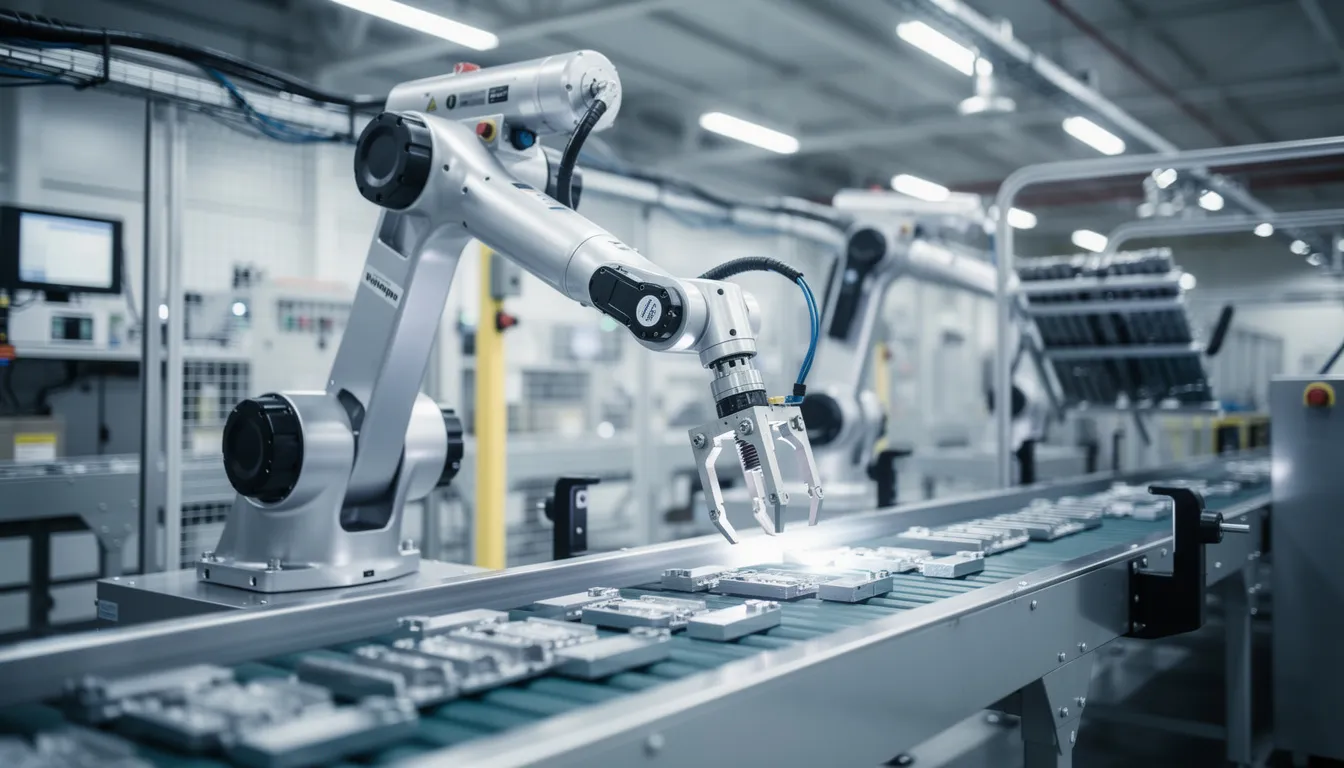
Manufacturing and logistics deploy:
Predictive maintenance using sensor data (Siemens reports 50% downtime reduction)
Computer vision for quality control
Warehouse robotics (Amazon automates 75% of warehouse operations)
Public sector applications include:
Flood and wildfire forecasting
Satellite-image analysis for disaster damage assessment
Evacuation planning using mobility data
Benefits and Limitations of AI
Where AI Shines
AI can reduce repetitive work and improve decisions at scale, but it’s fallible, data-dependent, and not a magic solution. A realistic view of both strengths and weaknesses is crucial for leaders deciding when to deploy AI versus when to keep humans fully in the loop.
Speed and scale: AI systems process millions of documents or images in seconds-tasks that would take humans years. BlackRock’s Aladdin platform manages $21 trillion in assets using AI-powered analysis.
Consistency: AI models don’t get tired, bored, or distracted. Manufacturing quality control systems achieve 99.99% uptime with consistent inspection standards.
Creativity support: Generative AI accelerates brainstorming, design mockups, and rapid prototyping. Marketing campaigns use AI to generate dozens of copy variants for testing.
Scientific discovery: AI researchers use systems like AlphaFold to scan literature, propose candidate molecules, and generate hypotheses. This accelerates the pace of discovery in biology, chemistry, and materials science.
24/7 availability: AI tools like chat assistants operate around the clock without fatigue, scaling customer support and information access.
Where AI Still Struggles
Hallucinations: Language models confidently generate incorrect facts. In 2023, a lawyer cited six fake cases fabricated by ChatGPT in court filings-a stark reminder that AI outputs require verification. GPT-4 shows roughly 15% factual error rates on out-of-distribution queries.
Context brittleness: Models fail when confronted with rare edge cases or adversarial prompts. Adversarial robustness testing shows 20–50% performance drops on manipulated inputs.
Explainability: Many deep neural network models operate as “black boxes.” It’s hard to explain why a loan was denied or why a medical diagnosis was suggested-problematic in regulated industries.
Dependence on training data: AI systems reflect biases and gaps in their data. They struggle with scenarios poorly represented in training sets, limiting generalization to new data or unfamiliar contexts.
Human oversight, testing, and guardrails remain essential despite marketing suggesting fully autonomous solutions.
Risks, Ethics, and Regulation in AI
As AI capability grew between 2016 and 2024, so did concerns about bias, safety, misinformation, and economic disruption. Understanding these risks helps organizations deploy AI responsibly.
Bias, Fairness, and Privacy
Training data can embed historical biases. The COMPAS recidivism prediction system showed 45% error rates for Black defendants versus 23% for White defendants-a stark example of algorithmic bias affecting hiring decisions and criminal justice.
Facial recognition research by Joy Buolamwini (2018) documented 34% error rates on darker skin tones versus near-perfect accuracy on lighter skin-leading several cities to ban the technology.
Privacy concerns arise when models train on scraped web content, sensitive documents, or personal data. GDPR violations have resulted in €2 billion+ in fines related to data scraping. The EU AI Act (2024-2026 phased rollout) adds requirements for high-risk AI systems handling personal information.
Mitigations include:
Better data curation and documentation
Fairness-aware training techniques
Differential privacy methods
Independent third-party audits
Misinformation, Deepfakes, and Security
Deepfakes-AI-generated audio and video that convincingly mimic real people-pose growing risks. By 2024, an estimated 500,000+ deepfake videos circulated during election cycles. These have been used in scams, political messaging, and reputational attacks.
AI-assisted cyber threats include:
Automated phishing email generation at scale
Vulnerability discovery using AI systems
Social engineering powered by convincing synthetic personas
Emerging defenses include:
Watermarking like Google’s SynthID (95% detection rate)
Content authenticity standards
AI tools that detect manipulated media
Regulations and Governance Frameworks
The EU AI Act takes a risk-based approach:
Prohibited: Social scoring, real-time biometric identification in public spaces
High-risk: Credit scoring, critical infrastructure, requiring conformity assessments
Limited risk: Chatbots requiring transparency disclosures
Minimal risk: Most AI applications with no special requirements
Other frameworks include:
OECD AI Principles
NIST AI Risk Management Framework (2023)
UK AI Safety Institute (established 2023) with evaluation tools like Inspect
Organizations deploying AI should implement governance: model documentation, monitoring, incident response plans, and cross-functional ethics review-whether or not specific regulations apply to their jurisdiction.
Staying Sane in the AI Boom: How to Keep Up Without Burning Out
By 2024–2025, AI-related announcements, blog posts, and research papers grew so fast that even AI researchers struggled to keep up. arXiv alone sees 1,000+ AI papers per week.
The problem with daily newsletters and social feeds: constant minor updates, sponsor-driven content, and FOMO-inducing noise that drains focus. Most AI newsletters are designed to maximize your time with them-not to respect it.
KeepSanity takes a different approach:
One email per week with only major developments that actually happened
Zero ads and no sponsor-driven padding
Expert curation from the finest AI sources
Smart links (papers link to alphaXiv for easy reading)
Scannable categories covering models, tools, business, research, robotics, and regulations
A typical week’s issue might include:
3–5 major product launches (e.g., new Copilot features, Adobe Firefly updates)
2–3 research breakthroughs or significant model releases
1–2 key regulatory or safety updates
A handful of standout resources and community highlights
For founders, engineers, and leaders who need to stay informed but refuse to let newsletters steal their sanity: KeepSanity exists as a signal filter. Lower your shoulders. The noise is gone. Here is your signal.
History and Future of AI
The arc of artificial intelligence runs from theoretical roots through boom-and-bust cycles to today’s mainstream deployment.
Historical timeline
Year | Milestone |
|---|---|
1950 | Alan Turing publishes “Computing Machinery and Intelligence,” proposing the Turing test |
1956 | Dartmouth Conference formally launches AI as an academic discipline |
1974-1993 | Two “AI winters” following unmet promises |
1997 | IBM’s Deep Blue defeats chess champion Garry Kasparov |
2012 | AlexNet wins ImageNet, sparking the deep learning revolution |
2016 | DeepMind’s AlphaGo defeats world Go champion Lee Sedol |
2017 | Transformers introduced in “Attention Is All You Need” |
2020 | GPT-3 demonstrates emergent few-shot learning |
2022 | ChatGPT launches November 30, reaches 100M users by January 2023 |
2023-2025 | AI copilots embedded in major consumer and enterprise platforms |
The transition from experimental to mainstream took just a few years. In 2020, GPT-3 was a curiosity for researchers. By 2025, AI assistants are standard features in office suites, creative tools, and smartphones.
Near-term future (5–10 years)
More capable multimodal models handling text, images, audio, and video simultaneously
On-device AI running sophisticated models on phones and laptops
Domain-specific copilots for every major profession (law, medicine, engineering, education)
Evolving regulation and safety standards as capabilities advance
Continued progress on agentic AI systems that take multi-step actions
One of KeepSanity’s core goals is helping readers see not just weekly noise, but the longer-term narrative of where AI is actually heading-grounding expectations while highlighting genuine advances.

FAQ
Is current AI truly “intelligent” or just sophisticated pattern matching?
Mainstream AI systems like GPT-4, Gemini, and Claude 3 work by predicting patterns in data rather than possessing conscious understanding. They don’t have goals, experiences, or self-awareness. When a language model solves math problems or writes essays, it’s finding statistical patterns in its training data, not reasoning the way humans do.
That said, these capabilities are powerful enough to reshape workflows and industries regardless of philosophical debates about consciousness. A pragmatic approach focuses on what AI can reliably do-and where it needs human oversight-rather than whether it’s “truly” intelligent.
Will AI take over most jobs, and how fast could that happen?
AI is automating tasks within jobs rather than replacing entire roles overnight. Economic studies from 2023–2025 suggest large productivity gains in knowledge work-30–40% of work activities could be automated according to IMF and McKinsey analyses-but effects vary enormously across occupations and regions.
The pattern resembles previous technological shifts: some roles diminish, others transform, and new categories emerge. Workers who learn to use AI tools effectively-treating AI as an amplifier rather than a replacement-will likely fare better than those who ignore the shift or fear it.
How can a non-technical person start learning about AI without getting overwhelmed?
Start with hands-on experience rather than theory. Try reputable chatbots like ChatGPT or Claude for simple tasks: summarizing articles, drafting emails, planning trips. This builds intuition faster than reading textbooks.
Follow a small number of trusted sources-a weekly briefing like KeepSanity rather than dozens of daily newsletters. When you encounter unfamiliar concepts, look them up as needed rather than trying to master everything upfront. The goal is informed comfort with the technology, not expertise in ai algorithms or architecture.
Are open-source AI models safe to use for sensitive business data?
The risk often comes from where and how the model is hosted, not just whether it’s open or closed. Running Llama 3 on your own infrastructure can be more private than using a third-party API-because data never leaves your control.
Sensitive data should only be processed in environments meeting your organization’s security and compliance requirements. This might mean self-hosted deployments, vetted cloud setups with data processing agreements, or avoiding AI processing entirely for certain data categories. Policies around open models are evolving rapidly; monitor governance guidance and consider third-party audits for high-stakes applications.
How do I avoid falling for AI hype or doom narratives?
Focus on verifiable capabilities: benchmarks, peer-reviewed research, and real deployments. When someone claims AI will achieve specific goals like “solving all diseases” or “causing extinction,” ask for concrete evidence and timelines. Track both benefits (productivity gains, new tools) and documented failures (bias incidents, hallucination examples, misuse cases).
Curated, low-noise sources like KeepSanity are designed to navigate between over-optimistic marketing and exaggerated catastrophe scenarios. By reading balanced coverage weekly rather than breathless daily updates, you maintain perspective on both the genuine promise and real limitations of current AI systems.