AI Advantages: How Artificial Intelligence Will Shape 2026 and Beyond
AI advantages in 2026 are no longer theoretical projections or science fiction dreams. They’re measurable results showing up in hospital radiology departments, logistics centers, customer support queues, and research labs worldwide.
This article is for business leaders, professionals, and anyone interested in understanding the real-world impact of AI advantages in 2026 and beyond. Understanding these advantages is crucial for staying competitive and making informed decisions in a rapidly evolving technological landscape. Whether you’re responsible for strategic planning, operational efficiency, or simply want to future-proof your career or organization, knowing how AI is delivering tangible benefits will help you navigate the changes ahead.
This article walks through nine concrete categories of benefits backed by real data from 2024–2026 deployments.
Key Takeaways
AI advantages in 2026 are practical and measurable, with 92.1% of businesses reporting direct results from their AI implementations and 72% of companies now actively using artificial intelligence in their operations.
Global AI spending is projected to reach $2 trillion in 2026, with the technology expected to contribute $15.7 trillion to the global economy by 2030 through productivity gains and consumption effects.
The most tangible benefits span higher productivity (40% improvement expected), faster and better decision making from data analysis, innovation in healthcare and climate solutions, and entirely new business models.
Separating real advantages from hype requires curated, high-signal sources-weekly updates like KeepSanity AI cut through the noise so you can focus on changes that actually matter.
The rest of this article delivers concrete, 2024–2026 era examples and statistics rather than abstract theory or distant speculation.
What Is Artificial Intelligence in 2026?
Artificial intelligence refers to ai systems that perform tasks requiring human-like perception, reasoning, language understanding, or planning. These systems are built on training data, ai models, and significant computing power working together to solve complex tasks that previously demanded human intelligence.
The 2022–2024 generative ai wave transformed AI from a niche technical specialty into everyday life infrastructure. When ChatGPT launched in November 2022, it triggered an 8x expansion in AI investment flows. By the end of 2024, ChatGPT alone had over 180 million users, and similar tools from Anthropic (Claude), Google (Gemini), and others became standard utilities for millions of knowledge workers.
Understanding the differences between core AI techniques helps clarify which advantages apply where:
Technique | What It Does | Common Applications |
|---|---|---|
Machine learning | Systems that improve from data without explicit programming | Fraud detection, recommendations |
Deep learning | Neural networks with many layers for pattern recognition | Image recognition, speech processing |
Large language models | AI trained on massive text to understand and generate human language | Chatbots, writing assistants |
Computer vision | AI that interprets images and video | Medical imaging, quality control |
Reinforcement learning | AI that learns through trial and reward | Game playing, robotics |
By late 2025, foundation models like GPT-4.1, Claude 3.5, and Gemini 1.5 became standard building blocks embedded in office suites, browsers, and phones. According to research, 77% of devices in use now have some form of AI embedded-the technology has shifted from discrete tool to infrastructure. |
This context matters because the advantages described below are mostly enabled by these modern, large-scale models rather than classical narrow ai alone.
9 Major Advantages of AI
AI advantages refer to the measurable benefits that artificial intelligence systems provide across various domains, including increased productivity, improved decision-making, automation of routine tasks, and enhanced customer experiences. These advantages are realized through AI’s ability to analyze large amounts of data rapidly, streamline workflows, operate continuously without human intervention, and deliver personalized solutions at scale. By automating repetitive processes and providing data-driven insights, AI empowers organizations and individuals to focus on higher-value activities, improve safety, and make more informed decisions in real time.
AI advantages span productivity, decision quality, safety, scientific progress, customer experience, and societal challenges like climate and food security. These aren’t theoretical concepts-they’re documented results from real deployments between 2020 and 2026.
The data confirms this shift from experimentation to production. McKinsey reports that 72% of companies have adopted AI (up from roughly 50% in 2020–2023), and 92.1% of businesses have seen measurable results from their implementations. Additionally, 87% of businesses now treat AI as an operational priority.
Here are nine categories of benefits where AI represents meaningful, documented impact:
Healthcare: Earlier diagnoses, faster drug discovery, reduced administrative burden
Economic Growth & Productivity: Higher output per worker, new products and services
Climate and Energy: Optimized grids, reduced emissions, better forecasting
Transportation & Logistics: Route optimization, early autonomous systems, safety improvements
Customer Experience: Conversational support, personalization at scale
Scientific Discovery: Accelerated research across materials, biology, and physics
Financial Services: Real-time fraud detection, personalized advice, better risk models
Agriculture & Food: Precision farming, reduced waste, resilient supply chains
Cybersecurity & Safety: Threat detection, physical safety systems, incident response
Let’s examine each in detail.
1. Transforming Healthcare
AI in healthcare represents one of the most mature advantage areas, with applications spanning diagnostics, drug discovery, and administrative efficiency. The AI healthcare market could reach $371.02 billion by 2035, up from $32.12 billion in 2025-an 11.6x increase reflecting the sector’s confidence in these tools.
AI imaging tools have demonstrably reduced diagnostic error rates. IDx-DR, FDA-approved in 2018 for diabetic retinopathy screening, showed that ai algorithms could match or exceed specialist performance in specific diagnostic tasks. Since then, deep learning systems have expanded to lung cancer detection, stroke triage, and cardiac imaging, reducing the time from scan to diagnosis while minimizing human error in pattern recognition.

DeepMind’s AlphaFold (2020) and AlphaFold 3 (2024) predicted protein structures with remarkable accuracy, speeding up drug discovery and vaccine research. This is ai’s ability to solve complex processes that would take human researchers years-compressed into hours or days.
Administrative advantages are equally significant. AI assistants now process clinical notes, billing codes, and prior authorizations, freeing hours per week for clinicians. For patients, this translates to:
Earlier diagnoses through faster screening
Fewer adverse events from AI-assisted medication checks
More personalized treatment plans based on analyzed patient data
Shorter wait times as administrative bottlenecks clear
2. Fueling Economic Growth and Productivity
PwC projects that AI could add up to $15.7 trillion to the global economy by 2030-$6.6 trillion from increased productivity and $9.1 trillion from consumption-side effects. These aren’t optimistic guesses; they’re based on current adoption trajectories showing 36.6% expected annual AI growth between 2024 and 2030.
Controlled experiments from 2023–2024 demonstrated that generative ai increased productivity by 20–66% on complex tasks. In customer service settings, agents using ai tools handled more tickets per hour with higher customer satisfaction scores. AI is expected to improve employee productivity by 40%, and 72% of business leaders believe AI implementation will boost their teams’ output.
AI enables entirely new products and services that didn’t exist at scale in 2019:
Fully autonomous document review for legal and compliance work
AI-generated designs for marketing and product development
On-demand language translation for global business operations
Automated code generation that helps developers ship faster
The job impact story requires nuance. By 2025, AI is predicted to have displaced 75 million jobs globally but created 133 million new jobs-a net gain of 58 million positions (some estimates suggest a more modest 12 million net gain). Currently, organizations estimate that 34% of all business-related tasks are performed by machines, with the remaining 66% performed by human workers.
The major benefits come from human-AI collaboration rather than wholesale replacement. Two-thirds of employers plan to hire AI-skilled talent, while 40% anticipate staff reductions in roles AI can automate repetitive tasks effectively. The shift is about changing what jobs entail, not simply deleting jobs.
3. Tackling Climate Change and Energy Challenges
AI functions as both a climate risk (due to data center energy consumption) and a powerful tool for mitigation. The key is deploying AI primarily for optimization rather than computationally wasteful applications.
Machine learning models optimize power grids by predicting demand and balancing renewable sources. Google’s 2019 wind farm forecasting improved the value of wind energy by approximately 20% by predicting power output 36 hours ahead, allowing better grid scheduling. Similar approaches now apply to solar installations and demand-response systems.
AI-driven building management systems cut heating, cooling, and lighting energy use in commercial real estate. Between 2020–2025, these systems spread from tech company headquarters to mainstream commercial buildings, adjusting settings based on occupancy patterns, weather forecasts, and utility pricing.
Climate modeling has accelerated significantly. AI-powered weather forecasting (including DeepMind’s nowcasting work and Nvidia’s Earth-2 initiatives) enables more precise storm, flood, and wildfire predictions. This isn’t just about convenience-accurate forecasting saves lives and reduces economic damage from extreme weather events.
The trade-off is real: AI itself consumes significant energy. The environmental advantage depends on net impact-using AI to reduce emissions across transport, buildings, and industry must outweigh the compute footprint. The European AI market, forecast to hit €191 billion by 2030, is increasingly focused on this balance.
4. Smarter Transportation and Logistics
AI already runs behind the scenes in route optimization, aviation, shipping, and early autonomous driving tests. The advantages are measured in fuel savings, delivery times, and safety metrics.
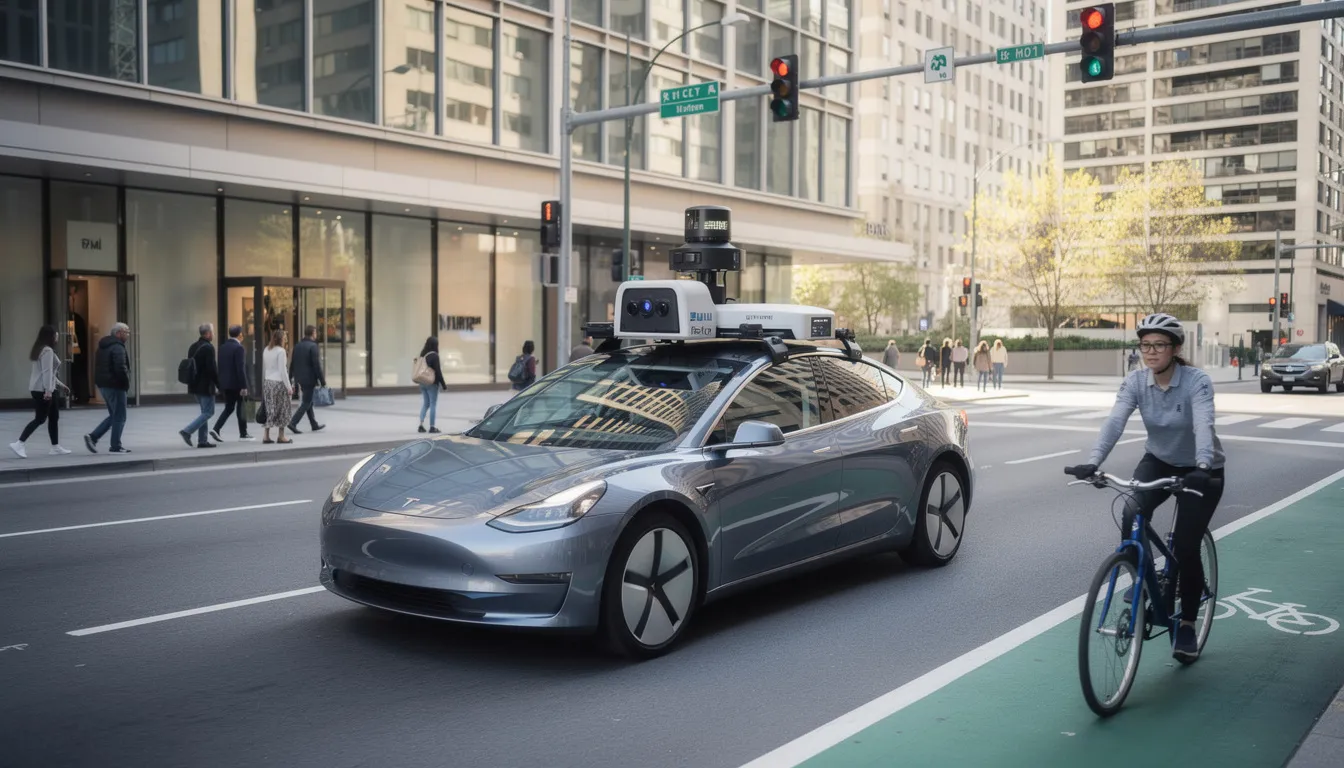
Self-driving cars have moved from science fiction to limited deployment. Waymo’s driverless robotaxi services operated in Phoenix and San Francisco by 2023–2024, providing real autonomous rides without safety drivers in defined geographic areas. These aren’t fully mature-they remain geographically limited and require extensive mapping-but they demonstrate that ai powered vehicles work in production, not just demonstrations.
For freight and delivery, ai applications in route optimization have delivered measurable gains:
UPS and Amazon use AI to optimize delivery sequences and reduce fuel consumption
Logistics startups apply machine learning algorithms to dynamic routing based on traffic conditions
Warehouse systems use AI for inventory placement and picker routing
Urban planning benefits from AI analyzing traffic sensor and GPS data to adjust traffic lights dynamically, reducing congestion and idling emissions. Cities implementing these systems report measurable reductions in average commute times and fuel consumption.
Safety improvements matter most. Assisted driving features-lane keeping, automatic emergency braking, adaptive cruise control-have reduced accident rates in equipped vehicles. The long-term potential points toward 2040-era fleets of AI-assisted vehicles with dramatically lower crash rates than human-only driving.
5. Better Customer Experience and Service
Generative AI transformed chatbots from rigid phone tree menus into conversational agents that resolve complex issues. The shift happened between 2023–2025 as large language models became capable of understanding context, accessing account information, and providing accurate answers.
By 2024, many enterprises report AI agents handling a significant share of first-line support, with higher resolution rates and lower wait times. AI powered chatbots now handle routine inquiries-password resets, order tracking, appointment scheduling-freeing human agents for situations requiring empathy and judgment.
Personalization advantages extend across consumer interactions:
Application | How AI Helps | Business Impact |
|---|---|---|
Recommendations | Analyzing viewing/purchase history | Higher engagement and conversion |
Dynamic pricing | Real-time demand analysis | Optimized revenue |
Email personalization | Customer data segmentation | Better open and click rates |
Product suggestions | Behavior pattern analysis | Increased average order value |
Virtual assistants are growing rapidly-8 billion AI-powered voice assistants are projected by 2026, with 157.1 million users expected to use voice search in 2025–2026. About 50% of U.S. mobile users already use voice search daily. |
The best results come from well-designed, human-supervised systems. AI handles volume and speed; humans provide oversight and handle edge cases requiring genuine empathy. This combination improves both customer satisfaction and employee experience.
6. Accelerated Scientific Discovery
AI has become a force multiplier for science, especially where huge datasets and complex simulations are involved. Since around 2020, many high-profile Nature and Science papers list AI as a central methodological contribution, not a side note.
Beyond healthcare, ai development is accelerating discovery in:
Materials Science: AI models scan vast chemical spaces to discover new battery chemistries, superconductors, and catalysts. Research that once took years of trial-and-error synthesis now starts with AI-generated candidate materials.
Fusion Research: Experiments at facilities like the DeepMind-TCV collaboration use AI to optimize plasma control systems, addressing one of the key challenges in making fusion power practical.
Astronomy: AI scans sky surveys for exoplanets and gravitational waves, processing more data than human astronomers could review in lifetimes. Pattern recognition in telescope data has identified planetary systems that visual inspection missed.
Genomics: Massive sequencing datasets get analyzed with machine learning to identify disease markers, drug targets, and evolutionary patterns.
Generative models also help scientists draft computer code, simulation pipelines, and literature reviews. The time from idea to experiment has shortened dramatically for researchers willing to utilize ai as a collaborator.
7. Stronger and Smarter Financial Services
The financial industry was one of the earliest AI adopters, from algorithmic trading in the 2000s to GenAI copilots for analysts in 2023–2025. Financial services is now the fastest-growing sector globally in AI investment, with growth estimated at 29.6% CAGR.
The numbers reflect serious commitment:
AI spending in financial services totaled $35 billion in 2023
Expected to climb to $97 billion by 2027
Global AI banking market set to expand almost 10x by 2034, reaching $379.41 billion
In insurance, 47% of organizations have implemented AI across core functions
AI-based fraud detection monitors billions of transactions in real time, flagging anomalies far faster than human teams. Natural language processing analyzes communications for suspicious patterns. The result: fewer false positives that annoy legitimate customers, faster catches of actual fraud.
Personalized financial advice has democratized through robo-advisors and AI-powered budgeting apps. These ai programs provide investment recommendations and financial planning that previously required expensive human advisors.
Risk management advantages include scenario modeling and stress testing with AI that analyzes years of historical data and macroeconomic indicators quickly. Banks can model thousands of scenarios to understand exposure before regulators or markets force the issue.
Regulators in the EU, US, and UK have responded with guidance for explainability and model risk management. Financial firms implementing ai must now document how models make decisions and demonstrate they don’t discriminate against protected groups-ethical considerations that shape responsible deployment.
8. More Efficient and Resilient Agriculture
AI advantages show up far from offices-on farms and in food supply chains across the US, Europe, India, and Africa. Precision agriculture uses AI models combining satellite imagery, drone data, and soil sensors to recommend irrigation, fertilization, and pest control field-by-field.
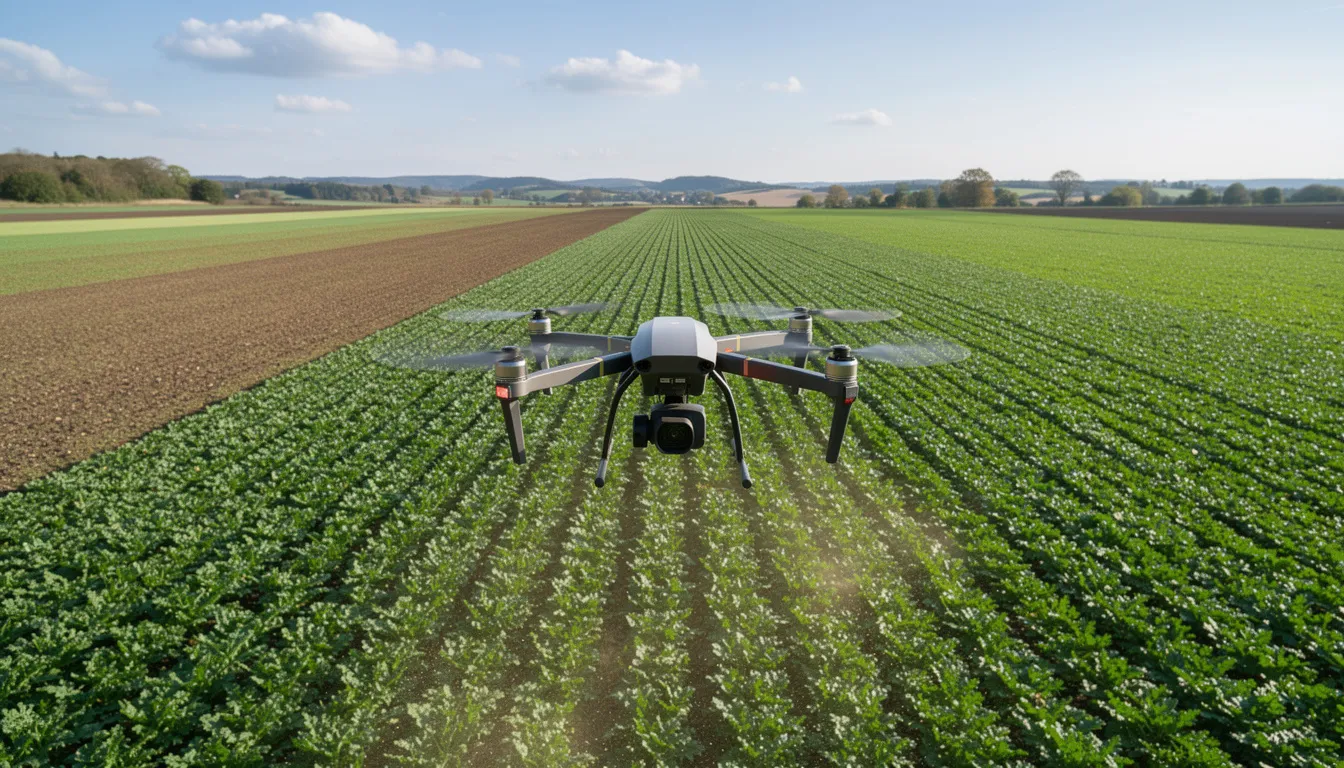
John Deere’s See & Spray technology, commercialized in the early 2020s, uses computer vision to target weeds specifically, reducing herbicide use by applying chemicals only where needed. This approach cuts costs for farmers while reducing environmental impact.
Key agricultural AI applications include:
Yield prediction: Machine learning forecasts harvests based on weather, soil conditions, and crop health
Supply chain forecasting: AI predicts demand fluctuations to reduce food waste
Pest and disease detection: Computer vision identifies problems before they spread
Irrigation optimization: Sensors and AI determine precisely when and how much to water
The sustainability benefits are substantial. Lower chemical use protects ecosystems. Optimized water consumption matters increasingly as climate change affects rainfall patterns. Better resilience to climate disruptions helps farmers adapt to unpredictable conditions.
9. Enhanced Cybersecurity and Physical Safety
AI both creates new threats (deepfakes, automated attacks) and is essential to defending against them. Security represents one of the clearest cases where ai’s ability to process massive data streams exceeds human capacity.
AI-driven threat detection analyzes network logs, email patterns, and endpoint behavior to spot ransomware, phishing, and intrusions in real time. Government agencies and large tech companies use AI to triage millions of security alerts per day-volumes that human analysts couldn’t review manually. This deep learning approach to recognizing patterns catches dangerous tasks before they cause damage.
Beyond digital security, AI-powered safety systems operate in:
Factories: Computer vision detecting unsafe worker behavior or equipment malfunctions
Construction sites: AI monitoring for fall hazards and PPE compliance
Mining operations: Systems identifying dangerous conditions from sensors and cameras
These applications demonstrate ai powered robots and systems handling tasks too dangerous for human workers to perform safely.
The advantages in security depend on continuous learning through retraining, human intervention for oversight, and strong governance to avoid false positives. AI security systems that generate too many false alarms get ignored; those that miss real threats fail catastrophically. The balance requires careful consideration of sensitivity settings and human review processes.
How AI Changes Daily Work and Life
By 2026, AI is embedded into office suites, browsers, design tools, development environments, and phones. The technology subtly reshapes everyday tasks in ways that weren’t possible just three years earlier.
Common personal use cases now include:
Drafting emails and messages with ai assistant help
Summarizing long documents into key points
Tutoring children with personalized explanations
Language learning with conversation practice
Travel planning with itinerary suggestions
Creative projects from writing to image generation
At work, implementing ai has changed how knowledge workers operate. Programmers use AI code assistants that suggest completions and catch bugs. Marketers use AI for campaign ideation and copy generation. Analysts use AI to save time on data summaries and slide drafts, then focus human involvement on interpretation and strategy.
Most marketers (88%) already depend on AI, and 46% of business owners use AI to craft internal communications. This isn’t future speculation-it’s current practice.
The democratization advantage matters most. People without deep computer science expertise can now prototype apps, automate repetitive jobs like data entry, and explore data using human language queries. A solo entrepreneur in 2025 can run a global storefront with AI handling copy, design, and customer support-capabilities that required teams of specialists a decade ago.
For small businesses, this is transformative. SMBs make up over 90% of all businesses and employ half the global workforce. When 57% of small businesses believe AI will improve their daily work lives, that’s not hope-it’s based on tools they’re already using. AI represents operational efficiency at a fraction of historical costs.
Limits, Risks, and How They Interact with AI Advantages
This article focuses on advantages, but understanding limitations helps readers know where benefits of artificial intelligence can break down.
Key risk categories include:
Risk | Description | Mitigation |
|---|---|---|
Hallucinations | AI generating plausible but false information | Human review, source verification |
Bias | Models reflecting biased training data | Diverse datasets, audit processes |
Privacy | Sensitive data exposure through AI tools | Data governance, access controls |
Energy use | Environmental impact of compute | Efficient models, renewable power |
Job disruption | Displacement of certain roles | Upskilling, transition support |
Black-box systems | Decisions that can’t be explained | Explainability requirements |
Failure cases illustrate why guardrails matter. Biased hiring ai algorithms have discriminated against protected groups. Hallucinated legal citations appeared in court filings when attorneys didn’t verify AI output. These aren’t theoretical concept problems-they’re documented incidents that damaged careers and companies. |
The percentage of businesses reporting little or no business value from AI declined from 19% to just 8%, suggesting that organizations are learning to implement ai effectively. But success requires combining the technology with human review, clear policies, and transparent evaluation.
The greatest advantages come from deliberate, responsible adoption-not blind trust or blanket rejection.
Staying On Top of AI Advantages Without the Noise
AI moves too fast for most professionals to track daily. The signal-to-noise ratio is getting worse as more outlets cover every minor update and funding announcement.
Many AI newsletters push daily emails not because there’s major news every day, but because they need to report reader engagement to sponsors. The result: minor updates that don’t matter, sponsored headlines you didn’t ask for, and noise that burns focus and energy.
KeepSanity AI takes a different approach: one focused weekly email surfacing only the major developments that change what AI can do for you. Launched after the 2022–2023 hype wave specifically to address information overload.
What gets curated:
Business impacts and real enterprise case studies
Major model releases (not every incremental update)
Breakout ai tools worth testing
Robotics advances
Standout research papers with readable links to alphaXiv
The categories are scannable-business, models, tools, resources, community, robotics, trending papers-so you can skim everything in minutes and focus on what matters to your work.
For professionals who need to stay informed but refuse to let newsletters steal their sanity: KeepSanity AI delivers the signal without the noise.
FAQ
These questions address practical concerns about AI advantages that weren’t fully covered above, grounded in 2024–2026 reality rather than distant speculation.
How can an individual worker start benefiting from AI today?
Start with one high-friction task-email drafting, generating reports, coding, or research-and test a mainstream ai assistant like ChatGPT, Microsoft Copilot, or Claude. Even dedicating 1–2 hours per week to experimenting yields noticeable productivity gains within a month.
Learn prompt basics: being specific, providing context, and iterating on outputs. Set clear boundaries for privacy-sensitive data-don’t paste confidential customer interactions or proprietary information into consumer AI tools without understanding the data policies.
Treat AI as a collaborator you must supervise, not as a magic replacement for your own judgment. Review outputs, verify facts, and apply your domain expertise to the results.
What is the realistic timeline for “full” AI transformation in most industries?
While software, marketing, and customer support felt major change between 2022–2025, heavily regulated or physical industries-healthcare, public sector, manufacturing-will see gradual transformation over the next 5–10 years.
The data supports this: 66% of organizations have not yet scaled AI enterprise-wide according to McKinsey. The World Economic Forum notes ongoing shifts, but full transformation remains years away. Healthcare AI could reach $371 billion by 2035 (from $32 billion in 2025), and banking AI markets show similar decade-long growth curves.
Most organizations will live in a hybrid world through the 2030s: existing systems plus AI copilots and targeted automation, not total replacement. The main advantage today comes from early, thoughtful ai adoption rather than waiting for a perfect, finished AI future.
How do I separate real AI advantages from marketing hype?
Apply concrete filters: look for measurable outcomes (time saved, error rates reduced, revenue gained), independently verified case studies, and tools actually used in production beyond small pilots.
Red flags include vague claims without numbers, constant rebranding of simple automation as “AI,” and tools that don’t let you test with your own workflows. Strong ai claims rarely survive scrutiny without specific performance data.
The percentage reporting little or no business value from AI declined from 19% to just 8%-organizations are filtering out unproven applications. High-quality data on real implementations matters more than vendor promises. Curated sources like KeepSanity AI exist specifically to highlight changes that truly move the needle.
Do small businesses really gain AI advantages, or is this just for big tech?
Small businesses often benefit disproportionately. Off-the-shelf ai tools now provide marketing, design, analytics, and customer support capabilities that used to require large teams and significant human resources budgets.
Examples include:
Local shops using AI for ad creatives and social media content
Solo consultants using AI to draft proposals and conduct research
Small ecommerce brands using AI chat widgets and inventory forecasting
With 57% of small businesses believing AI will improve their work lives, the benefits of ai are reaching beyond enterprise deployments. Start with low-cost, low-risk tools before considering bespoke models or heavy integration projects.
What skills will matter most to capture AI’s advantages in the next 5 years?
Hybrid skills combine domain expertise with AI literacy. Understanding how to design workflows where humans and AI complement each other matters more than either pure technical skill or pure domain knowledge alone.
Baseline skills by 2030 will include:
Prompt design for effective AI interaction
Basic data handling and interpretation
Understanding AI limitations (privacy, bias, hallucinations)
Data reasoning and critical thinking
Workflow design for human-AI collaboration
Two-thirds of employers plan to hire AI-skilled talent. Continuous learning through short courses, hands-on experimentation, and following high-signal AI news keeps skills aligned with evolving tools. Innovation ai brings requires adaptability-the specific platforms will change, but the underlying competencies transfer.