AI and Tech: How Artificial Intelligence Is Reshaping Technology in 2024 and Beyond
AI and tech are now inseparable, with artificial intelligence moving from research labs to the center of nearly every aspect of modern technology. In 2024, AI underpins the smartphone in your pocket, the cloud platforms running enterprise software, the autonomous vehicles navigating city streets, and the robotics systems transforming manufacturing floors. What was once the domain of specialized computer science research now powers features that billions of people use daily without thinking twice.
This article is designed for developers, business leaders, and professionals seeking to understand how AI is transforming technology and what it means for their work and industries. Understanding AI and tech is essential in 2024 and beyond, as these technologies are rapidly reshaping products, services, and the very nature of work across every sector. Whether you’re a developer integrating AI into applications, a business leader evaluating AI investments, or a professional adapting your career to an AI-augmented world, understanding these systems is no longer optional-it’s essential.
The past two years have marked an inflection point. OpenAI released GPT-4 in 2023, demonstrating capabilities that seemed like science fiction just years earlier. Multimodal models that can analyze data from text, images, and audio emerged throughout 2024. Generative AI tools became embedded in mainstream productivity software-Microsoft Copilot, Google Gemini, and Adobe Firefly are now standard features rather than experimental add-ons. The speed of adoption has been unprecedented.
This article provides a practical, tech-focused overview of how AI works, where it’s deployed across the technology landscape, the benefits it delivers, the risks it introduces, and the trends shaping its future.
Introduction to Artificial Intelligence
Artificial intelligence (AI) is the science and engineering of creating computer systems capable of performing tasks that typically require human intelligence. These tasks include learning from experience, solving problems, making decisions, and understanding language or images. Unlike traditional software, which is explicitly programmed for each scenario, AI systems use algorithms and vast amounts of data to learn patterns and make predictions or decisions on their own.
Recent advances in AI research have led to the development of powerful AI tools that can analyze data, recognize complex patterns, and generate human-like text and images. Technologies such as machine learning, deep learning, and artificial neural networks have enabled computers to excel at tasks like computer vision, natural language processing, and speech recognition. Deep learning models, in particular, use multiple layers of neural networks to process unstructured data and perform tasks ranging from facial recognition to generating human-like text.
Today, artificial intelligence AI is embedded in a wide range of real-world applications, from virtual assistants and recommendation engines to advanced medical diagnosis systems. As AI continues to evolve, its ability to perform tasks that once required human intelligence is transforming industries and redefining what computer systems can achieve.
AI Fundamentals for Tech: From Algorithms to Generative Models
Artificial intelligence (AI) is technology that enables computers and machines to simulate human learning, comprehension, problem solving, decision making, creativity and autonomy. AI encompasses many different disciplines, including computer science, data analytics and statistics, hardware and software engineering, linguistics, neuroscience, and even philosophy and psychology. AI applications generally involve the use of data, algorithms, and human feedback.
Key Components of AI Systems
The core ingredients powering AI systems are straightforward:
Training data: The material models learn from, often vast in quantity.
Algorithms: Define how learning happens (such as gradient descent for optimization).
Compute resources: GPUs, TPUs, and cloud clusters that process calculations.
The modern era of deep learning traces back to the 2012 ImageNet competition, where deep neural networks dramatically outperformed traditional computer vision approaches. This breakthrough triggered a decade of rapid advancement, culminating in the large language models boom of the 2020s.
Types of AI
Understanding AI requires grasping its conceptual hierarchy:
Artificial Intelligence (AI): The broadest category, encompassing any system that mimics cognitive functions.
Machine Learning (ML): A subset of AI where systems improve through experience rather than explicit programming-think recommendation engines suggesting your next Netflix show.
Deep Learning (DL): ML using deep neural networks with multiple layers-powering image classifiers that can identify objects in photos.
Generative AI: The latest frontier, where models create new content including text, images, video, and computer code.
How Neural Networks Learn
Neural networks learn by processing data through interconnected layers of computational nodes, loosely inspired by the human brain. Each connection has a “weight” that determines its influence. During training, the network makes predictions, measures errors, and adjusts weights through a process called backpropagation. Over millions of examples, the network becomes skilled at identifying patterns in complex data-whether that’s recognizing facial features, understanding speech recognition commands, or generating human-like text. AI systems can now understand, interpret, and respond to human language using natural language processing (NLP), enabling more effective communication between machines and people.
With this foundation, we can now explore how AI is integrated into everyday technology.

How Generative AI Works in Modern Tech Stacks
Foundation models became the central organizing principle for AI technology products after 2022. These are large pre-trained models developed on internet-scale datasets-think tens of terabytes of text and images-that can then be adapted for specific applications. The approach trades massive computational expense during training for efficiency and flexibility during deployment.
Timeline of Key Model Families
Model Family | Year(s) | Key Features/Advances |
|---|---|---|
OpenAI GPT-3 | 2020 | Demonstrated that scaling language models led to emergent capabilities |
OpenAI GPT-4 | 2023 | Major advance in reasoning and multimodal capabilities |
Google Gemini | 2023–2024 | Brought large-scale multimodal capabilities with native text and image understanding |
Meta Llama-3 | 2024 | High-performing open-source alternative democratizing access |
Anthropic Claude 3 | 2024 | Competitive capabilities with emphasis on safety and interpretability |
Modern Development Lifecycle
The modern development lifecycle for AI models typically follows these steps:
Pretraining on massive datasets.
Domain-specific fine-tuning for particular tasks (e.g., medical diagnosis support, customer service).
Continuous evaluation through benchmarks and real-world applications.
A critical innovation enabling practical deployment is retrieval augmented generation (RAG), which connects language models to live data sources. Rather than relying solely on knowledge from training, RAG allows applications like enterprise document search or support knowledge bases to access current information without retraining the underlying model.
These AI models are exposed to downstream applications through APIs provided by cloud platforms and AI companies. Integration patterns include:
Embedding models within developer tools for code completion.
Building chatbot interfaces.
Integrating into enterprise software platforms.
Embedding within specialized industry applications.
The composable, API-driven architecture means organizations can leverage sophisticated AI capabilities without building models from scratch.
History and Evolution of AI
The journey of artificial intelligence began in the mid-20th century, when pioneers like Alan Turing and John McCarthy first proposed that machines could be designed to simulate aspects of human intelligence. Early AI research focused on symbolic reasoning and expert systems, which aimed to encode human knowledge into computer programs. However, progress was often hampered by limited computing power and the complexity of real-world problems, leading to alternating periods of optimism and so-called “AI winters.”
The emergence of machine learning marked a turning point, allowing AI systems to learn from data rather than relying solely on hand-crafted rules. This shift paved the way for deep learning, where deep neural networks with multiple layers could identify complex patterns in vast datasets. Breakthroughs in deep learning have powered advances in computer vision, natural language processing, and speech recognition, making technologies like virtual assistants and self driving cars possible.
In recent years, AI researchers have pushed the boundaries further with generative AI, which enables machines to create new content such as text, images, and even computer code. The rise of agentic AI-systems capable of planning and executing multi-step tasks-and the growing focus on AI governance reflect the field’s increasing maturity and societal impact. Today, artificial intelligence is at the heart of innovations in medical diagnosis, autonomous vehicles, and countless other domains, with ongoing research continuing to expand what AI can achieve.
AI Inside Everyday Tech: Real-World Applications
Many “smart” features in 2024 consumer and enterprise technology are AI-driven even when not explicitly labeled as such. The virtual assistants on your phone, the recommendations in your social media feed, the autocomplete suggestions in your email-all powered by AI algorithms running continuously in the background. Understanding where AI appears helps demystify technology that might otherwise seem magical.
AI in Consumer Devices
Smartphone AI has become nearly invisible through ubiquity. Apple’s Face ID technology, introduced with iPhone X in 2017, uses deep learning models for facial recognition with accuracy that requires millions of attempts to achieve a single false positive. Modern computational photography features like Google Pixel’s Night Sight employ artificial neural network architectures to reconstruct detail in low-light conditions, while Magic Eraser uses image inpainting to remove unwanted elements from photos. Predictive typing and autocorrect systems employ language models to anticipate user input based on context.
Smart speakers and assistants-Amazon Alexa, Google Assistant, Apple Siri-combine speech recognition (converting audio to text), natural language processing (interpreting intent), and knowledge graph integration to provide conversational interfaces. These systems handle millions of daily interactions, with accuracy improving continuously through data collection and model updates.
A significant 2023–2024 shift involves dedicated hardware for on-device AI. Qualcomm’s Snapdragon X Elite processors and Microsoft’s Windows Copilot PCs integrate neural processing units (NPUs)-specialized silicon for running AI programs locally rather than on remote servers. This architectural shift reduces latency, improves privacy by keeping data local, and enables sophisticated features even without constant internet connectivity.
Recommendation systems drive engagement across content platforms. TikTok’s algorithm, YouTube’s recommendation engine, Instagram’s feed curation, and Spotify’s personalization all employ deep learning models that analyze user behavior patterns to predict content preferences. These systems operate at massive scale-YouTube processes billions of hours of video data monthly-making efficiency critical for both user experience and infrastructure costs.

AI in Cloud Services
Cloud providers have become primary vehicles for AI democratization. Amazon Web Services offers SageMaker and Bedrock for managed machine learning. Azure provides access to OpenAI’s models plus services like Computer Vision API and Speech Services. Google Cloud’s Vertex AI provides unified ML platform capabilities alongside specialized services. These platforms handle infrastructure complexity-GPU provisioning, model serving, scaling, monitoring-that would be prohibitive for individual organizations.
Hardware underpins these services. NVIDIA’s H100 and newer generation GPUs dominate large-scale AI deployments due to their tensor processing capabilities optimized for neural network computations. Google’s custom TPU chips offer specialized performance. The supply and cost of these accelerators directly constrains how many organizations can train large models, creating competitive advantages for cloud providers with massive GPU fleets.
Developer tooling has transformed fundamentally. GitHub Copilot (launched 2021, generally available 2022) uses large language models trained on public code repositories to provide context-aware code completion. Developers report significant productivity improvements on repetitive tasks, with the tool reducing time spent on boilerplate patterns. Amazon CodeWhisperer and Replit Ghostwriter provide similar capabilities in their ecosystems. These AI tools accept natural language descriptions and generate code, or complete partial implementations based on context.
Low-code and no-code platforms have incorporated AI capabilities. Microsoft’s Power Platform includes AI Builder, enabling non-technical users to train custom models and automate workflows. Google AppSheet provides similar capabilities for mobile and web development. Continuous integration pipelines are becoming AI-enhanced-automated test generation, anomaly detection in logs, and performance regression detection compress development cycles while improving reliability.
AI in Industry Sectors
AI has achieved FDA clearance for specific medical imaging tasks. Algorithms analyzing chest X-rays and mammography detect pathologies with accuracy comparable to radiologist performance in controlled settings. DeepMind’s AlphaFold 2 (2021) solved the protein structure prediction problem-determining 3D protein configurations from amino acid sequences-a challenge that had remained open for decades. This capability directly accelerates drug discovery pipelines, enabling AI researchers to explore biomolecular dynamics with unprecedented speed.
In finance, fraud detection represents a primary use case. ML algorithms analyze transaction patterns in real-time, identifying anomalies indicating fraudulent activity. The advantage over rule-based systems is adaptation-as fraud patterns evolve, models retrain on new data to recognize emerging threats. Algorithmic trading employs ML to identify market patterns. Robo-advisors like Betterment and Wealthfront use ML to optimize portfolio allocation, democratizing wealth management for retail investors throughout the 2010s and 2020s.
Manufacturing leverages predictive maintenance using sensor data to identify equipment likely to fail before actual failure occurs, preventing costly unexpected downtime. Computer vision systems inspect product quality at speeds exceeding human capabilities in automotive and electronics plants. Warehouse automation, exemplified by Amazon’s Kiva robotics fleet, combines vision, motion planning, and logistics optimization to coordinate thousands of mobile robots.
Other sectors show similar patterns:
Agriculture uses drone imagery for crop health monitoring.
Energy deploys smart grid systems for demand forecasting.
Transportation companies optimize routing across continental scales to reduce fuel consumption and improve delivery reliability.
Beyond consumer and enterprise applications, AI delivers significant benefits and introduces new challenges, which we examine next.
Benefits of AI-Driven Tech: Efficiency, Accuracy, and New Capabilities
AI delivers more than automation of existing processes-it enables entirely new categories of products and services that were previously impossible. The launch of ChatGPT in November 2022 demonstrated this dramatically, with the platform reaching 100 million users faster than any application in history. Understanding the concrete benefits helps organizations identify where AI investments will deliver real value.
Automation and Productivity in Digital Work
AI automates repetitive tasks that previously consumed significant worker attention. Examples include:
Email triage systems that automatically categorize incoming messages by priority.
Document classification that routes incoming materials to appropriate processing pipelines.
Invoice processing systems that extract key data fields from unstructured data-vendor names, amounts, dates-reducing manual entry errors.
Robotic process automation augmented with machine learning to handle workflows requiring judgment calls on non-standard inputs.
Generative AI applications extend productivity gains to knowledge work:
Meeting transcription and summarization tools (Zoom AI Companion, Google Meet AI features) convert hours of recorded discussion into searchable, summarizable records.
Email drafting assistance reduces time on routine correspondence.
Document generation creates first drafts that writers can edit rather than starting from blank pages.
GitHub Copilot reduces time spent on routine coding patterns.
Research suggests that generative AI could automate a significant percentage of knowledge-worker tasks by 2030, though implementation timelines vary by industry and role. Critically, automation typically augments human workers rather than immediately replacing them. Workers using AI tools become more productive at existing jobs rather than becoming unnecessary. The medium-to-long-term workforce effects depend on how organizations choose to redeploy labor and whether new roles emerge.
Better Decisions, Fewer Errors, and 24/7 Reliability
Real-time analytics powered by machine learning enable decision-making impossible with traditional analysis. Demand forecasting systems predict customer purchasing patterns with sufficient accuracy to optimize inventory levels, reducing both stockouts and excess carrying costs. These systems ingest point-of-sale data, seasonal patterns, marketing calendars, and external signals like weather to generate probabilistic forecasts.
Anomaly detection systems continuously monitor for deviations across security, operations, and performance domains. SIEM platforms correlate thousands of events per second to identify potential intrusions. APM tools detect performance degradation patterns indicating infrastructure issues. Such systems keep learning from new data, a feedback loop that static human procedures typically lack.
AI systems provide 24/7 reliability through automation:
Chatbots handle support inquiries outside business hours.
Monitoring systems alert on-call engineers immediately rather than waiting for morning reviews.
Autonomous systems manage routine operational tasks continuously, freeing human operators for exception handling.
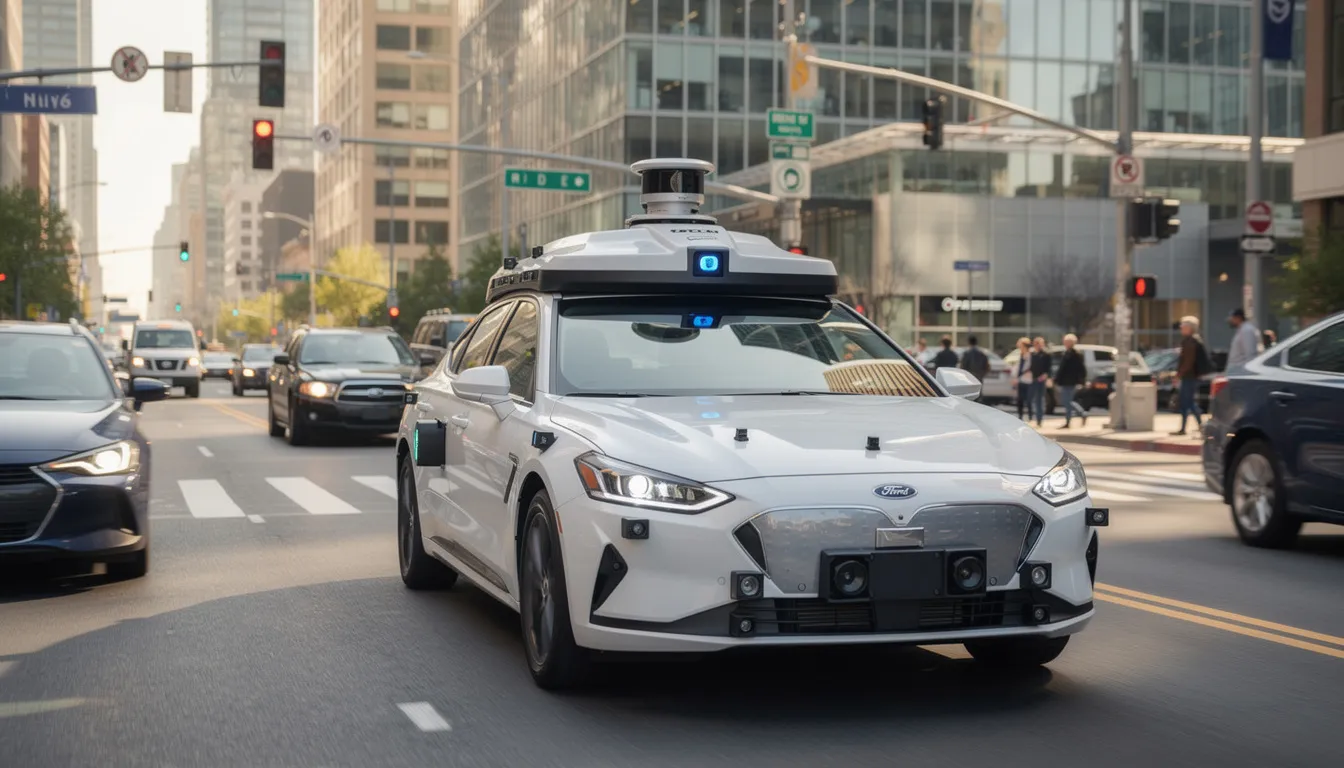
Safety improvements emerge when AI handles dangerous tasks. Autonomous drones inspect offshore installations, reducing human exposure to hazardous environments. Robotic systems handle hazardous materials processing. Self-driving cars and autonomous vehicles remove human drivers from high-risk conditions-though this application remains in development with significant technical and regulatory hurdles.
Risks and Challenges at the Intersection of AI and Tech
AI’s integration into critical infrastructure introduces technical, operational, ethical, and environmental risks that require careful management. Since 2023, concerns have crystallized around generative AI hallucinations (confident but false outputs), data leakage when users paste confidential information into public chatbots, persistent model bias, and the regulatory response culminating in the EU AI Act approval in 2024. Understanding these risks is essential for responsible AI development.
Data, Model, and Security Risks
Training data quality directly determines model behavior. When datasets contain skewed distributions-historical hiring data reflecting past discrimination, for example-models trained on this data perpetuate those biases. Facial recognition systems trained predominantly on lighter-skinned individuals show significantly higher error rates on darker-skinned individuals, a pattern documented across commercial systems. Similar bias patterns emerge in medical AI when training data reflects healthcare system inequities.
Data poisoning represents an intentional attack where adversaries inject malicious data into training sets to corrupt model behavior. This threat grows more acute as organizations rely on user-generated content for training. Privacy breaches occur when users input confidential information into public AI tools-corporate documents, trade secrets, proprietary code potentially entering training datasets. OpenAI has documented cases where ChatGPT surfaced content from other users’ conversations, indicating data leakage.
Model-centric risks include:
Adversarial attacks-carefully crafted inputs causing misclassification that humans wouldn’t notice.
Model drift, where real-world data distributions shift from training conditions.
A fraud detection model trained on 2023 patterns may perform poorly against 2025 fraud tactics. Secure MLOps practices become essential:
Dataset audits
Access controls
Continuous monitoring
Periodic retraining
Version control enabling rollback if corrupted versions deploy
Ethical, Legal, and Societal Concerns
Algorithmic bias manifests in high-stakes domains with documented consequences. Amazon’s recruiting algorithm downranked female candidates due to historical hiring data bias. COMPAS, used in criminal justice, showed racial bias in recidivism prediction. Lending algorithms perpetuate historical discrimination. Predictive policing concentrates enforcement in over-policed neighborhoods, creating feedback loops. These cases from the late 2010s and early 2020s established that bias isn’t theoretical-it causes real harm.
Privacy concerns extend beyond training data. Large-scale data collection enables surveillance capabilities. Facial recognition in public spaces enables persistent tracking. Behavioral tracking through recommendation algorithms creates detailed psychological profiles used for targeting-raising concerns about human interaction with technology designed to maximize engagement.
Regulatory developments are accelerating. The EU Artificial Intelligence Act achieved political agreement in 2023 and formal adoption in 2024, establishing risk-based regulation with prohibited applications (social scoring, subliminal manipulation), high-risk categories (criminal justice, hiring), and transparency requirements. The US and UK have pursued less prescriptive approaches through executive orders and sector-specific guidelines. AI governance frameworks continue evolving, with explainability requirements in high-stakes domains pushing against the “black box” nature of deep neural networks.
Environmental and Infrastructure Costs
Large AI models demand significant compute, driving growth in data centers and energy consumption since roughly 2017–2018 when deep learning scaling accelerated. Training a state-of-the-art LLM at GPT-3 scale consumes megawatt-hours of electricity and substantial cooling water. The environmental impact compounds when considering not just initial training but continuous inference serving millions of users and periodic retraining cycles.
Efforts to mitigate impact include:
Model compression techniques like quantization (reducing numerical precision) and knowledge distillation (training smaller models to mimic larger ones).
More efficient architectures-sparse models, mixture-of-experts designs-reduce computation relative to capability.
Newer GPU generations provide better performance per watt.
Geographic strategies locate data centers in regions with renewable energy or cooler climates.
However, aggregate global data center energy consumption continues growing faster than efficiency improvements. The computing power required for AI advancement presents genuine sustainability challenges. Broader concerns include rare-earth mineral extraction for specialized semiconductors and e-waste from rapid hardware obsolescence. These trade-offs deserve honest consideration rather than either dismissal or alarmism.

How AI Is Transforming the Tech Workforce
AI is reshaping roles across the tech industry rather than simply eliminating jobs. The transformation creates new positions, evolves existing ones, and demands new skills from professionals at every level. Understanding these shifts helps individuals and organizations adapt proactively.
New roles have emerged since approximately 2020 with explosive growth in 2022–2024:
Role | Primary Focus |
|---|---|
ML Engineer | Design, train, and deploy models |
Prompt Engineer | Optimize instructions for language models |
AI Product Manager | Bridge AI capabilities and business requirements |
AI Safety Researcher | Study potential harms and develop mitigations |
AIOps Specialist | Manage production AI systems |
Traditional roles are evolving to incorporate AI capabilities. Software engineers increasingly use coding assistants as standard tools. Data analysts employ AI for exploratory analysis rather than manual query writing. QA testers design automated test generation. UX designers use generative AI for rapid prototyping. These evolutions represent augmentation-the same roles exist with different workflows and skill requirements.
Skills, Upskilling, and Collaboration with AI
Core skills increasingly valuable across technical roles include:
Data literacy: Understanding how data is collected, represented, and used in models
ML fundamentals: Grasping how models learn and where they fail
Prompt engineering: Effectively directing AI tools toward productive outputs
Statistical reasoning: Interpreting model outputs and identifying misuse
Reinforcement learning basics: Understanding how systems learn from human feedback
Teams are reorganizing around AI capabilities. Rather than siloed ML teams, organizations embed data scientists and ML engineers within product teams alongside domain experts. Platform engineers provide shared infrastructure enabling multiple teams to deploy AI efficiently. The cross-functional approach ensures AI solutions address genuine business problems rather than solving technically interesting but practically irrelevant challenges.
The 2023–2024 period saw a surge in AI courses, bootcamps, and internal training programs. Research indicates 62% of senior executives identify AI and machine learning as top investment priorities, suggesting sustained demand for AI-capable talent. The concept of AI as “co-pilot” rather than replacement has become central-code review workflows where AI suggests improvements, incident triage systems prioritizing alerts, design ideation augmenting rather than replacing creativity. In these configurations, human judgment, contextual knowledge gained through experience, and accountability remain with humans while AI handles repetitive tasks.
The Future of AI and Tech: Trends to Watch After 2024
AI development moves fast but not in a straight line. Many impressive demonstrations remain research-in-progress rather than production-ready systems. Separating near-term practical advances from longer-term possibilities requires understanding both current capabilities and fundamental limitations. Several concrete trend areas deserve attention.
Multimodal Models, Agents, and Edge AI
Multimodal AI systems process and integrate multiple data types-text, images, audio, video, sensor data-within single models. GPT-4V demonstrated early commercial vision capabilities. Google Gemini included native multimodality from inception. By 2034, multimodal AI will likely be standard rather than novel. Practical implications include medical AI systems processing patient history, imaging studies, and vital signs simultaneously, or customer service understanding videos of product issues without requiring text descriptions.
Agentic AI represents a meaningful progression beyond current chatbots. Where today’s systems primarily respond to user input, AI agents can autonomously plan and execute multi-step workflows-reading email, creating calendar events, updating project management systems, calling APIs without intermediate human steps. 2024 saw multiple agent frameworks announced by major technology companies. Expected applications include coordinating logistics, orchestrating customer service workflows, and managing IT operations across distributed systems. This capability requires addressing safety, accountability, and error recovery concerns before widespread deployment in complex tasks.
Edge and on-device AI reduces latency, improves privacy, and enables functionality without constant connectivity. NPUs in mainstream processors (Qualcomm Snapdragon X Elite, Apple Neural Engine) are becoming standard. The trade-off involves model size-current large language models cannot run efficiently on mobile hardware-but distilled models show promise for acceptable edge performance. Within 1–3 years, meaningful edge AI should become mainstream as NPU-equipped devices proliferate.
Toward Safer, More Governed, and Possibly More General AI
Post-2023, focus has intensified on AI safety research, evaluation benchmarks, and “red teaming” efforts as models gained broader capabilities. Organizations and governments recognize that AI systems this powerful require governance frameworks beyond voluntary commitments. Anticipated tightening of standards in healthcare, finance, and public sector applications will likely expand after the EU AI Act’s implementation. Global regulatory harmonization remains incomplete but directionally clear.
The concepts of artificial general intelligence (AGI) and superintelligence remain debated rather than imminent. Current systems, even in 2024, remain specialized despite impressive breadth-GPT-4 performs exceptionally on language tasks but cannot physically act in the world. Vision systems excel at image classification but don’t understand physical causality. The medium-term future likely involves incremental capability improvements rather than sudden jumps, though these accumulated advances may prove transformative for specific tasks like solving math problems or generating accurate predictions in narrow domains.
The vast majority of AI progress remains focused on making existing approaches more efficient, reliable, and practical rather than achieving the simulate emotions and general reasoning of human intelligence depicted in science fiction. As an academic discipline, AI continues evolving through careful research rather than dramatic breakthroughs.
AI functions as an amplifier for other major technology trends. Robotics combines with AI for autonomous behavior. Biotechnology leverages AI for protein prediction. Energy systems employ AI for optimization. Rather than viewing AI in isolation, understanding future development requires understanding these cross-domain dependencies. The use of AI makes progress in one area-more efficient edge hardware-enable advancement in dependent areas-autonomous vehicles with on-device perception.
For technologists, the path forward requires continuous learning, thoughtful governance adaptation, and honest engagement with both possibilities and limitations. AI isn’t a distant future-it’s the foundational layer of the tech stack already powering problem solving across industries. The professionals who thrive will be those who learn to work alongside these systems, understanding their capabilities and constraints, rather than either dismissing them or expecting them to solve everything automatically.
Understanding AI and tech today positions you to shape how these systems develop tomorrow.
Conclusion
Artificial intelligence is no longer a futuristic concept-it is the driving force behind the most significant technological transformations of our time. From powering virtual assistants and self driving cars to revolutionizing healthcare, finance, and manufacturing, AI systems are reshaping how we live and work. As AI research advances and new tools emerge, the line between human intelligence and machine capabilities continues to blur.
For developers, business leaders, and professionals, understanding artificial intelligence AI and its real world applications is essential for staying competitive and making informed decisions. The rapid evolution of AI technologies demands continuous learning, adaptability, and a commitment to responsible development and governance. By embracing the opportunities and addressing the challenges of AI, we can harness its potential to solve complex problems, drive innovation, and shape a future where technology and human intelligence work hand in hand.
AI Techniques and Methods
Artificial intelligence (AI) draws on a diverse set of techniques and methods that empower machines to perform tasks once thought to require human intelligence. At the core of modern AI systems are approaches like machine learning, deep learning, neural networks, and natural language processing, each playing a distinct role in how computers analyze data, identify patterns, and deliver accurate predictions.
Machine learning is a foundational technique where algorithms enable systems to learn from data and improve their performance over time, without being explicitly programmed for every scenario. This allows AI to adapt to new information and solve a wide range of problems, from recognizing images to recommending products.
Deep learning takes this a step further by using deep neural networks-complex architectures with multiple layers that can process vast amounts of unstructured data. These deep learning models excel at tasks such as speech recognition, computer vision, and generating human-like text, thanks to their ability to uncover complex patterns that traditional algorithms might miss.
Neural networks are inspired by the structure of the human brain, consisting of interconnected nodes that process information in layers. By adjusting the connections between these nodes during training, neural networks can learn to perform tasks like facial recognition, language translation, and even medical diagnosis with remarkable accuracy.
Natural language processing (NLP) enables AI systems to understand, interpret, and generate human language. This technology powers virtual assistants, chatbots, and large language models that can generate human-like text, making it possible for machines to interact with people in more natural and meaningful ways.
AI researchers continually refine these methods, pushing the boundaries of what artificial intelligence AI can achieve. By combining these techniques, modern AI systems can analyze data from multiple sources, learn from human feedback, and perform tasks that were once the exclusive domain of human intelligence. As these methods evolve, they drive the development of AI applications that are transforming industries and redefining the relationship between humans and technology.