AI Content Creation: How to Use Generative AI Without Losing Your Voice (2026 Guide)
Key Takeaways
Most marketing teams now use AI somewhere in their content creation process, but the real advantage goes to those who combine AI speed with strong audience insight and rigorous editing.
AI should handle research, ideation, repurposing, and rough drafts while humans own strategy, personal perspective, and final quality control.
Overusing generic AI outputs can hurt SEO rankings and erode brand trust, while thoughtfully edited AI-assisted content can safely scale your output 2-3x.
The shift isn’t “AI vs humans” but “teams that collaborate with AI vs teams that don’t.”
KeepSanity AI exists specifically to help creators cut through the daily AI news noise so you can focus on creating great content, not doomscrolling tool launches.
What Is AI Content Creation (and Why It Matters in 2026)
AI content creation means using generative ai tools like ChatGPT, Claude, Gemini, and Midjourney to plan, draft, and repurpose content across text, audio, video, and images. It’s the deployment of artificial intelligence to handle everything from ideation and keyword research to producing content across multiple platforms. AI is employed in various stages of the content lifecycle, including drafting, design, and optimization.
The data tells a clear story: a 2025 CreatorIQ survey reveals 86% of content creators already integrate generative ai into their workflows, with the remaining 14% projected to adopt by 2026. Marketing budgets for creator partnerships jumped 171% in 2025 alone. This isn’t a trend-it’s infrastructure.
Here’s what matters: the shift isn’t about AI replacing humans. It’s about teams that know how to collaborate with AI versus teams that don’t. Heinz Marketing puts it well-AI is now ubiquitous for drafting, summarizing, and repurposing, but it’s insufficient without human-defined perspective, buyer-focused beliefs, and proprietary data.
This article is written for KeepSanity AI readers: busy marketers and builders who want leverage without drowning in AI hype. You’ll find practical guidance on benefits, real limitations, step-by-step workflows, tool categories, SEO implications, and best practices you can implement this quarter.

The Real Benefits of AI Content Creation Tools
Benefits only appear when AI is used intentionally-not as a one-click “write my blog” button. Teams that treat ai tools as a magic shortcut end up with bland, generic content that damages their brand. Teams that treat AI as a drafting partner and research accelerator see genuine gains.
Consider a content marketer at a Series B SaaS startup. Before AI, they managed 4 blog posts per month with constant stress and weekend work. With an AI-assisted workflow-using AI for outlines, research summaries, and first drafts-they scaled to 8-10 posts monthly without adding headcount. The time savings went into deeper customer interviews and better data visualization.
These benefits apply across formats: blogs, newsletters, landing pages, video scripts, ad copy, and social posts. Each subsection below focuses on one concrete advantage with specific numbers and scenarios.
Time-Saving for Drafts and Research
A 1,500-word article that used to take 6-8 hours (research, draft, basic edit) can often be completed in 2-3 hours with AI-assisted outlines and rough drafts.
Here’s how to capture those savings:
Outlines and structure: Ask AI to generate 3 different outline approaches, then merge the best elements
Research summaries: Batch prompts like “summarize these 5 URLs” or “list the key statistics from this report”
FAQ generation: AI can quickly produce 10-15 potential questions your audience might ask
Hook variants: Generate multiple opening angles, then pick the strongest
Always cross-check facts and dates from AI against primary sources. Hallucination rates run 10-40% on niche statistics, according to Stanford 2025 evaluations.
Reinvest your time savings into what AI can’t do: original interviews, proprietary data analysis, and storytelling that connects with your target audience.
Increased Efficiency and Productivity Across Channels
One long-form asset can feed an entire content ecosystem. A 2,000-word blog becomes the “source of truth” that AI repurposes into:
LinkedIn carousel posts
Twitter/X thread outlines
5-email nurture sequences
YouTube Shorts scripts
Newsletter sections
Podcast talking points
A simple workflow:
Write one human-led, deeply researched piece
Feed it to AI with platform-specific instructions
Generate variations tailored to different channels
Human review for voice and accuracy on each platform
Create reusable prompt templates for recurring tasks. “Turn this blog post into a LinkedIn thread with 8 posts, each under 300 characters” becomes a one-click operation once you’ve tested and saved the prompt.
Teams tracking “content units per week” report 50-100% increases after adopting AI-assisted repurposing. AI also helps maintain momentum-when you hit writer’s block, ask for 10 new ideas angles on your core topic.

Cost Savings vs Traditional Outsourcing
The math is straightforward:
Approach | Cost per 1,500-word article |
|---|---|
Specialized freelancer (2025-2026 rates) | $200-$400 |
AI tools (monthly subscription for team) | $20-$200/month total |
Agency retainer | $3,000-$7,500/month |
AI allows individual content creators and small teams to produce mid-funnel and long-tail content without expanding headcount. A solo founder can now cover product descriptions, support content, and long-tail blog posts that previously required hiring.
Where cost savings work best:
First drafts and outlines
Product update announcements
Internal documentation
Translation and localization (with human review)
Repurposing existing content
Where to spend the savings: reinvest into better data sources, original design assets, distribution, and flagship thought leadership pieces that still need heavy human involvement.
Scalability Without Burning Out Your Team
Maintaining a consistent presence across blogs, newsletter, LinkedIn, YouTube, and podcast is exhausting without support. AI helps by:
Standardizing structures: Consistent blog templates and video script frameworks let multiple contributors ship faster
Global scaling: Use AI translation as a first pass for new markets (EN → ES, DE, FR), then human review for nuance
Evergreen updates: AI can scan existing content for outdated statistics (pre-2023 data) and suggest refreshes
Guardrails: Document brand voice, approved phrases, and banned claims to keep scaled content on brand
Kantar research shows that coherent cross-channel ideas are now 2.5x more vital to brand success than a decade ago. Consistent brand voice across platforms matters-AI helps maintain it at scale when you give it the right constraints.
SEO Support and Topic Discovery
AI alone is not a content strategy. But paired with tools like Ahrefs, Semrush, or Surfer, it accelerates keyword research, outline generation, and competitive analysis.
Use AI to:
Cluster related keywords into logical topic groups
Group topics by search intent (informational, commercial, navigational)
Propose internal link structures between related posts
Analyze top 10 Google results and suggest differentiated angles
Feed AI the titles and headings from top-ranking pages, then ask: “What angle or depth is missing from these results that would genuinely help the searcher?”
Avoid keyword stuffing-Google’s 2022-2024 Helpful Content updates emphasize answer depth and usefulness over mechanical keyword placement. Create modular, scannable structures that work both for human readers and AI-powered search summaries (the emerging field of GEO, or Generative Engine Optimization).
Maintain a human-owned content strategy document that AI cannot overwrite. This ensures consistency and prevents drift over time.
Limits and Risks of AI Content Creation (You Can’t Ignore These)
Misuse of AI leads to bland writing, factual errors, loss of brand trust, and search penalties. This section is essential reading for any team planning to scale ai content past initial experiments.
Google’s stance as of 2024-2025 focuses on content quality and usefulness, regardless of production method. But spammy AI output-thin articles, spun text, scaled doorway pages-still gets penalized.
The goal here is practical, not alarmist. AI is powerful, but you need constraints, review processes, and clear ownership.
Limited Originality and Surface-Level Thinking
Most large language models are trained on internet-scale data up to a cutoff (2024-2025 for recent models). They reflect and remix existing patterns rather than inventing new ideas.
Telltale signs of generic ai generated content:
Overused phrases: “in today’s digital landscape,” “in conclusion,” “game-changer”
Overly even, neutral tone throughout
Lack of specific stories, dates, or concrete examples
No fresh data or proprietary insight
What to do:
Use AI for scaffolding (outlines, gaps to cover), then rewrite key sections in your voice
Inject elements AI cannot generate: exclusive data, customer interviews, proprietary frameworks, personal failures and lessons
Measure “original contribution” per piece-aim for at least one fresh example or argument per 1,000 words
Relatability, Voice, and Brand Consistency Challenges
Raw AI output feels neutral and slightly corporate, even when prompted to be “casual” or “funny.” Trying to train an LLM on one person’s style often produces superficial mimicry, not genuine perspective.
How to maintain voice:
Create a brand voice guide with real sample paragraphs, dos and don’ts, specific phrases, and syntax preferences
Paste voice guidelines into every prompt: “Write like a blunt but kind consultant, avoid clichés, use concrete numbers where possible”
Keep final tone decisions and sensitive messaging (layoffs, pricing changes, policy updates) human-written or heavily human-edited
The editing process is where your voice actually lives. AI gives you structure; you give it personality.
Accuracy, Hallucinations, and Outdated Info
LLMs confidently invent statistics, misquote research, and fabricate sources-especially for niche topics or post-cutoff events.
Simple rules:
Never publish AI-generated numbers, quotes, or legal/medical claims without checking primary sources
Run all drafts through manual fact-check, particularly for dates, prices, regulatory changes, and scientific claims
Use AI heavily where stakes are lower (brainstorming, internal notes, idea lists)
Maintain a “source of truth” document for common stats you reuse, instead of relying on AI to recall them
Ethics, Attribution, and Trust
Ethical considerations include:
Plagiarism risk: AI may closely recycle existing content without proper attribution
Impersonation: Using AI to pretend to be specific individuals or brands
Disclosure: When should you tell readers AI was involved?
Copyright: Evolving legal landscape in US, EU, and UK around training data (2025-2026 cases ongoing)
Create internal guidelines specifying which content types must be mostly human-written: case studies, customer quotes, sensitive PR statements.
Long-term brand trust depends on consistently accurate, honest content-regardless of whether AI was involved in drafting.
SEO and AI Detection Concerns
Google has publicly stated it targets low-quality, unhelpful content-including mass-produced ai generated material-not AI use per se. Patterns that trigger penalties:
Thin articles with no unique value
Spun or lightly reworded text
Scaled doorway pages targeting slight keyword variations
Missing E-E-A-T signals (Experience, Expertise, Authoritativeness, Trustworthiness)
What to focus on:
Add bylines, author bios, sources, and real-world examples to every important page
Use AI detection tools only as internal checks, not as the ultimate quality judge (they produce false positives)
Track engagement metrics: time on page, scroll depth, conversions, and feedback
If AI-heavy content underperforms organically, scale back and increase human input
How to Create Content with AI: A Practical Workflow
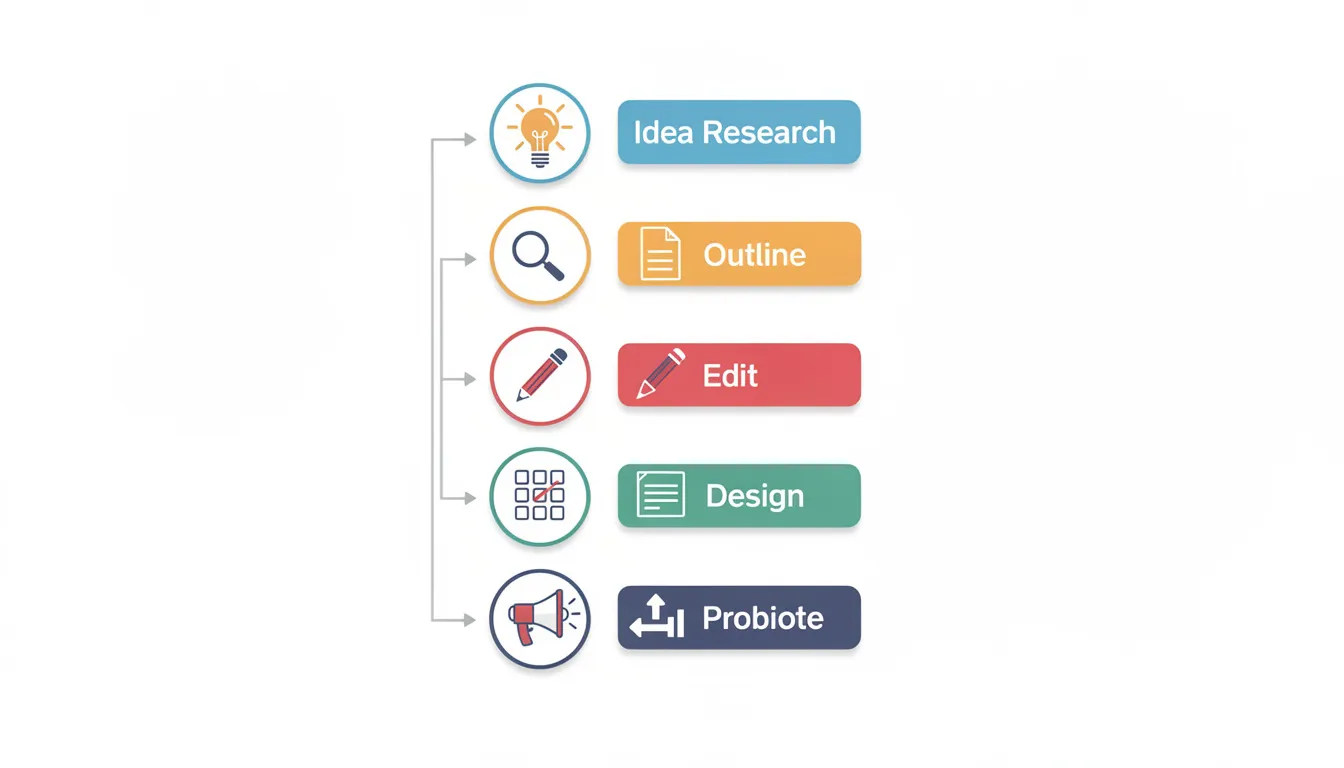
This section provides a step-by-step, repeatable workflow for blogs, newsletters, and landing pages. It’s tool-agnostic-works with ChatGPT, Claude, Gemini, or enterprise models, plus whatever SEO and design tools you prefer.
The content creation process ties together audience understanding, research, drafting, editing, and distribution. Adapt examples and prompts to your industry, whether B2B SaaS or consumer products.
Step 1: Clarify Your Audience and Intent
Understanding your target audience is crucial for effectively using AI tools in content creation, as it ensures the generated content is relevant and engaging for specific segments.
Define who you’re writing for with specifics:
Role: “Head of Growth at a Series B SaaS”
Company size: 50-200 employees
Geography: US-based, expanding to Europe
Main pain points: Scaling content without adding headcount, maintaining quality
Use AI to refine this: ask it to draft audience personas, then adjust based on real customer interviews and CRM data.
Select a single primary intent per piece before outlining:
Educational (teach a concept)
Comparison (evaluate options)
Tutorial (step-by-step instructions)
Opinion (stake a position)
Include “intent + persona” in your system prompt so AI tailors examples and tone appropriately. Save approved persona descriptions in a shared document to reuse across your team.
Step 2: Research with AI Plus Human Sources
Pair AI with manual research:
Start broad: Ask AI for a list of key subtopics, potential objections, and a reading list of authoritative sources
Go deep: Read actual reports, documentation, and expert interviews
Synthesize: Paste excerpts from primary sources into AI and ask for bullet-point summaries and comparisons
Maintain a research log separate from the AI chat so you can trace origins of every claim. Never trust AI-generated citations or URLs without manually verifying them-they may not exist.
Step 3: Generate Outlines, Not Finished Articles
The first AI output should be a structured outline, not a ready-to-publish draft.
How to get better outlines:
Ask for multiple variants: one focused on use cases, one on ROI, one on step-by-step process
Set constraints: word count ranges per section, required subtopics, must-include examples
Merge the strongest elements from each variant
Human review and reorder before generating full text
Save successful outlines as reusable templates for similar topics or campaign series.
Step 4: Draft with AI, Then Rewrite Key Sections
Workflow:
AI generates a rough first draft based on approved outline, persona, and tone guidelines
Immediately rewrite the intro, conclusion, and core argument sections in your own voice
Use AI text as scaffolding only
Inject personal experience: mini case studies, mistakes made, specific numbers from your data
Ask AI to propose alternative phrasings for difficult concepts, then choose the most natural ones
Label drafts as “AI-assisted” internally so editors know to pay extra attention to nuance and facts.
Step 5: Edit for Clarity, Accuracy, and Voice
Two-pass editing:
Pass | Focus |
|---|---|
First | Structure, logic, flow, completeness |
Second | Line-level clarity, style consistency, brand voice |
Use AI as an editing assistant:
Ask it to flag jargon and suggest simpler alternatives
Request tighter headline options
Have it identify paragraphs that could be condensed
Humans own fact-checking: verify dates, product capabilities, regulatory claims, and external stats. Update anything AI invented.
Read key sections aloud or use text-to-speech to catch robotic phrasing. Final check against brand guidelines: banned claims, tone, legal disclaimers, required CTAs.
Step 6: Optimize for SEO and Distribution
Use SEO tools (Ahrefs, Semrush, Surfer, NeuronWriter) to refine:
Titles and meta descriptions
Heading structure
Internal and external links
Ask AI to generate multiple headline candidates balancing SEO keywords and click-worthiness.
Generate platform-specific snippets:
LinkedIn summary
X thread outline
Newsletter intro
YouTube description for video versions
Pre-publish checklist:
[ ] Primary keyword in title, H1, and first 100 words
[ ] Internal links to 2-3 relevant existing posts
[ ] External citations properly formatted
[ ] Images or diagrams with alt text attached
[ ] Meta description under 160 characters
Review analytics after publishing. Feed real performance data back into future prompts and strategy.
Types of AI Tools for Content Creation (and Where They Fit)
No single AI tool covers everything. The most effective teams assemble a small, focused stack rather than chasing every new launch.
This section organizes tools by function-writing, visuals, video/audio, research, workflow-rather than by brand name. Start with 3-5 core tools rather than subscribing to every product that appears in your feed.
KeepSanity AI exists specifically to filter AI news so you only hear about tools that matter strategically, not every daily launch that adds noise without value.
Text and Copy Generation Tools
Mainstream LLMs for drafting and ideation:
ChatGPT: Versatile, large context window, strong for general writing
Claude: Excellent for longer documents, nuanced tone, detailed analysis
Gemini: Strong integration with Google ecosystem
Enterprise models: Custom deployments for compliance-heavy industries
Typical use cases:
Blog outlines and rough drafts
Product descriptions
Email copy and sequences
FAQs and support content
Internal documentation
Evaluation criteria:
Factor | Why it matters |
|---|---|
Token limits | Determines how much context you can include |
Integration options | API access, docs plugins, team features |
Privacy policies | Where is your data stored and used? |
Compliance features | Required for finance, health, legal |
Never blindly trust any model to generate legally or medically binding written content without specialist review.
Visual and Image Generation Tools
Tools like DALL·E, Midjourney, and Adobe Firefly help generate:
Custom blog headers
Diagrams and concept illustrations
Social graphics
Campaign concepts and mood boards
Best practices:
Specify brand colors, aspect ratios, and usage context in prompts
Choose tools with clear commercial licensing for images created
Use AI visuals where stock photos fall short or where unique metaphors are needed
Maintain a shared library of prompts and favorite styles for consistency

Video and Audio Content Tools
Tools for video content and short form videos:
Text-to-video: Pictory, Lumen5 turn blog posts into video scripts with scene suggestions
Editing: Descript treats audio/video like text documents
Synthetic voices: Useful for demos, but use real voices for brand-sensitive content
Workflow example:
Long-form blog becomes a video script
AI suggests scenes and visuals
Tool generates subtitles automatically
Human reviews and refines before publishing
Test vertical formats (Reels, Shorts, TikTok) by using AI to rapidly generate multiple hooks for the same core idea. AI-generated captions and translations make videos more accessible and global-ready.
Research, Analytics, and Audience Insight Tools
Some tools focus on understanding audience behavior and performance rather than generating copy:
GWI Spark: Query audience research data
Analytics copilots: Ask natural language questions about your data
Survey analysis tools: Surface patterns in customer feedback
Use AI to query first-party analytics (CRM, product usage, website data) to discover which topics and formats actually move metrics.
Validate content ideas before production-reduce waste on topics nobody searches for or shares. Always layer your own customer insights on top of generic market data.
Orchestration and Workflow Automation Tools
Connect content planning, drafting, review, and publishing:
Zapier AI: Automate handoffs between tools
Notion AI: Built-in assistance for docs and databases
ClickUp/Asana automations: Status changes trigger actions
Example automations:
Move task to “Ready for Design” when AI draft is marked complete
Send Slack alert when editor leaves comments
Auto-generate content briefs from approved idea list
Start with 1-2 high-friction processes (brief creation, status updates) before scaling. Maintain a simple diagram of your content workflow so automations support it rather than creating hidden complexity.
Best Practices for Sustainable AI Content Creation
These are rules-of-thumb for teams who want consistent, high quality output over years-not quick hacks that break down at scale.
Balance is key: use AI aggressively for leverage, but maintain strict boundaries around strategy, ethics, and final sign-off. These practices come from patterns visible across high-performing teams in 2024-2025.
Keep Humans in the Loop (Especially on Strategy)
Humans must own:
Topic selection and content calendar priorities
Messaging hierarchy and brand positioning
Narrative arcs tied to business goals
Final approval on anything public-facing
Hold regular editorial meetings where content leads review AI-assisted ideas against product roadmaps and sales insights.
Clear role assignments:
AI handles | Humans handle |
|---|---|
Drafting and repurposing | Prioritization and approvals |
Research summaries | Strategy and positioning |
Format conversion | Final edits and voice |
Repetitive tasks | Sensitive messaging |
No important page should go live without at least one human reading it end-to-end.
Document Your Prompts and Playbooks
Ad-hoc prompting leads to inconsistent quality. Maintain a shared library:
Organize by outcome: Blog outline, case study draft, feature announcement, email sequence, LinkedIn post
Include examples: Before/after outputs showing what “good” looks like
Version prompts: Update as brand evolves or model capabilities improve
Onboard with the library: New team members learn by walking through existing prompts, not starting from blank chats
Measure Quality Beyond Volume
Don’t judge success solely by how many articles AI helped produce.
Metrics that matter:
Organic traffic growth
Conversion rates from content
Subscriber growth and retention
Reply rate to newsletters
Time on page for key content
Sales team feedback on lead quality
Run A/B tests: AI-assisted versus mostly human-written pieces on similar topics. Learn from performance differences.
Prune or consolidate underperforming AI-era content instead of letting thin pages accumulate and dilute your domain.
Stay Informed Without Drowning in AI Noise
AI tooling and regulations change quickly. EU AI Act milestones roll out through 2024-2026. Copyright rules evolve. New models launch weekly.
Following every launch blog and Twitter thread can easily eat hours per week with little benefit.
Better approach:
Choose 1-2 high-signal sources like KeepSanity AI’s weekly digest
Batch your AI news review (e.g., 20 minutes every Monday)
Revisit your tool stack and policies quarterly, not weekly
Designate 1-2 people to share vetted, relevant updates with the team
Respect Legal, Compliance, and Privacy Boundaries
Critical guidelines:
Don’t paste sensitive customer data into public AI tools without clear policies
Consult legal/compliance before scaling AI content in regulated industries
Consider data residency and logging-enterprise models offer private options
Document which tools are approved, which are banned, and what data types are allowed
Regular training keeps content teams current on do’s and don’ts beyond “don’t share passwords.”
How KeepSanity AI Fits Into an AI-First Content Strategy
KeepSanity AI’s mission is simple: one weekly, no-filler AI news email that helps content creators and marketers stay sharp on what actually matters-models, tools, regulations, and standout use cases-without daily inbox overload.
Subscribers include teams at Bards.ai, Surfer, and Adobe who need signal, not noise. The question worth asking: is your current AI information diet giving you leverage, or stealing your focus and creative energy?
Weekly, High-Signal AI News for Creators
KeepSanity AI sends one concise email per week summarizing the most important AI developments relevant to builders and content teams.
What’s covered:
Model releases and capability changes
Tooling updates worth knowing about
Policy and regulation shifts
Standout resources and industry trends
Format features:
Scannable categories (business, models, tools, robotics, trending papers)
Smart links (papers link to alphaXiv for easy reading)
Zero ads or sponsorship filler
Only changes that could influence real workflows
Use the digest as a prompt source for future content or experiments: “How does this new model capability change our approach to X?”
Protecting Your Focus While You Scale Content
Constantly testing new ideas and AI tools can become procrastination that prevents shipping relevant content.
KeepSanity AI works as a filter:
Ignore 95% of noise
Pay attention when something truly paradigm-shifting appears
Batch AI updates weekly instead of drip-fed distraction daily
Schedule a single review block instead of constant context-switching
Use the newsletter as a trigger for quarterly reviews of your AI stack and processes-not pressure to pivot weekly.
The best content strategies focus on consistency and depth. Freeing teams from tool-chasing lets them create great content that actually serves their audience.

FAQ
Is AI-generated content bad for SEO in 2026?
Google’s focus is on usefulness and originality, not production method. The 2022-2024 Helpful Content and spam updates target low-quality content regardless of how it was made.
Problems arise when teams publish large volumes of thin, unedited AI text without unique value or E-E-A-T signals.
What works:
Add human perspective, proprietary data, and clear sourcing
Monitor organic performance and user engagement
If AI-heavy content underperforms, scale back and increase human input
Using AI for research and drafting, then editing heavily, is generally safe
How much should I tell my audience about using AI in my content?
For most digital marketing content, a light-touch policy works: be honest if asked, but no disclaimer needed on every paragraph.
Disclosure matters more for:
Educational resources
Investor materials
Sensitive or technical topics
Academic-style content
Internal transparency is essential-teams should always know which pieces are AI-assisted to prioritize review. Consider adding a general statement in your content policy about responsible AI use and human oversight.
What’s the best way for a small team to start using AI for content?
Start with one core LLM (ChatGPT, Claude, or Gemini) instead of juggling multiple tools immediately.
Begin with low-risk tasks:
Outlines and idea generation
Repurposing existing posts into social content
Internal documentation
Research summaries
Run one flagship article per month through the full AI-assisted workflow. Keep a simple shared doc recording what worked, what didn’t, and prompt patterns that yielded good results.
Don’t outsource your entire content calendar to AI until you have proof that AI-assisted pieces actually perform.
How do I keep my content from sounding like every other AI-written article?
Tactical approaches:
Ban common clichés internally and have editors remove them from all drafts
Include at least one specific story, dataset, or example from your own business in every important piece
Use AI only for structure, then rewrite intros, transitions, and conclusions yourself
Change prompt instructions to demand concrete examples, dates, and numbers
Perform periodic audits. If too many articles feel interchangeable, slow down publishing and raise the bar for originality.
Which content tasks should I never fully hand over to AI?
High-risk categories requiring human ownership:
Legal terms and contracts
Medical advice
Financial recommendations
Crisis communications
Content involving individual people’s reputations
Executive thought leadership
Nuanced opinion pieces
Sensitive customer stories
Use AI in these contexts only for brainstorming, outlining, and editing for clarity-never for final wording.
Create an internal “red list” of content types that require extra review and approvals. AI is a powerful assistant but a poor replacement for responsibility and accountability.