AI in Work: What 2025–2030 Really Looks Like for Your Job, Skills, and Organization
AI at work in 2025–2030 is no longer about simple automation replacing factory tasks. It’s about AI teammates that reason, act, and collaborate alongside people in nearly every function.
This guide is for managers, employees, and executives navigating the future of AI in the workplace. Understanding these changes is critical for career resilience and organizational success in the coming decade.
This shift creates massive opportunity-and real challenges. If you’re a manager, employee, or executive trying to figure out what AI means for your role and your organization, this guide breaks it down without the hype.
Key Takeaways
Global estimates from McKinsey and OECD project AI’s productivity potential in the trillions of dollars, yet only about 1% of C-suite leaders rate their organizations as truly AI-mature.
Employees are adopting AI faster than leadership realizes-13% report using generative AI for over 30% of daily tasks, compared to just 4% of executives who estimate the same level of use.
AI at work reshapes skills, roles, training, and day-to-day well-being-it’s not only about cost-cutting.
About 28% of jobs in advanced economies face high automation potential, but augmentation (not replacement) is the dominant pattern in knowledge work.
Leaders need sane, low-noise information flows (like a weekly digest rather than daily hype) to make smart choices about AI in their organizations.
What “AI in Work” Really Means in 2025–2030
'AI in work' refers to the integration of artificial intelligence technologies into daily workplace tasks, processes, and decision-making across all levels of an organization. Key benefits of AI in the workplace include increased efficiency, reduced burnout, and improved safety. However, challenges of implementing AI include addressing ethical biases, high implementation costs, and the need for workforce upskilling. The dual impact of AI means it displaces some roles, especially for entry-level workers, while creating new roles like AI ethicists.
In 2025, AI at work looks nothing like the rule-based automation of the 2010s that targeted repetitive manual tasks. Today’s foundation models-GPT-4, Gemini 2.0, Claude 3.5, OpenAI’s o1-incorporate multimodal capabilities handling text, audio, and images. They offer enhanced reasoning for multistep problems and real-time data integration.
This isn’t your 2019 chatbot anymore.
AI in work spans three layers:
Layer | Description | Example |
|---|---|---|
Task-level assistance | AI helps with individual tasks | Drafting emails, summarizing documents |
Workflow automation | AI handles end-to-end processes | Claims processing, call summarization |
Strategic decision support | AI informs major business decisions | Portfolio optimization, demand forecasting |
Here’s what this looks like across industries:
A nurse uses AI triage tools that analyze symptoms multimodally to prioritize patients faster
A sales rep uses CRM-embedded copilots like Salesforce Agentforce to simulate product launches and orchestrate marketing campaigns
A supply chain manager employs real-time models integrating sales, weather, and economic data to minimize stockouts
Research shows that about 28% of jobs in advanced economies face high automation potential according to OECD data. But here’s the critical nuance: the dominant pattern in knowledge work is augmentation, not wholesale replacement. AI exposes two-thirds of U.S. and European jobs to some degree of change, with Goldman Sachs estimating productivity gains of 15% in developed markets when fully adopted.

Core Technological Shifts Behind AI at Work
Why does 2023–2026 feel like an inflection point? Five intertwined shifts explain everything:
Enhanced intelligence: Models like o1 solve complex multistep problems and maintain dialogue coherence
Agentic AI: Systems evolving from reactive bots to proactive agents
Multimodality: Blending text, audio, images, and video inputs
Hardware scaling: GPUs, TPUs, and edge devices enabling real-time capabilities
Transparency demands: Interpretability moving from academic research to enterprise requirements
Reasoning advances allow platforms to generate multi-step plans and act as thought partners. Claude 3.5 and Gemini 2.0 can pass bar exams and handle nuanced analysis-shifting from pattern matching to genuine problem-solving.
Agentic AI progressed dramatically from 2023 contact center bots that auto-summarize calls to 2025 agents that fully handle tickets, process payments, run fraud checks, handle shipping, and update CRMs autonomously.
Multimodality is now standard. OpenAI’s Sora generates text-to-video, Gemini Live enables real-time voice interactions, and warehouse edge devices inspect goods visually. Workers can now blend text, audio, images, and video in a single workflow.
Hardware enablers like improved GPUs/TPUs and cloud scaling support real-time copilots for thousands of employees simultaneously.
Transparency tools are becoming part of enterprise requirements. Model cards and Stanford AI Index-style rankings are now procurement requirements to audit biases and robustness-not just academic debates.
From Copilots to Autonomous Agents
The evolution from 2023 copilots to 2028 autonomous agents follows a clear trajectory.
Copilots are human-in-the-loop assistive tools. Think GitHub Copilot for code or Grammarly for writing. They suggest outputs, but you make the final call.
Agents are different. They gather data, decide actions, execute via APIs (sending emails, filing tickets), and self-report-enabled by tool-calling mechanisms and orchestration layers.
Here’s what this looks like in practice:
A marketing AI teammate drafts campaigns, books A/B tests, pushes assets to Google Ads via APIs, and delivers weekly reports without human intervention
A logistics agent re-optimizes delivery routes in real-time using live traffic data, cutting fuel costs by 5-10% in pilot programs
The risks are real. Error cascades from unchecked chains-like a flawed refund triggering inventory errors-necessitate stop rules, human approvals for high-stakes actions, and audit logs. McKinsey notes that operational pitfalls like over-reliance require safeguards including red-teaming for safe scaling.
How AI Is Changing Day-to-Day Work Across Functions
By 2025, 40-45% of U.S. employees report AI use at work, with daily adoption climbing into double digits. Use is highest in tech (50% optimistic outlook), finance, and professional services.
The biggest gains so far are in:
Information consolidation (summarization)
Idea generation
Drafting content
Not full job replacement.
Frequent AI users access advanced tools like coding assistants and analytics copilots, showing a widening AI fluency gap inside organizations. The World Economic Forum reports that 86% of employers expect AI to transform businesses by 2030, with half reorienting operations and two-thirds hiring AI-skilled talent.
Let’s walk through how this plays out in key departments.
Customer Service and Frontline Workflows
NLP-powered chatbots and voicebots now handle Tier-1 support-password resets, billing questions, basic customer queries-24/7. Human agents focus on escalations and empathy-heavy cases.
In a typical 2024 call center scenario:
AI summarizes each call in real-time
Suggests next-best actions to agents
Updates CRM notes automatically
Tracks customer sentiment
The result? Handle times cut by 20-30% and improved consistency across the support team.
By 2025-2026, some firms are piloting fully autonomous agents for simple returns and order updates while keeping humans in the loop for exceptions and complaints.
Employee impact:
Less copy-paste work
More emotional labor and complex problem-solving
Training and mental health support matter as work content shifts toward higher-stakes interactions
Operations, Supply Chain, and Manufacturing
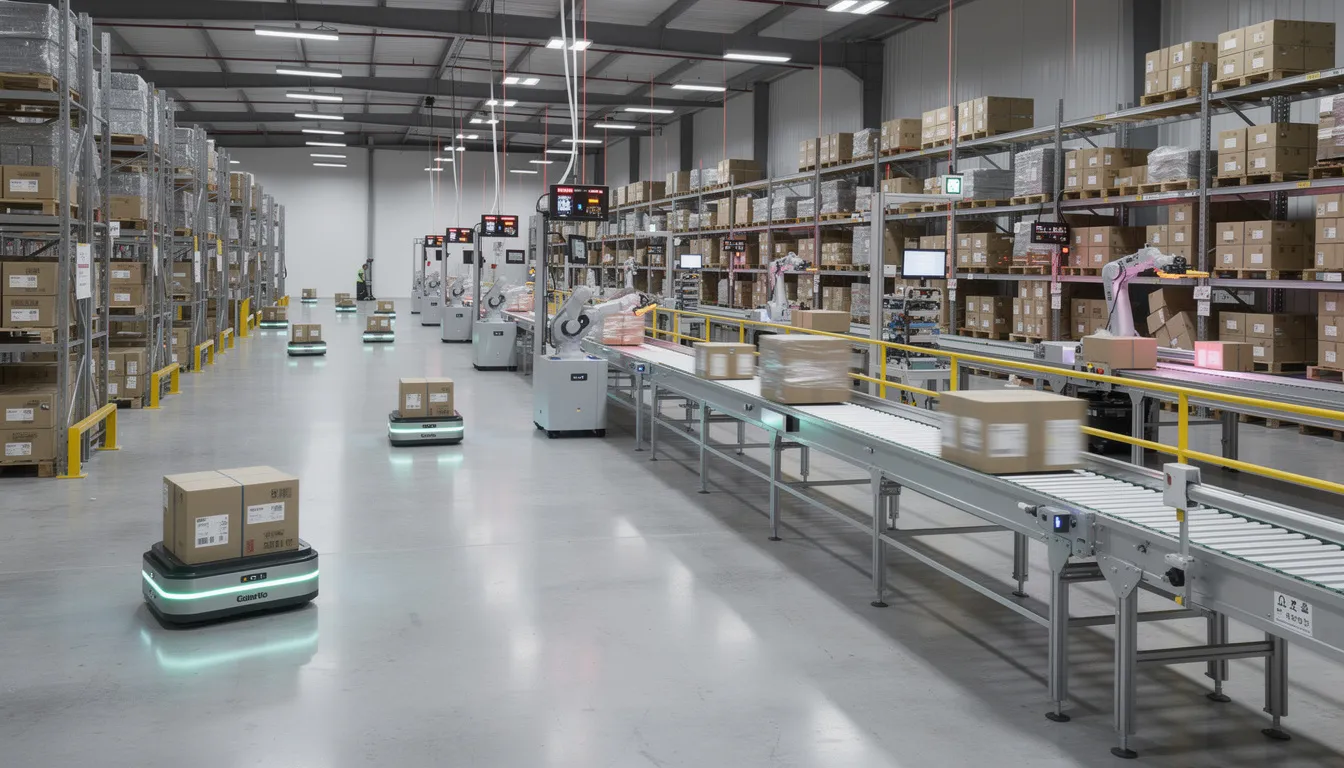
AI demand-forecasting integrates historical sales, weather, economic data, and promotional calendars to reduce stockouts and overstock by 10-15% while cutting costs 5-10%.
Route-optimization tools analyze live traffic for 10-20% fuel and delivery savings. Firms like UPS report 7-10% efficiency gains from real-time AI routing.
In manufacturing:
Computer vision on production lines achieves 95% accuracy in defect detection
Predictive maintenance models schedule repairs before breakdowns, avoiding costly downtime
These tools typically start as pilots on a single plant or region, then scale globally after measurable ROI. A 5-10% cost reduction or fewer delays makes the business case clear.
HR, Talent, and People Analytics
AI is transforming recruitment:
Screening large applicant pools automatically
Matching candidates to roles based on skills (reducing time-to-hire by 30-50%)
Scheduling interviews without human coordination
HR self-service chatbots:
Answer policy questions
Guide benefits selection
Collect anonymous feedback
People analytics models flag burnout risk or attrition signals based on workload, engagement surveys, and collaboration patterns-though strong privacy controls are essential.
A notable 2024-2026 trend: 77% of businesses prioritize reskilling, responding to employee demand for formal training rather than ad hoc experimentation.
Fairness concerns persist. Biased screening models and lack of transparency draw regulatory scrutiny around algorithmic hiring. Employers must address these proactively.
Sales, Marketing, and Product
AI personalizes outbound marketing campaigns by:
Predicting which leads are most likely to convert
Determining which messages or channels to use
Revenue lifts of 5-15% are common.
E-commerce recommendation engines:
Increase average order value by 10-20% through real-time product suggestions
Generative AI:
Drafts ad copy variations
Generates product images
Summarizes customer reviews into actionable insights
These 2024-2025 tools often plug directly into CRMs, email platforms, and content management systems-minimizing change-management friction.
The upside:
Faster iteration
Revenue lift
New opportunities for creative work
The downside:
Brand risk from off-brand or inaccurate AI content
Human oversight remains essential
IT, Data, and Cybersecurity
AI in IT operations means:
Anomaly detection triaging logs and alerts
Automatic remediation suggestions (speeding resolutions by 40%)
Code assistants accelerating cloud migrations and documentation
Security models:
Scan network traffic and user behavior with 20-30% lower false-positive rates
In a typical 2024 scenario:
A security team uses AI to correlate phishing attempts with endpoint logs and auto-isolate compromised devices
IT acts as both user and gatekeeper-responsible for selecting, integrating, and governing AI tools used across the enterprise.
Finance and Strategic Decision-Making
AI automates:
Invoice processing and expense classification with 80-90% accuracy, freeing staff for higher-value analysis
Predictive models:
Forecast cash flow, credit risk, and scenario outcomes for budgeting and capital allocation
Anomaly detection:
Flags fraud early-catching card scams and invoice fraud to reduce losses by 15-25%
Finance teams often demand:
Clear model documentation
Backtests
Explainability before trusting AI outputs
Mini-case: A mid-size retailer uses AI for seasonal inventory and pricing optimization, achieving a 10% margin uplift during peak periods.
Employees, Skills, and the New Division of Labor
Around 40% of global jobs have high AI exposure, varying by sector, role, and country. Two-thirds of U.S. and European jobs face some exposure, with 25% at higher risk.
AI changes which skills are scarce and valuable:
Gaining weight: Cognitive, creative, and interpersonal skills
Losing weight: Routine cognitive tasks
Workers with AI skills command wage premiums of up to 15% in some labor market segments. PwC’s barometer shows wages rising twice as fast in AI-exposed industries.
Generational dynamics matter too. Millennials (mid-30s to mid-40s) often act as AI champions internally-answering questions, piloting new technologies, and coaching peers.
Continuous learning and on-the-job experimentation are becoming core parts of career resilience. By 2030, 59% of the workforce needs skill changes, according to World Economic Forum data.
Who Is Most at Risk, and Who Gains?
Most at risk:
Low-skill, routine roles (admin support, basic data entry)
Entry-level positions that traditionally served as “first jobs”
About 28% of jobs at high risk per OECD estimates
Young workers may be hit hardest as AI reduces demand for basic, repetitive routine tasks. Goldman Sachs forecasts a potential 0.5% unemployment spike during the transition period.
Who gains:
Hybrid roles: data-literate marketers, clinicians comfortable with diagnostic AI, project managers who can orchestrate AI tools
Those who invest in AI skills and domain expertise
Workers in industries investing heavily in reskilling
Regional differences matter. Advanced economies face more dislocation than emerging markets, but policy and education investments can shape outcomes significantly.
The reality is neutral-neither techno-doom nor blind optimism captures it. Both dislocation and opportunity are real.
The New Skill Stack for AI-Era Workers
Three main buckets define the new skill stack:
Bucket | What It Means | Example |
|---|---|---|
AI literacy and prompt design | Understanding how tools work and fail | Weekly practice with chatbots, prompt engineering |
Domain expertise and critical thinking | Deep industry knowledge humans still own | A lawyer using AI for first drafts but refining arguments |
Collaboration on AI outputs | Working with others around AI-generated content | A teacher personalizing practice problems via AI |
Lifelong learning tools are becoming standard:
Microcredentials and MOOCs
Internal bootcamps and company-sponsored courses
Project-based learning curricula
Education systems are slowly adapting toward problem-solving and digital skills, but often lag behind industry needs. By 2030, workers can expect multiple reskilling cycles over a career.
Practical advice: Set a concrete learning goal for the next 6-12 months-like automating one recurring task or becoming the AI point person for your team.

Leadership, Strategy, and Organizational Readiness
Here’s the uncomfortable reality: over 90% of executives plan AI investment increases, but only around 1% claim their organizations are truly AI-mature.
Leaders systematically underestimate employee AI use. Staff often experiment with tools under the radar, creating shadow AI and governance blind spots. Meanwhile, 31% of organizations are in developing stages and 22% are expanding-indicating widespread immaturity despite the hype.
Effective AI strategy requires aligning:
Business goals
Data assets
Talent capabilities
Risk appetite
Not just buying tools.
A simple AI lifecycle:
Define objectives
Assess capabilities
Build data strategy
Run pilots
Scale what works
Continuously govern and refine
Business leaders need to act in the next 12-24 months as employees grant permission for bolder moves.
Setting Goals and Choosing the Right Use Cases
Start from business outcomes, not “adopt AI everywhere.”
Good goals:
Reduce churn by 5%
Cut processing time by 30%
Improve first-call resolution by 20%
Prioritize use cases that combine:
Clear ROI potential
Available data
Manageable risk
Strong internal champions
Mix quick wins (document summarization for legal teams) with bolder bets (AI-powered predictive maintenance across manufacturing plants).
Involve end users in design so tools match real existing workflows and don’t become shelfware.
Example phased rollout:
Pilot AI summarization in one country’s legal function
Measure time savings
Scale based on metrics like 10% efficiency gains
Data, Infrastructure, and Governance Foundations
Successful AI projects rely on clean, accessible data with clear ownership-not just powerful models.
Basic data governance includes:
Standards for quality, privacy, access controls, and retention
Clear roles for data owners and stewards
Documentation of data lineage
Infrastructure options:
Cloud platforms with managed AI services
On-premises for sensitive workloads
Edge computing for real-time industrial use cases
AI governance framework essentials:
Policies on acceptable use
Human oversight requirements
Documentation standards
Incident response for model failures
Governance enables faster, safer scaling rather than being a brake on innovation.
Training, Change Management, and Employee Trust
Evidence shows that nearly half of employees report insufficient AI training, while over 20% receive little to no support despite strong demand.
What works:
Role-specific training (“AI for sales managers,” “AI for nurses”)
Transparent communication about job impacts and reskilling options
Clear ethical guidelines
Leveraging millennial managers and early adopters as internal AI champions
Regular, low-noise updates help employees stay informed without burnout. A weekly AI digest beats constant hype emails every time-allowing people to focus on work rather than FOMO.
Risks, Regulation, and Responsible AI at Work
The central tension is clear: leaders feel pressure to move fast to capture AI value, but employees worry about cybersecurity, accuracy, privacy, and fairness.
Key risk categories:
Category | Examples |
|---|---|
Technical | Hallucinations, bias, accuracy issues |
Operational | Over-reliance, error cascades |
Legal/Compliance | Data leaks, IP issues |
Social | Job displacement, morale impacts |
Employees often trust their own employers more than governments or distant tech companies to deploy AI safely. This raises the bar on corporate responsibility.
The goal is risk management, not risk elimination-supported by benchmarks, audits, and clear accountability.
Practical Risk Management for Generative and Agentic AI
Start with a basic AI risk assessment:
Map sensitive data involved in each use case
Identify high-impact decisions AI systems might influence
Review applicable regulations
External benchmarks and evaluations (academic or industry benchmarks for robustness, safety, and bias) should be part of vendor selection and model validation.
Essential safeguards:
Human-in-the-loop checkpoints for high-stakes uses (medical, legal, credit decisions)
Clear escalation paths when AI outputs conflict with human judgment
Red-teaming to stress-test AI systems
Prompt and output filters
Access logging
Periodic audits of model performance and drift
Focus on workplace practicality over abstract ethical theory. Implementation should be straightforward.
Global Regulatory Trends and What They Mean at the Office
Different regions are experimenting with distinct regulatory approaches:
Region | Approach |
|---|---|
EU | Strong transparency, data protection requirements (model cards, privacy notices) |
U.S. | Lighter regulatory touch |
India, Singapore | Experimental, sandbox approaches |
Rules around transparency, documentation, and data protection filter into everyday practices like model cards, privacy notices, and vendor contracts.
Some sectors-finance, healthcare, public sector, defense-face stricter expectations and slower approval cycles for AI deployments.
Practical advice for companies: Track relevant regulatory development through focused, periodic updates rather than reacting to every headline. The implications for managers and employees center on training, documentation workload, and audit preparedness.
The Road Ahead: Scenarios for AI and Work by 2030
What might 2030 look like? Here are plausible workplace snapshots:
Optimistic scenario:
Broad augmentation and upskilling dominate
Most workers use AI as thought partners
Organizations invest heavily in training
Productivity gains of 15% materialize across developed markets
Reskilling (prioritized by 77% of firms) prevents mass displacement
Mixed scenario:
Polarized outcomes emerge
About 40% workforce reduction occurs in automatable areas
Hybrid workers with AI skills command significant wage premiums
The gap between AI-fluent and AI-limited workers widens
Healthcare snapshot:
AI triage augments nurses by 20-30%
Improves patient prioritization while keeping human expertise central to diagnosis and care decisions
The AI revolution enhances rather than replaces clinical judgment
These scenarios aren’t predictions-they’re shaped by choices leaders and policymakers make in the 2025-2030 window. Investment in training, safety, and innovation ecosystems matters enormously.
Information overload is a real risk. Leaders who consume curated, weekly signals instead of daily noise will be better positioned to make thoughtful AI bets.
Here’s the pragmatic optimism: AI can expand human agency at work if paired with governance, education, and sane information diets. The future of work depends on the decisions we make now.

FAQ
This section answers common questions that go beyond the main narrative-from an employee or manager perspective.
Will AI Really Replace My Job, or Just Change It?
Most roles will see certain tasks automated-summarizing reports, drafting emails, handling customer queries-while human work shifts toward judgment, creativity, and relationship-building.
Some routine, entry-level positions face higher risk of full automation, which increases the importance of upskilling and internal mobility.
Map your own tasks into “highly automatable” vs. “uniquely human” buckets to see where to invest in new skills.
Many organizations now publicly commit to reskilling and redeployment, though quality varies by employer and country.
How Can I Start Using AI at Work Safely and Productively?
Begin with low-risk use cases: drafting emails, summarizing documents, brainstorming ideas. Always review outputs critically.
Follow company policies on data privacy-avoid pasting sensitive client, HR, or financial data into external tools without approval.
Treat AI as a collaborator, not an oracle. Double-check facts, adapt drafts, and keep ultimate responsibility for decisions.
Keep a simple log of tasks where AI saves time or improves quality to build your personal case for further adoption.
What Skills Should I Learn Now to Stay Relevant in an AI-Driven Workplace?
Focus on three key areas:
Basic AI literacy (how tools work and fail)
Domain depth (industry-specific expertise)
Soft skills (communication, leadership, problem-framing)
Practical actions: take an introductory data science or AI course, experiment with a mainstream chatbot weekly, join internal pilots or communities of practice.
Skills like critical thinking, storytelling with data, and cross-functional collaboration are becoming more valuable, not less.
Set a concrete learning goal for the next 6-12 months.
How Should Leaders Keep Up with AI Developments Without Drowning in Noise?
Shift from daily, hype-heavy feeds to curated weekly or biweekly updates that focus on meaningful, high-impact changes for business and work.
Assign one or two internal AI scouts to synthesize key news, tools, and case studies into short digests for leadership.
Combine external signals with internal data: pilot results, productivity metrics, employee feedback on AI tools.
Disciplined information diets help leaders make calmer, more strategic AI decisions instead of reacting to every viral demo.
What Ethical Questions Should We Ask Before Rolling Out a New AI Tool at Work?
Use this quick checklist:
Which data does the tool use?
Who is affected by its mistakes?
How will we monitor bias and errors?
Who is accountable when it fails?
Involve multiple perspectives-legal, security, HR, end users-in evaluation, not just IT or procurement.
Pilot tools with clear opt-in, feedback channels, and options for humans to override or appeal AI-driven decisions.
Document these considerations so employees see that your organization treats AI deployment as a serious responsibility, not just a tech upgrade.