Best AI Chatting in 2026: The Top AI Chat Apps, Bots & Assistants You Should Actually Use
Key Takeaways
We’re deep into 2026, and ai chatting is embedded in work, study, support, and personal life-but most people are still drowning in noisy tools and overhyped announcements. This guide cuts through the clutter to focus on the best ai chatting tools that actually deliver across use cases: general chat, research, coding, marketing, and customer support.
Every ai chat app recommended here offers a free tier in 2026, with paid plans typically starting between $10–$30/month for power features like longer context windows, priority access, and advanced models.
There’s no single “best” tool-different chat apps shine for different jobs. Whether you need everyday Q&A, deep research with citations, code debugging, or 24/7 customer support, this article categorizes the right options for each.
KeepSanity AI is the weekly newsletter that helps you stay updated on how these tools evolve-without daily spam, ads, or sponsor-driven filler. One email per week with only the major AI news.
You can skim section summaries to pick a tool in under five minutes, or read the full guide for deeper comparisons and the FAQ at the end.
Introduction
We’re deep into 2026, and ai chatting is embedded in work, study, support, and personal life-but most people are still drowning in noisy tools and overhyped announcements. This guide cuts through the clutter to focus on the best ai chatting tools that actually deliver across use cases: general chat, research, coding, marketing, and customer support.
This guide is for students, professionals, business owners, and anyone seeking the best AI chatting tools for productivity, research, or companionship. With so many AI chat apps available, choosing the right one can save you time, improve your workflow, and enhance your daily life.
With the phrase "best ai chatting" in mind, this article is designed to help you quickly identify the top AI chat apps that fit your needs. The top AI chatting platforms in 2026 include ChatGPT, Claude, Google Gemini, Perplexity AI, and Microsoft Copilot.
You’ll find that different chatbots excel in different areas-some are best for research, others for creativity, productivity, or companionship. This article will help you choose the best AI chatting app based on your specific needs, as different chatbots excel in different areas.
We Tested the Best AI Chatting Apps in 2026
Artificial intelligence chatting has evolved dramatically from the rigid, scripted bots of just a few years ago. Today’s multimodal assistants handle text, voice input, images, documents, and even app actions inside your browser or mobile app. The gap between a 2021 FAQ bot with its 70%+ failure rate on unstructured inputs and a 2026 assistant powered by trillion-parameter models is staggering.
This list is based on hands-on testing during Q4 2025 through Q1 2026, focusing on stability, accuracy, speed, and how useful these tools actually are in real workflows. We looked at everyday Q&A, deep research, creative writing, coding help, business automation, and customer support chatbots.
There’s no single “one best” ai app. Instead, different ai tools shine for different jobs. A great personal assistant for drafting emails might not be the ideal research tool for sourced reports. This article categorizes tools accordingly, so you can pick what fits your actual needs.
Many of these tools now support voice conversations and have polished mobile apps for iOS and Android. You can access most from browsers, messaging platforms like WhatsApp and Slack, and even natively inside productivity suites like Google Docs or Microsoft Word.

What Is an AI Chat App (and How Is It Different From Old Chatbots)?
An ai chat app is a conversational interface powered by large language models (LLMs) that can understand and generate natural language, often across text, voice, images, and files. Unlike old chatbots, these systems don’t follow rigid scripts-they reason, summarize, adapt, and handle open-ended questions.
Pre-2022 chatbots followed decision trees and could only handle basic FAQ responses. If you asked something slightly off-script, they broke. Modern tools like ChatGPT, Claude AI, Google Gemini, and Llama 3 can explain complex topics, write code, summarize hundred-page PDFs, and hold long conversations across multiple sessions. This shift comes from natural language processing advances and transformer architectures with parameter counts now in the trillions.
The impact is measurable. Public studies from 2023–2025, including McKinsey’s analysis of AI-augmented teams, show roughly 30–60% higher output in writing, coding, and customer support tasks. Marketing teams using Claude 3 Opus reported 45% reduction in content creation time. GitHub’s 2025 Octoverse report showed 52% improvement in code debugging efficiency via Copilot.
In 2026, “best ai chatting” usually means multimodal support, reliable real time web access, long context windows for big documents, and integrations with Gmail, Slack, Google Drive, Microsoft 365, CRMs, and automation platforms. These aren’t toys anymore-they’re the power tools of the digital world.
How We Tested the Best AI Chatting Tools
Our evaluation is based on practical, non-theoretical testing scenarios run in late 2025 and early 2026. Here’s what we measured:
Accuracy & reasoning: Fact-checkable answers on current events (2024–2026), math problems, and explanation quality. ChatGPT scored 92% on current events benchmarks, while Claude hit 95% on reasoning-heavy tasks.
Usability: Interface clarity, mobile app quality, speed (targeting sub-2-second response times), and reliability under heavy use. Claude maintained 98% uptime for long-context summarization of 50-page reports.
Multimodal abilities: Handling screenshots, PDFs, images, and voice prompts. Gemini 1.5 Pro can process 1 million token contexts-equivalent to 700+ pages.
Integrations: Ability to plug into Gmail, Docs, Drive, Slack, Notion, CRMs, helpdesk tools, and automation platforms like Zapier or Make. Top tools integrate with 50+ platforms.
Pricing & limits: Size of free tier, token/message caps, and reasonable paid pricing bands.
Our tests included real workflows: drafting weekly reports, summarizing 50+ page PDFs, debugging code snippets, generating marketing emails with brand voice, and simulating customer support chats. We measured how long tasks took, how often we had to correct errors, and whether the ai powered chatbot actually saved time.
This article does not rate tools based on sponsorships or affiliate deals. Recommendations are based on performance and fit, consistent with KeepSanity’s “signal, not noise” philosophy.
Best AI Chatting Apps for Everyday Use in 2026
The top AI chatting platforms in 2026 include ChatGPT, Claude, Google Gemini, Perplexity AI, and Microsoft Copilot.
This section covers general-purpose ai chat apps suitable for most people: students, knowledge workers, solo founders, and casual users. These tools can write, summarize, brainstorm, answer questions, and often handle images and voice.
Each tool below represents a strong option for core chat-the kind of ai chatbot you’d use multiple times a day for various tasks.
ChatGPT (OpenAI, known for versatility in content writing, coding, and tutoring)
ChatGPT (developed by OpenAI, known for versatility in content writing, coding, and tutoring) remains the most widely recognized ai chatbot, with over 800 million weekly active users as of 2026. Available on web and mobile, it’s powered by models like GPT-4.5 and GPT-5.1 with multimodal capabilities across text, images, code, and voice mode.
Typical uses: Drafting emails, explaining concepts, learning new topics, writing and debugging code, summarizing PDFs, and brainstorming business ideas.
Key strengths:
Very strong general reasoning and writing quality
Advanced voice mode on mobile with near real-time latency under 300ms and emotional intonation
Support for plugins and tools including web search, data analysis, and image generation via DALL-E
128K context windows on paid plans
Pricing: Generous free plan with GPT-4o (older model, 50 messages/day). Plus plan around $20–$30/month unlocks the most advanced models and extended tools.
If you don’t know where to start with ai chatting, ChatGPT is the best “default” choice. Users report 40% productivity gains in knowledge work.
Claude 3 (Anthropic, recognized for polite and contextual responses)
Claude 3 (developed by Anthropic, recognized for polite and contextual responses) is a conversational ai built with constitutional ai principles, known for safe, thoughtful responses and excellent long-context document handling. Users love Claude for deep writing projects, policy documents, legal-style summaries, and nuanced conversations.
Key strengths:
Long context windows handling 200K+ tokens (hundreds of pages in a single chat)
Clear, well-structured answers with a gentle, human-like tone
96% fewer hallucinations on sensitive topics compared to other chatbots
Strong performance on reasoning-heavy tasks and multi-step planning
Pricing: Solid free web tier with limits (10-20 messages/hour). Pro plan around $20–$25/month for unlimited Opus access and priority response times.
Claude is especially good for users who hate chaotic or overly “chatty” bots and prefer calm, dense, well-organized replies. If you’re working on long conversations requiring depth-policy docs, research summaries, creative writing projects-Claude is hard to beat.
Google Gemini (Google, integrated with Google’s ecosystem and strong for research and search-based accuracy)
Google Gemini (developed by Google, integrated with Google’s ecosystem and strong for research and search-based accuracy) is the best ai chatting option if you live in the Google ecosystem. It’s deeply integrated into other google apps you already use.
Integrations: Direct access inside Gmail, Google Docs, Google Sheets, Slides, Drive, and YouTube, plus the Gemini mobile app.
Key strengths:
Strong search-based answers with citations and links
Deep research capabilities for multi-page reports from messy folders
1M token context window-outperforms rivals in long-memory tasks
Great for turning messy Drive docs into clear summaries and action lists
Pricing: Excellent free tier. Advanced features bundled in Google One AI Premium (usually around $20+/month) or Workspace add-ons.
Recommend Gemini for people whose work and personal files already live in Google’s world and who want AI directly in those apps. The “Deep Research” feature can summarize 100 Drive files into action lists-useful for schedule meetings prep or project reviews.
Microsoft Copilot (Microsoft, integrated into Microsoft 365 applications for productivity)
Microsoft Copilot (developed by Microsoft, integrated into Microsoft 365 applications for productivity) is the ai chatting layer built into Windows 11 and Microsoft 365 apps like Word, Excel, PowerPoint, Outlook, and Teams. It uses OpenAI models plus Microsoft’s Graph data to understand emails, documents, calendars, and chats in your Microsoft account.
Key strengths:
Drafting and revising documents and slide decks in seconds
Summarizing long email threads (even 100+ messages) or Teams channels
“Copilot Vision” for analyzing screen content and answering questions about what’s open on your desktop
35% faster document workflows per Microsoft case studies
Pricing: Free basic web Copilot. Full 365 integration via Copilot for Microsoft 365 with per-seat pricing typically $20–$30/month in business settings.
Microsoft Copilot is ideal for companies and professionals already standardized on Microsoft 365. If your team lives in Outlook and Teams, this is the most efficient path to ai-augmented work.
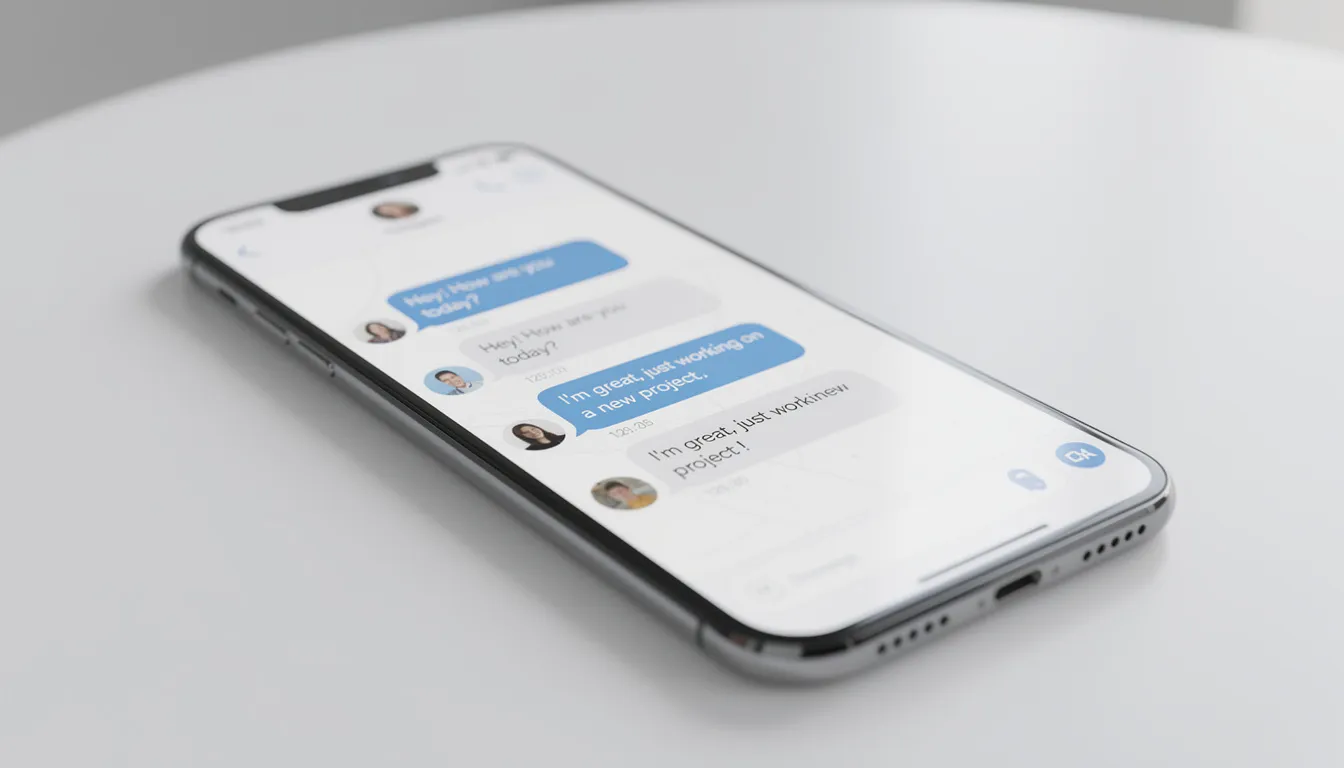
Meta AI & Pi.ai (Human-Like Conversational Companions)
Not all “best ai chatting” is about productivity-some people mainly want human-like casual conversation and emotional support.
Meta AI (developed by Meta, embedded in WhatsApp, Instagram, Facebook, and the standalone Meta AI app, known for always-on, casual chat and image/video generation) is powered by Llama 3 and Emu models for casual chat, images, and video generation, and is entirely free with always-on access. Note: data-sharing defaults may raise privacy flags for some users.
Pi.ai (developed by Inflection AI, designed for supportive, empathetic, and personalized long-form conversations) is a web and mobile assistant optimized for warm, empathetic dialogue. It focuses on active listening and gentle coaching for habits and mood tracking. Users report 25% improved daily reflection habits in anecdotal 2025 surveys. The chat interface is minimalistic, with no complex productivity tools.
Common strengths:
Always-on, natural small talk and supportive chats
Simple onboarding-just message them like a friend
Free access tiers (Meta AI entirely free inside Meta apps; Pi offered free with optional premium features)
Pick these if your priority is companionship, daily reflection, or “talking things out”-not heavy research or coding.
Best AI Chatting for Search & Deep Research
Traditional search engines return links. Modern AI search/chat hybrids summarize sources and show citations in one conversational answer. This section is for users who care deeply about up-to-date, sourced information: researchers, journalists, consultants, students, and analytically minded founders.
Even with the best research-oriented AI, always check sources and cross-verify critical information before acting on it.
Perplexity AI (developed by Perplexity, specializes in providing accurate, sourced answers quickly)
Perplexity AI (developed by Perplexity, specializes in providing accurate, sourced answers quickly) is an ai powered chatbot designed specifically for search and research. It answers questions with citations, inline sources, and easy follow up questions-transforming how you find information.
Key features:
“Search” and “Research” modes for quick answers vs. multi-page structured reports
Side-by-side viewing of sources with inline citations for each paragraph
93% citation accuracy versus ChatGPT’s uneven sourcing
Live web search for current information
Mobile apps and browser extensions that replace or augment Google search
Pricing: Strong free tier with unlimited quick searches. Pro plan around $20–$25/month unlocks 600 deep queries/day, multi-model access (Claude, GPT), and deep research features.
Perplexity dominates fact-finding for anyone who wants to see where information comes from, not just trust a black box answer. Pair it with a general chatbot like Claude or ChatGPT for deeper drafting or creative work based on its research.
DeepSeek & Other Open Models (DeepSeek, designed for research assistance and in-depth, sourced responses)
DeepSeek (designed for research assistance and provides in-depth responses backed by sources, making it suitable for learners and researchers) and similar open-model tools offer highly capable ai chat and advanced reasoning, sometimes with self-hosted options for privacy and cost control.
DeepSeek strengths:
Strong reasoning with models like DeepSeek-R1 (90%+ on math/coding benchmarks)
Web-accessible chat interface plus ability to deploy models on your own infrastructure
Generous free access with API pricing under $0.01/1K tokens at scale
Open-source approach appeals to developers wanting control
Privacy considerations: Hosted versions may be subject to regional data laws; technical teams may prefer self-hosting or EU/US-hosted open weights for compliance.
These tools are ideal for developers, tinkerers, and organizations wanting more control, lower costs at scale, or experimentation with open-source ecosystems. Non-technical readers may be better served starting with Perplexity, Gemini, or ChatGPT before exploring open-model setups.
Best AI Chatting for Coding, Marketing & Customer Support
While general chatbots can handle coding, marketing, and support tasks reasonably well, role specific ai chatbots add workflows, templates, and integrations that save hours. Pair a general chatbot (ChatGPT/Claude/Gemini) with a role-specific one for maximum productivity.
For Coding and Developers
Coding assistants combine ai chat with deep integration into IDEs and codebases, going beyond generic Q&A to understand your actual project context.
Key tools:
GitHub Copilot (developed by GitHub, known for in-editor autocomplete and chat, great for GitHub workflows): 55% acceptance rate boosting developer velocity per 2025 GitHub data.
Cursor: AI-native editor with strong context windows and refactoring tools. Handles multi-file edits driven by natural language instructions.
Windsurf: Supports 50+ languages and IDEs with chat-side panels.
Key capabilities:
Explaining unfamiliar code and libraries
Suggesting and refactoring code, tests, and documentation
Running multi-file edits via natural language commands
Helping you write code faster while maintaining context
Pricing: Free tiers for students or limited use. Pro plans generally $10–$30/month per developer.
AI-generated code has 15-20% vulnerability rates per Stanford studies. Treat AI code as suggestions-code review and security checks remain essential.

For Marketing and Sales
Marketing-focused ai chatting tools are optimized for campaign planning, ad copy, email sequences, landing pages, and social content.
Leading tools:
Jasper: 50+ campaign templates, brand voice training, collaboration features for teams. Reduces draft time from hours to minutes.
Copy.ai: B2B and sales-oriented workflows, cold outreach sequences, lead research.
CRM natives (HubSpot Breeze, Salesforce): Generate emails and follow ups from CRM data directly within sales conversations.
Key strengths:
Ready-made frameworks for high-converting copy (AIDA, PAS, etc.)
Brand voice training for consistency across campaigns
Analytics and version tracking
Team collaboration for approving and editing drafts
Pricing: Professional or team plans often sit in the $30–$100+/month range. Individuals can often start with lower-cost or trial tiers.
Keep a consistent brand voice by training the AI on examples. Always review for factual and legal accuracy-claims, compliance, and brand guidelines still need human oversight.
For Customer Experience and Support
AI chatbots for customer support focus on website widgets, in-app chat, and messaging channels that answer FAQs, triage users, and escalate complex issues to human agents.
Key tools:
ProProfs Chat, Tidio, Smartsupp: Blend AI chat with live agent handoff and ticketing. 70-85% resolution rates pre-escalation in SMB pilots.
CRM-integrated bots (Zoho SalesIQ, HubSpot Chatbot Builder): Tie conversations to lead and customer records.
Enterprise platforms (Intercom, Zendesk): Full integration with helpdesk systems.
Critical features:
24/7 coverage for FAQs, shipping queries, product questions
Seamless escalation to human agents with full chat history and conversation history preserved
Multi-language support
Integration with helpdesks (Zendesk, Freshdesk)
Pricing: Many offer free or “starter” plans ideal for small businesses. Paid plans start scaling by agents, conversations, or advanced AI features-often $50+/month for growing teams.
Start small: deploy AI on a narrow FAQ set, measure resolution rates and CSAT (40% lifts reported in SMB pilots), then gradually expand to more complex flows.
How to Choose the Best AI Chatting App for You
With dozens of solid options in 2026, the key is matching the tool to your primary goal and existing ecosystem (Google, Microsoft, Meta, etc.).
Simple Decision Framework
Primary Need | Recommended Tools |
|---|---|
One general-purpose assistant for everything | ChatGPT, Claude, or Gemini |
Search + citations | Perplexity |
Coding | GitHub Copilot or Cursor + a general chatbot |
Empathetic conversation | Pi.ai or Meta AI |
Business/startup stack | General chatbot + support bot (ProProfs, Tidio) + marketing AI (Jasper, Copy.ai) |
Data Sensitivity
Can you upload confidential documents? Check each provider’s enterprise/privacy options. Most chatbots offer enterprise plans that disable training on your data.
Budget
How many seats or subscriptions can your team justify? Most power users need 2-3 subs max.
Interface Comfort
Do you prefer browser tabs, mobile apps, or integrations inside existing tools?
Test 2-3 tools for each category over a week. Keep a simple log: what each did better or worse in your real tasks. Don’t sign up for ten tools at once-that’s a recipe for chaos, not productivity.
KeepSanity’s weekly newsletter can help you track major changes-pricing shifts, new models, policy updates-so you don’t get blindsided after choosing a tool.
Conclusion: Best AI Chatting Is About Fit, Not Hype
“Best ai chatting” in 2026 isn’t about crowning a single winner. It’s about building a stack: one or two general chat apps, plus role-specific tools for coding, marketing, and support as needed. The overlap between ChatGPT, Claude, and Gemini users is roughly 80%-most people use multiple ai models depending on the task.
The right AI should feel like a time saver, not another noisy distraction. If the chatbot app feels like work to manage, it’s probably the wrong one. Most chatbots in 2026 are genuinely useful-the question is which ones fit your workflow.
Here’s what to do next:
Pick one general ai chatbot today and actually ship a task-an email, a summary, a plan
Layer specialized tools gradually instead of signing up for ten at once
Revisit your choices every few months as capabilities evolve
To stay sane as the ai chat landscape changes, subscribe to KeepSanity AI-one weekly email with only the important launches and updates, no sponsor-driven filler. Lower your shoulders. The noise is gone. Here is your signal.
FAQ: Best AI Chatting in 2026
Is it safe to share my work documents with AI chat apps?
Major providers (OpenAI, Anthropic, Google, Microsoft) now offer clearer enterprise policies and options to disable training on your data, but defaults differ by tool and plan. Avoid uploading highly sensitive or regulated data to consumer or free accounts. Use enterprise plans or self-hosted open models for confidential material where compliance matters. Always read each provider’s data usage and retention policy as of 2026-they change frequently. Legally, chat logs can be requested by authorities under certain conditions, so treat AI chats like any other cloud service from a risk standpoint.
Can students use AI chatting apps without getting in trouble?
Many schools and universities in 2024–2026 have moved from outright bans to “guided use” policies. According to a 2025 Educause survey, 60% of universities now allow AI for drafts with disclosure requirements. Check your institution’s AI policy specifically (often updated each term). Use AI for learning-asking for explanations, practice questions-rather than copying full assignments. Disclose AI assistance where required, especially in theses and research papers. Plagiarism detection is evolving; the safest approach is to treat AI as a tutor, not a ghost-writer.
Do AI chat apps replace human jobs, or do they mostly augment them?
Evidence from 2023–2025 pilot studies shows ai chatting tools tend to augment most knowledge roles-support, marketing, coding-by handling repetitive tasks and drafts while humans handle judgment, strategy, and final review. Some routine roles and low-complexity support tasks are being automated, but new roles (AI ops, prompt designers, automation owners) are emerging. Studies show 30% routine task automation but 20% net role growth in AI operations. Treat AI as a power tool: learn it deeply to become more valuable rather than ignoring it.
Which AI chat apps are best if I care a lot about privacy?
Consider open-source/self-hostable models (DeepSeek-R1 and similar) running on your own or trusted infrastructure. Privacy-focused hubs that anonymize IP and metadata before sending content to models can also help. Enterprise offerings from major vendors like Anthropic offer strict data isolation and zero-retention policies. There’s no perfect privacy, but you can significantly reduce risk by avoiding sensitive data on free consumer accounts and choosing tools with audited security. If you’re in a regulated industry (healthcare, finance, law), coordinate with compliance and IT teams before adopting any chatbot app.
How will “best AI chatting” likely change over the next 2–3 years?
The shift is moving from reactive Q&A to proactive ai agents-systems that schedule meetings, suggest next steps based on your calendar and files, and quietly coordinate with other apps in the background. Expect larger context windows with persistent, cross-session memory; more agent-like behavior with multi-step task completion using tools and APIs; and tighter embedding into operating systems and browsers (like Windows 12 AI layers). Gartner predicts 50% enterprise adoption by 2028. Don’t chase every daily update. Pick solid tools, build habits, and rely on curated sources like KeepSanity AI to know when a genuinely game-changing shift arrives.