Living Artificial Intelligence: How “Living Intelligence” Will Transform the 2030s
Key Takeaways
Living artificial intelligence merges AI models, advanced sensors, and biotechnology into systems that sense, learn, adapt, and evolve continuously-behaving more like organisms than static software.
Near-term deployments (2025–2030) include continuous health monitoring wearables reducing severe diabetic events by 40%, adaptive hospital workflows cutting false alarms by 30%, and precision agriculture slashing chemical use by 77%.
This represents the next S-curve beyond today’s LLM boom: persistent sensing, real-time feedback loops, personalization at the biological level, and systems that change autonomously without waiting for human prompts.
Organizations entering early will build data moats and ecosystem advantages that late movers cannot easily replicate.
KeepSanity AI delivers one weekly, no-ads update covering only the major milestones in living intelligence, so teams at companies like Adobe and Bards.ai can track breakthroughs without drowning in daily hype.
Introduction: Who Should Care About Living Artificial Intelligence-and Why
This article is designed for business leaders, technologists, healthcare professionals, and anyone responsible for strategic decision-making in industries facing rapid technological change. Understanding living artificial intelligence is crucial for these audiences because it represents a paradigm shift in how organizations operate, deliver value, and manage risk in the coming decade.
Living artificial intelligence is not just a buzzword-it's a transformative approach that will redefine how we interact with technology, manage health, optimize operations, and respond to real-world challenges. This page will explain what living artificial intelligence is, why it matters, and how it will transform the 2030s.
In this article, you’ll find a clear definition of living intelligence, real-world use cases, strategic implications for organizations, and a discussion of the ethical considerations that come with these new technologies.
The Transformative Potential and Main Applications of Living Intelligence
Living intelligence refers to the convergence of advanced artificial intelligence algorithms, biotechnology enhancements, and embedded sensor systems to create self-learning, adaptive, and responsive machines. These systems can sense, learn, adapt, and evolve through the use of AI, advanced sensors, and biotechnology.
The transformative potential of living intelligence is vast. It holds the promise to revolutionize healthcare by enabling continuous patient monitoring and personalized treatment, to advance robotics with machines that adapt to their environments, and to enhance environmental monitoring through real-time, autonomous data collection and response. Sectors such as robotics, environmental monitoring, and personalized AI systems are poised for dramatic change as living intelligence becomes mainstream.
What Is “Living Artificial Intelligence” Really About?
Let’s clear up a common misconception right away. Living artificial intelligence is not science fiction. It’s not conscious machines or sentient robots plotting in basements. It’s something far more practical-and far closer than most people realize.
Definition: Living intelligence refers to the convergence of advanced artificial intelligence algorithms, biotechnology enhancements, and embedded sensor systems to create self-learning, adaptive, and responsive machines.
Living intelligence systems can sense, learn, adapt, and evolve through the use of AI, advanced sensors, and biotechnology. The convergence of AI, biotechnology, and advanced sensors is essential for the development of living intelligence. These networked computational-biophysical systems are engineered to exhibit lifelike properties: sensing their environment, learning from continuous data streams, adapting behavior in real time, and self-maintaining without constant human intervention. Think of it as infrastructure that behaves more like an organism than a static software deployment.
The technical foundation rests on three pillars:
Pillar | Components | Role |
|---|---|---|
AI Models | Large language models, reinforcement learning agents, foundation models like GPT-4 and Gemini | The “brain” that processes data and makes decisions |
Sensor Networks | Wearables, IoT devices, industrial sensors, satellites, lab-grade biosensors | The “nervous system” gathering real-world data |
Biotechnology | Biocompatible implants, organoids, synthetic biology, nanotechnology | The bridge between silicon and living tissue |
These components combine into closed-loop systems. Sensors feed raw data streams-sometimes a terabyte per day from a single ICU bed. AI processes that data using online learning algorithms that update weights incrementally. Actuators respond based on what the system learns.
What does this look like in practice?
Consider Medtronic’s MiniMed 780G insulin pump. It uses reinforcement learning to anticipate glucose excursions 30 minutes ahead, adjusting basal rates autonomously. Clinical trials show 80% time-in-range improvement. The system doesn’t wait for a doctor’s appointment or a patient’s manual input. It acts continuously, adapting to that specific person’s physiology.
Or take smart greenhouses using Philips LED systems that dynamically modulate light spectra based on plant stress signals captured by hyperspectral cameras. Yields increase by 15% because the system responds to what plants actually need, not what a static schedule dictates.
Even industrial robots like Boston Dynamics’ Spot self-optimize their gait via proprioceptive sensors that detect wear patterns, scheduling oil changes before problems occur.
This is living intelligence in action. Systems that evolve like organisms through homeostasis rather than rigid programming.
From Static AI to Living Intelligence: What Changed After 2022
The generative AI surge that started with ChatGPT’s November 2022 release was extraordinary. OpenAI’s chatbot reached 100 million users in just two months. By 2024, 70% of Fortune 500 companies had adopted AI copilots in tools like Microsoft 365.
But here’s the uncomfortable truth: most of these deployments remain screen-bound and text-based.
You type a prompt. You get an answer. The system forgets you existed. This “stateless” approach means 85% of enterprise AI pilots fail to scale, according to McKinsey’s 2024 surveys. The AI sits in a box, disconnected from the messy, continuous reality of operations, health, and environments.
Three trends since 2022 are pushing AI toward something fundamentally different:
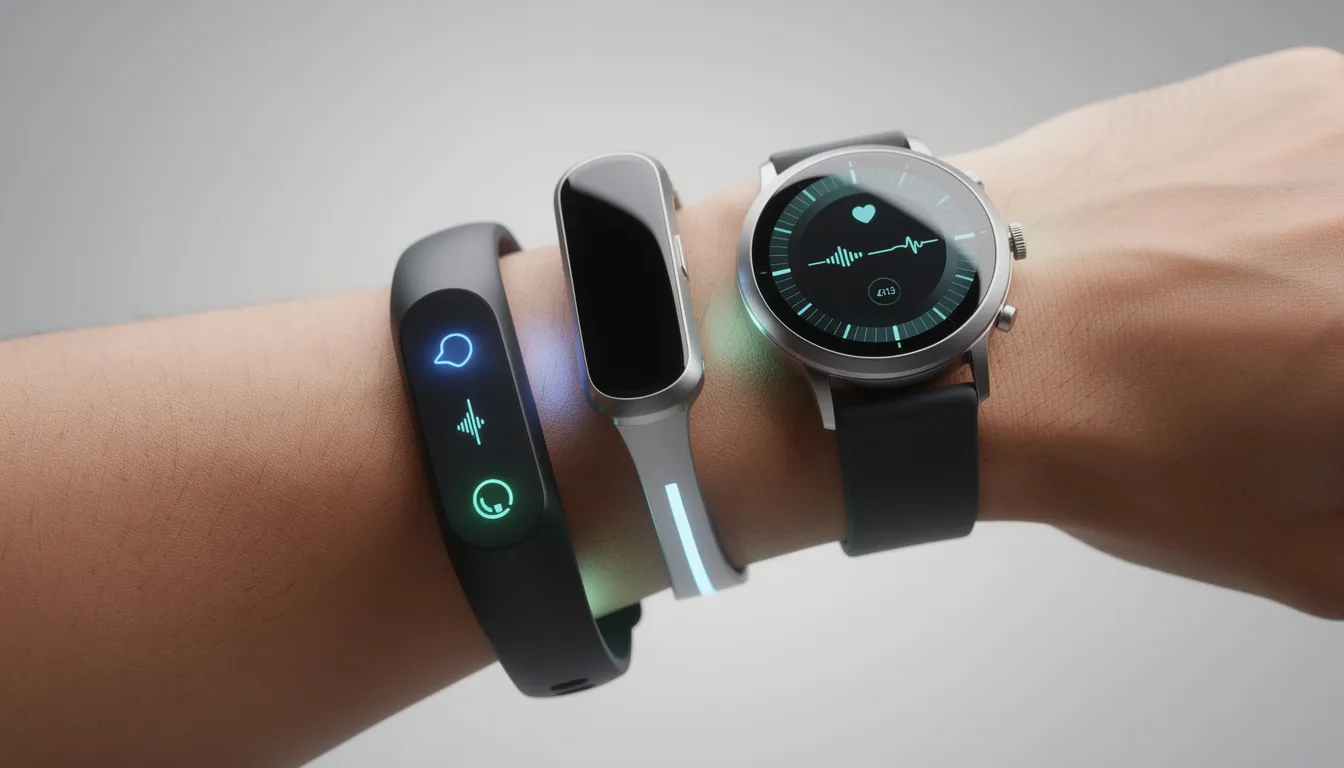
Sensor affordability has exploded. The Apple Watch Series 10 now includes blood pressure monitoring at $399. Continuous glucose monitors like Dexcom G7 have dropped to around $300 per year. Smart patches and wearables shipped 500 million units globally by 2023.
Edge computing has proliferated. NVIDIA’s Jetson Orin processes 275 trillion operations per second for just $500. TinyML models under 1MB can run sophisticated inference on devices that fit in your pocket.
Wet-lab costs have plummeted. Ultima Genomics achieved $100 genome sequencing in 2024. Automation platforms like Benchling cut experiment cycles by 50%. The biological world is becoming as programmable as software.
These shifts birth 24/7 systems that ingest streaming data-1.5 zettabytes annually from biometrics alone, per IDC forecasts-and act without being explicitly queried.
The contrast is stark:
Static AI (2022-2024) | Living Intelligence (2025+) |
|---|---|
Prompt in → answer out | Continuous sensing → autonomous action |
Episodic, stateless interactions | Persistent memory and adaptation |
Screen-bound, text-centric | Embedded in physical environments |
Quarterly analytics | Real-time closed loops |
Historical anchors make this clearer. In 2023, Cortical Labs published research on their “dishBrain” system-800,000 mouse neurons interfaced with silicon, learning to play Pong in 5 minutes versus weeks for traditional reinforcement learning. The FDA cleared IDx-DR for autonomous diabetic retinopathy screening with 90% sensitivity. Wearable shipments hit half a billion units.
This isn’t just another feature upgrade. It’s a new technology supercycle, the same way electricity rewrote every industry a century ago. PwC projects living AI will add $15.7 trillion to global GDP by 2030.
Core Building Blocks of Living Artificial Intelligence
You don’t need to adopt every component at once. Most organizations will enter living intelligence through sensors plus AI analytics-the 90% path per Deloitte’s 2025 projections. Biotechnology integration comes later as regulation and capability mature.
Let’s break down the technical stack powering these systems.
AI Engines: The “Brain” Behind Living Systems
The AI models behind living intelligence aren’t just answering questions. They’re maintaining state over days or weeks, detecting subtle shifts that humans would miss.
Multimodal models like OpenAI’s GPT-4V and reinforcement learning agents process continuous sensor streams instead of isolated text queries. They maintain per-entity memory-imagine a 1GB “patient twin” tracking 100,000 vital data points per day.
Key techniques powering this include:
Online learning: Incremental updates to model weights (around 1% of parameters per hour) as new data arrives
Federated learning: Aggregating edge device updates in a privacy-preserving manner, cutting central compute by 90% in Google’s 2024 Fitbit trials
Digital twins: Simulating outcomes before acting, like Siemens NX modeling factory physics at a million frames per second
An important shift is happening in human intelligence augmentation: rising training costs (over $100 million for GPT-4 equivalents) are pushing toward smaller, specialized models deployed at the edge. Phi-3 mini achieves 80% of Llama3’s performance at one-tenth the size. These lighter models suit living intelligence better than giant centralized systems alone.
Advanced Sensors: The Nervous System
Living AI depends on high-frequency, high-fidelity sensor data flowing continuously. This is where the “nervous system” analogy becomes literal.
The landscape includes:
Wearables: 500Hz photoplethysmography for heart rate variability in Fitbit Charge 6
Implantables: Neural spikes at 30kHz via Blackrock Neurotech arrays
Industrial IoT: Vibration sensors at 20kHz in SKF bearings
Lab-on-a-chip: qPCR in 15 minutes via Fluidigm platforms
Concrete examples in the real world today:
ECG patches like iRhythm Zio provide 14-day continuous wear with 99% patient adherence, detecting twice the atrial fibrillation cases compared to traditional Holter monitors
Tandem t:slim X2 insulin pumps using continuous glucose monitor data achieve 75% time-in-range
Propeller Health smart inhalers reduce asthma and COPD exacerbations by 50%
CropX agricultural sensors measure soil conditions at one-meter depth, optimizing water use by 30%
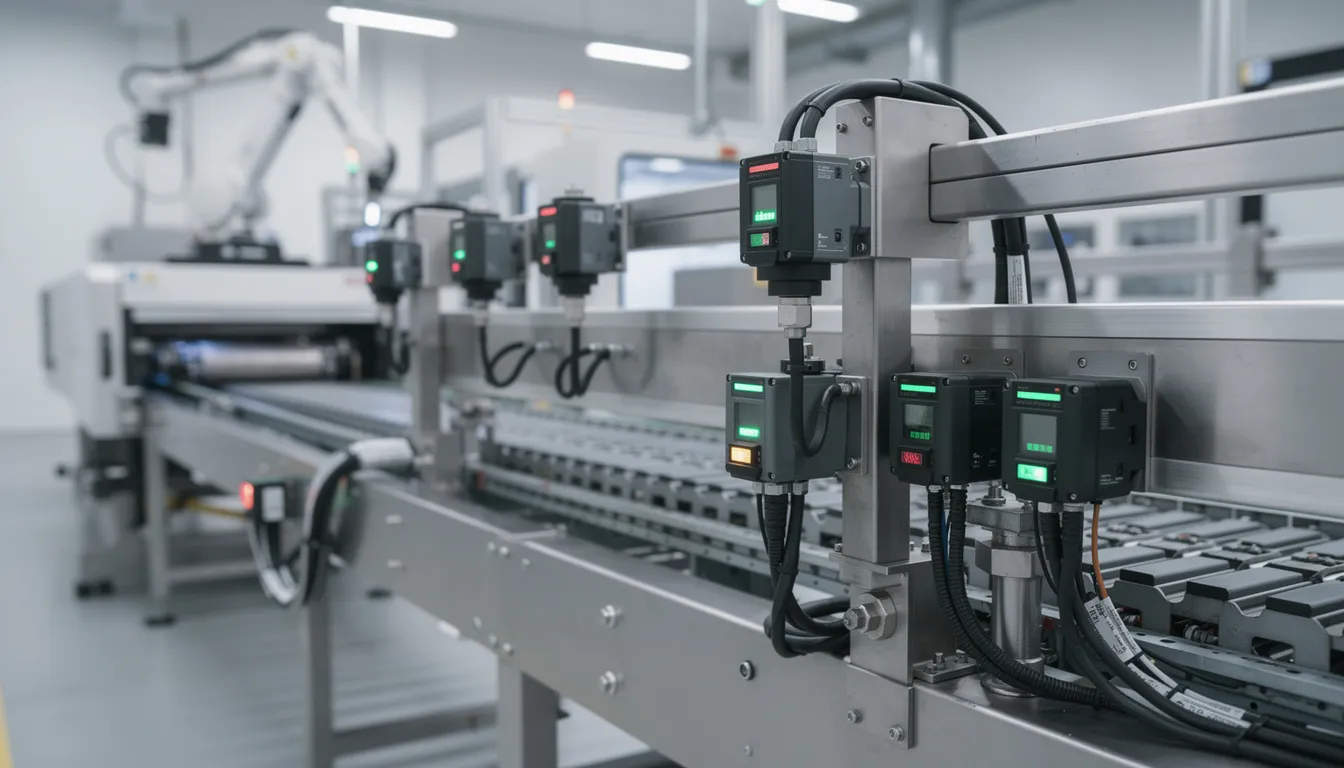
The networking piece matters enormously. 5G and emerging 6G (1ms latency, 10Gbps) enable real-time closed loops, replacing the batch analytics that dominated the 2010s. Sensors don’t just log data for monthly reports anymore-they feed systems that respond in seconds.
Biotechnology & Organoid Intelligence: Towards Hybrid Systems
Here’s where things get genuinely futuristic-but grounded in real research happening right now.
Organoid intelligence involves cortical organoids: 3D stem-cell-derived neural clusters containing 100,000 to 100 million cells. These lab-grown mini-brains serve as hybrid processors, combining biological computation with silicon.
In 2023, FinalSpark’s biocomputer used mouse organoids for XOR logic tasks at 10x the speed and energy efficiency of silicon analogs. The organoids responded to 60-electrode stimuli with plasticity resembling Hebbian learning-the same “cells that fire together wire together” principle that governs human intelligence.
Other biotechnology components in development include:
Biochips: Illumina NovaSeq enabling single-cell RNA analysis at under $10 per thousand cells
Nanobots: DNA walkers delivering chemotherapy drugs with 90% tumor specificity (published in Nature Nanotechnology, 2024)
Neural implants: Paradromics’ 65,000-channel arrays for brain-computer interfaces
Most of this remains experimental through 2029. The EU’s OI Challenge targets speech recognition via organoids. But understanding these technologies now helps leaders plan for a 2030–2040 time horizon when bio-AI hybrid systems could reshape medical products, computing, and beyond.
Real-World Use Cases: Where Living AI Is Emerging First
Living AI is not hypothetical. Early versions are rolling out across healthcare, industry, agriculture, and cities right now.
The systems already in pilots share common characteristics: they sense continuously, learn from streaming data, and act without waiting for human commands. By the early 2030s, if regulation and economics cooperate, these will move from experiments to mainstream infrastructure.
Healthcare & Personalized Medicine
Health care represents the highest-stakes, highest-reward frontier for living intelligence.
Continuous care systems are already detecting problems before symptoms appear. Biofourmis’ BOS platform predicts heart failure 7 days before acute events with 89% accuracy, saving an estimated $3,000 per patient. GE’s HealthPeek ICU monitoring system has cut false alarms by 89% by adapting thresholds to individual patients’ baseline patterns.
Other deployments include:
Closed-loop CPAP: ResMed’s AirSense auto-titrates pressure based on blood oxygen levels
Adaptive oncology: Tempus adjusts chemotherapy regimens based on circulating tumor DNA, showing 25% survival improvements in trials
AI-driven insulin delivery: Systems that learn a person’s rhythm and adjust dosing autonomously
Perhaps most intriguing is organoid-based drug testing. Companies like Emulate grow patient-derived “Liver-Chips” that predict with 80% accuracy how that specific individual will respond to therapies-before they ever take a pill. This tightens the feedback loop between biology and AI planning dramatically.
Hospitals are starting with narrow pilots: ICU monitoring, radiology triage, and scheduling systems that adapt to real-time patient flows. The full vision of continuously adaptive hospital ecosystems is a 2030s reality, but the foundation is being poured today.
Industrial Systems, Energy & Robotics
Predictive maintenance represents the clearest ROI case for living intelligence in business settings.
GE’s Predix platform ingests vibration, temperature, and acoustic data from industrial equipment, achieving 95% precision in predicting failures. The company estimates $1 billion per year in avoided downtime across its customer base. Siemens’ MindSphere IoT platform extends equipment life by 20% through self-optimizing maintenance schedules.
Autonomous mobile robots are evolving rapidly:
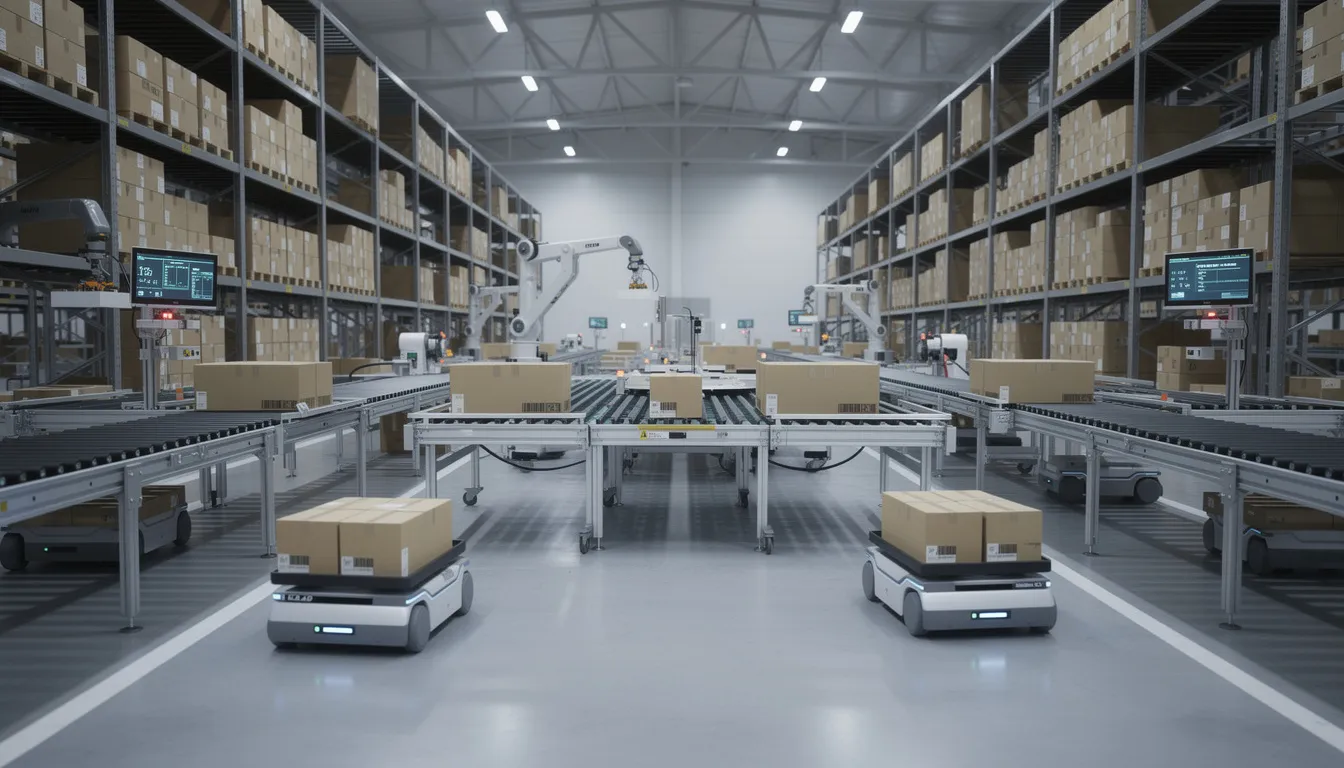
Boston Dynamics’ Stretch warehouse robots continuously map their environment, learning optimal routes and adapting to human traffic patterns in the same way organisms navigate ecosystems
Hospital delivery robots adjust paths based on real-time hallway congestion and staff movements
Energy applications showcase living AI at grid scale. NextEra’s smart grid systems balance load based on real-time usage, renewable output, and equipment health with 15% efficiency gains. They act more like self-regulating ecosystems than centrally planned networks.
By the late 2020s, such systems will likely orchestrate entire fleets of machines, not just individual devices. Multi-agent reinforcement learning enables 100-robot swarms to self-coordinate, exhibiting emergent behaviors that no single programmer designed.
Agriculture & Environmental Monitoring
Precision agriculture demonstrates living intelligence at landscape scale.
The Climate Corporation’s FieldView platform adjusts irrigation daily based on soil moisture sensors, weather data, and historical yield patterns, achieving 20% water savings. Smart vineyards at E&J Gallo in California have boosted yields by 18% through AI that responds to soil conditions and microclimates in near real-time.
Environmental “digital guardians” are emerging:
NOAA sensor buoys detect harmful algal blooms 48 hours before they become visible
Satellite networks from Planet Labs capture daily Earth imagery at 3-meter resolution, enabling detection of illegal deforestation within days instead of months
Forest fire risk systems combine weather stations, soil moisture sensors, and vegetation indices for early warnings
These applications illustrate a key point: living systems respond to climate variability and local micro-conditions the same way living ecosystems do. A greenhouse in California and one in Spain using the same technologies will develop completely different behavior patterns based on their unique environments.
Smart Cities & Human–Environment Interaction
Urban infrastructure is beginning to exhibit living intelligence characteristics.
Traffic systems in Singapore’s LTA achieve 15% flow improvements through cameras and 5G sensors that adapt signal timing to actual congestion rather than preset schedules. Honeywell Forge building management learns from occupancy patterns and weather forecasts, cutting HVAC energy use by 25%.
Citizen-facing aspects are evolving:
Personal devices and city sensors working together to adjust street lighting based on pedestrian presence
Noise monitoring systems that route emergency vehicles to minimize residential disturbance
Public transport routes that shift with real-time demand patterns
Early 2020s smart city projects like Sidewalk Labs in Toronto faced privacy backlash and were ultimately canceled. This highlights that living AI in cities forces real discussions about surveillance boundaries, data ownership, and citizen control. Americans and adults globally are increasingly aware that adaptive urban systems raise stakes beyond industrial applications.
The promise of adaptive cities comes with responsibility. GDPR fines have hit €2 billion for surveillance overreach, signaling that regulators are paying attention.
Strategic Implications: Why Living AI Is a Different Playbook
Organizations treating living AI as “just another AI project” will be blindsided.
This isn’t about adding a chatbot to your customer service or using AI to generate marketing copy. Living intelligence demands embedded strategies for systems that are continuous, cross-functional, and deeply integrated with physical operations.
Early adopters are already gaining advantages. Mayo Clinic’s AI ICU systems are saving 12% on costs. Companies building proprietary sensor data streams measured in petabytes are creating moats that competitors cannot easily replicate.
New Value Creation and Business Models
Living AI fundamentally shifts how companies create and capture value.
Subscription and outcome-based models align naturally with systems that act over time:
Traditional Model | Living Intelligence Model |
|---|---|
Sell a mattress | Sell “healthy sleep” as a service |
Sell factory equipment | Sell “uptime” with guaranteed availability |
Sell farm machinery | Sell “yield-as-a-service” with shared gains |
Medtronic’s business increasingly depends on time-in-range hours rather than pump units shipped. Farm-ng’s yield-as-a-service model achieves 30% margins by aligning incentives with farmer outcomes rather than equipment sales.
This requires long-term access to sensor data, pushing firms toward platforms and ecosystems rather than one-off product sales. The ability to create these continuous services will separate winners from commoditized hardware vendors.
Ask yourself: How could your current offerings become continuous services backed by adaptive AI rather than episodic transactions?
Organizational Capabilities and Roles
New capabilities are required across the organization:
Data engineering for continuous streams (not just batch processing)
ML operations for live models with drift detection under one hour
Sensor integration expertise across industrial, medical, and environmental domains
Bioethics knowledge as bio-AI convergence accelerates
Regulatory navigation across FDA, HIPAA, and emerging AI frameworks
Emerging roles include:
AI systems steward monitoring hundreds of metrics simultaneously
Living systems reliability engineer ensuring 24/7 operation
Clinical AI integration lead bridging doctors and engineers
Bio-AI liaison coordinating organoid and implant programs
City-level AI safety officer managing public trust
Success requires cross-functional squads-clinicians plus engineers plus ethicists plus operations-rather than siloed IT projects. Gartner data suggests 40% success rates for integrated squads versus 10% for siloed approaches.
Start small. Identify two or three high-impact living AI use cases and pilot them end-to-end instead of scattering resources across dozens of proofs of concept.
Data, Governance & Long-Term Risk
Living AI amplifies existing AI governance issues: bias, drift, security, and explainability. But the stakes are higher because systems act autonomously over long horizons with real-world consequences.
Key governance requirements:
Continuous validation: Models can drift 5% per month on streaming data
Fail-safe modes: Systems must degrade gracefully when sensors fail
Human override mechanisms: Especially critical in health care, infrastructure, and policing
Explainability: SHAP scores and model cards for traceability
Long-term risks deserve attention:
Dependency on opaque systems that nobody fully understands
Systemic vulnerabilities if sensors are hacked (imagine a Stuxnet-style attack on power grids)
Cascading failures across interconnected living systems
Worse outcomes if over-reliance leads to skill atrophy
Organizations should pair technical deployment plans with clear governance frameworks, oversight boards, and periodic scenario planning exercises.
How to Get Ready: Practical Steps for 2025–2030
You don’t need a wet lab or in-house organoid research to start. Most organizations can begin with data, sensors, and modest AI today.
The question isn’t whether living intelligence will matter to your organization. It’s whether you’ll be ready when it does.
Map Your Existing “Living” Signals
Start by inventorying data you already have that is time-series or streaming:
Device logs and operational telemetry
Patient vitals and health records
IoT sensors across facilities
CRM event streams and user behavior data
Customer service interaction patterns
Seventy percent of enterprises overlook existing telemetry assets, according to IDC. You likely have more “living signals” than you realize.
Next, identify latency gaps. Where could monthly reports become near-real-time dashboards? Where could dashboards become automated responses?
Build simple alerting and anomaly detection first. Tools like Zabbix achieve 95% recall on anomaly detection with modest setup. This forms the foundation for future living systems, guiding where to invest in better sensors and connectivity.
Start with One or Two High-Impact Pilots
Select pilots where continuous sensing clearly beats periodic checks:
ICU monitoring with early warning algorithms
Factory bottleneck detection and optimization
Fleet maintenance prediction
Energy management and load balancing
The lifecycle is straightforward:
Instrument: Add sensors or connect existing data streams (MQTT, Kafka for 10^6 events/second)
Collect: Aggregate data in real-time pipelines
Model: Apply AutoML or specialized algorithms
Act: Connect models to actuators via REST APIs
Monitor: Track performance against baselines
Iterate: Refine based on results
Measure impact with clear metrics: 20% reduced downtime, fewer readmissions, lower energy use, or improved yield. Not just “AI adoption.”
Document lessons, governance needs, and failure modes from these pilots. They’ll inform your broader roadmap.
Build Literacy, Not Hype
Run regular briefings on living AI trends for leadership, but anchor them in specific use cases. Avoid techno-mysticism and buzzword bingo.
Encourage cross-training:
Clinicians learning basics of sensors and AI
Engineers learning clinical or operational realities
Policy staff learning enough tech to shape rules
Executives developing enough expertise to ask hard questions
Carefully curated newsletters that appear weekly (not daily) help teams stay informed without overwhelming their attention budget. KeepSanity AI was built specifically for this purpose-one email per week with only the major AI news, curated from the finest sources, with smart links and scannable categories.
Emphasize a culture of experimentation paired with skepticism. Test, verify, and iterate. Don’t chase every flashy new frontier or vendor pitch.

Ethics, Safety & the Human Factor in Living AI
Systems that “feel alive” raise deeper psychological, ethical, and political questions than current chatbots ever did.
A 2024 APA study found that 40% of people anthropomorphize their wearable devices. When systems respond to your body continuously, the relationship changes. This isn’t just about technology-it’s about how we live with machines that know us intimately.
Cognitive Offloading and Human Skills
Living AI systems can cause people to rely more on automated alerts and decisions, potentially weakening situational awareness and critical judgment.
Research already shows concerning patterns:
Clinicians miss 15% of cues they previously caught after AI assistance becomes standard (NEJM, 2024)
Stanford’s 2025 study found 25% skill atrophy in operators who rely heavily on automated systems
Students using AI tools show reduced development of critical thinking skills
Thoughtful design keeps humans “in the loop” as supervisors and decision-makers. Interfaces should explain why the system is acting, not just what it does. Talk to users about their understanding, not just their satisfaction.
Consider periodic training and drills where humans must operate without AI assistance. Just as pilots practice manual flying, operators of living systems should maintain core skills.
The risk of a “golden age of stupidity” is real if society hands over too much thinking to machines without investing in education and critical thinking.
Biological Autonomy, Consent & Equity
Bio-integrated systems raise profound questions:
Who owns biological data from implants?
What rights exist over tissue-derived organoids?
How do you ensure informed consent for continuous monitoring?
Equity gaps are emerging. US continuous glucose monitor access is 5x higher for high-income populations compared to low-income (CDC data). High-income patients and regions get advanced living AI monitoring while others remain stuck in reactive care models.
Organizations should adopt explicit policies on:
Data ownership and portability
Access mechanisms regardless of ability to pay
Opt-out options for workplace and health monitoring
Transparency about what data is collected and how it’s used
Regulators will likely tighten rules on bio-AI convergence in the late 2020s. The EU AI Act already mandates opt-out mechanisms for certain implant categories. Forward-looking governance is also a compliance advantage.
Trust, Transparency & Long-Term Stewardship
Trust in living AI depends on transparency of goals, traceability of actions, and clear accountability when things go wrong.
Best practices emerging across the industry include:
Model cards: HuggingFace-style documentation explaining what systems can and cannot do
System logs: Complete audit trails for every decision
Independent audits: Annual reviews targeting 99% uptime and accuracy standards
Clear accountability chains: Named individuals responsible when systems fail
Organizations should designate long-term stewards for living systems. These individuals are responsible for monitoring drift, updating safeguards, and sunsetting systems when they no longer perform safely.
“Set and forget” is not an option. Living intelligence requires ongoing care, much like living organisms do. The innovation doesn’t end at deployment-it continues throughout the system’s entire life.
FAQ: Living Artificial Intelligence, Explained
When will living artificial intelligence become mainstream?
Basic forms-continuous monitoring plus automated responses-are already in pilots and early products in the mid-2020s. Hospitals running living AI ICU systems, factories with predictive maintenance loops, and farms with adaptive irrigation exist today.
By around 2030, many hospitals, factories, and farms in developed regions will run at least one core living AI system. Research suggests 50% adoption in these sectors by the end of the decade.
More experimental bio-integrated systems and organoid intelligence will remain mostly in research and specialized clinics through the early 2030s. Full-scale, cross-sector living intelligence ecosystems will emerge gradually rather than in a single breakthrough year.
Is living AI the same as conscious or sentient machines?
No. Living artificial intelligence does not imply consciousness, feelings, or awareness. The term describes systems that sense, adapt, and learn continuously like organisms-but they remain tools.
Current AI, even when combined with biotechnology, is best understood as powerful optimization and control infrastructure. Organoids used in computing lack the neural architecture associated with consciousness. They process information without subjective experience.
Separate philosophical debates about machine consciousness from practical decisions about deploying adaptive AI safely and ethically. The former is fascinating. The latter is urgent.
Will living intelligence replace human workers?
Living AI will automate continuous monitoring, routine adjustments, and some complex control tasks. Roles involving repetitive oversight will likely decrease-the factory floor monitor watching for anomalies all day, for example.
At the same time, new roles will emerge in oversight, integration, bio-AI interfaces, and system stewardship. The World Economic Forum projects 2 million new jobs by 2030 in these categories. Living systems will still rely heavily on human judgment for complex trade-offs, ethical decisions, and situations outside their training data.
Plan for reskilling and role redesign during the second half of the 2020s. Develop skills in your workforce now. Waiting for one-to-one job replacement predictions is the wrong approach-the reality will be messier and more gradual.
How safe is it to connect AI directly to the body or critical infrastructure?
Safety depends on multiple layers working together:
Rigorous testing before deployment
Regulatory approval (FDA, CE marks, industry standards)
Fail-safes and graceful degradation
Human override mechanisms
Cybersecurity against malicious actors
Continuous monitoring of real-world performance
Medical devices and critical infrastructure already operate under strict standards like ISO 13485. Living AI will need to meet or exceed those requirements, with new oversight rules likely emerging by 2028.
Design for graceful degradation: systems should fail safely and visibly rather than silently misbehaving. A living insulin pump that loses sensor connectivity should default to conservative dosing, not continue optimizing blindly.
How can I stay informed about living AI without drowning in updates?
Most AI newsletters send daily emails padded with minor updates and sponsored content. The result: piling inboxes, rising FOMO, and endless catch-up that steals your focus.
Prioritize a small number of high-signal sources that summarize the most important developments weekly. KeepSanity AI was specifically created for this purpose: one no-ads weekly email that curates only the major AI and living intelligence news across models, biotech, robotics, and tools. Teams at Adobe and Bards.ai already subscribe to filter hype from actionable intelligence.
Combine curated overviews with deeper dives into topics directly relevant to your sector. You don’t need to read everything-you need to read what matters.
Living AI is not a distant future waiting to arrive. It’s emerging now across hospitals, factories, farms, and cities. The organizations that start mapping their data streams, piloting continuous systems, and building cross-functional teams today will have advantages that late movers cannot easily replicate.
Lower your shoulders. The noise is gone. Here is your signal.
→ Subscribe to KeepSanity AI for weekly curated updates on living artificial intelligence and the technologies shaping our world.