What Is AI & DS? (Artificial Intelligence and Data Science Explained)
If you’ve seen “AI & DS” in a job posting, university course catalog, or tech news headline and wondered what it actually means, you’re not alone. These two fields have become so intertwined that companies and universities now bundle them together-and understanding how they connect is essential for anyone working in or around technology today.
This article is for students, professionals, and anyone interested in understanding the relationship between Artificial Intelligence and Data Science. Understanding these fields is essential for navigating modern technology careers and innovations.
Key Takeaways
“AI & DS” stands for Artificial Intelligence and Data Science-two overlapping but distinct fields that work together in most modern data-driven projects.
Data science focuses on extracting insights from structured and unstructured data through analysis, while artificial intelligence builds systems that act intelligently based on that data.
Real-world applications include recommendation engines, fraud detection, medical diagnosis support, autonomous systems, and generative AI tools like code assistants and chatbots.
Machine learning sits at the intersection, serving as both a core AI technique and a primary tool data scientists use for predictive modeling.
This article is written from KeepSanity AI’s perspective as an AI-focused publication that tracks major shifts in AI and data science without the daily noise that burns your focus.
What Does “AI & DS” Actually Mean?
Data science provides the foundation for AI by preparing and organizing raw data for machine learning algorithms. AI represents an advanced application of data science techniques, and both fields work together to turn raw information into automated actions.
When you see “AI & DS” in a course title, job description, or conference track, it refers to the combined study and practice of Artificial Intelligence (AI) and Data Science (DS). These aren’t separate silos-they’re deeply connected disciplines that both revolve around data, algorithms, and decision making.
Data Science is the broader discipline focused on working with data to generate understanding and insight. Artificial Intelligence (AI) is a specialized area within Data Science that focuses on using data to build systems that can learn from experience and make decisions with minimal human intervention.
Universities in India, the US, and the EU have launched joint AI & DS degree programs since around 2020 because employers recognized that the skills overlap significantly. Companies need people who can both analyze data to extract valuable insights and build intelligent machines that act on those insights automatically.
In practice, projects rarely separate AI and DS cleanly. The same team often handles:
Collecting and cleaning massive datasets
Performing exploratory data analysis to understand patterns
Building and validating machine learning algorithms
Deploying those models into production systems that make real-time decisions
Consider a 2023-2024 e-commerce fraud detection system at companies like PayPal or Stripe. Data scientists profile years of transaction data, using SQL queries on terabytes of logs and applying statistical analysis with tools like Pandas and Seaborn to spot anomalies. They engineer features like transaction graphs and build baseline models achieving 95%+ precision. Then AI takes over-deep learning models analyze behavioral biometrics and automatically block 99% of fraud attempts within milliseconds. Neither discipline works without the other.

Quick Comparison: Artificial Intelligence vs Data Science
Before diving deeper into each field, here’s a fast orientation to help you understand the core differences.
Data Science core goals:
Understanding what happened in historical data
Diagnosing why it happened through statistical methods
Predicting what is likely to happen using modeling data and forecasting techniques
Artificial Intelligence core goals:
Building systems that take autonomous actions based on input data
Generating content (text, images, code) through generative AI
Making decisions in real-time without explicit programming
Data science leans heavily on statistics, experimentation (like A/B testing), and business context to inform decision making. AI leans more on algorithms that learn patterns and perform tasks autonomously-sometimes mimicking aspects of human intelligence.
Machine learning and deep learning sit at the intersection. They’re core AI techniques, but data scientists use them constantly for predictive modeling. This overlap is why the fields get bundled together.
Here’s a concrete comparison from banking in 2024:
Data scientists analyze 5+ years of transaction data with time-series models like ARIMA or Prophet to estimate default probabilities. They incorporate macroeconomic variables and achieve AUC metrics above 0.85 for risk scoring.
AI engineers productionize these models via MLOps pipelines in Kubernetes, integrating reinforcement learning to dynamically approve loans and cutting manual reviews by 80% while maintaining regulatory compliance.
Same project, different focuses, both essential.
Core Concepts: What Is Data Science?
Data science is the discipline that collects, cleans, explores, models, and interprets data to support decisions. It’s fundamentally about answering questions: What happened? Why? What might happen next?
Data Science Tasks
Data science professionals typically handle these tasks across the data lifecycle:
Data acquisition from databases, APIs, social media, sensors, and transaction logs. This involves working with large volumes of information from multiple sources.
Data cleaning and feature engineering to handle missing values, outliers, and inconsistencies-transforming messy raw data into usable training data.
Exploratory data analysis (EDA) using statistical summaries, hypothesis testing, and data visualization to understand patterns before building models.
Predictive and prescriptive modeling to forecast outcomes like customer churn, demand fluctuations, or default risk.
Communication of insights to stakeholders who need to act on findings.
Data Science Tools and Technologies
Data science technologies have standardized around a core stack:
Category | Common Tools |
|---|---|
Programming languages | Python (80% market share per Kaggle 2024), R, SQL |
Data manipulation | Pandas, NumPy, Polars |
Modeling | scikit-learn, XGBoost, LightGBM |
Visualization | Matplotlib, Seaborn, Plotly |
Notebooks | Jupyter, VS Code |
Platforms | Snowflake, BigQuery, Databricks |
Data scientists often work closely with business stakeholders-product managers, marketing teams, operations leads-to translate questions like “Why is churn rising since Q3 2023?” into concrete analyses that drive action.
A strong foundation in probability, statistics, linear algebra, and experimental design is essential for trustworthy data science in regulated sectors like finance and healthcare.
Core Concepts: What Is Artificial Intelligence?
Artificial intelligence encompasses building systems that mimic aspects of human intelligence: perception, reasoning, learning, and natural language understanding. Where data science asks “What can this data tell us?”, AI asks “What can we make this system do intelligently with the data it sees?”
Main AI Subfields
Machine learning and deep learning power everything from image classification and computer vision applications to recommendation systems and facial recognition. These ML algorithms improve automatically from data without explicit programming.
Natural language processing (NLP) and Large Language Models (LLMs) enable chatbots, translation systems, and code assistants. Since ChatGPT’s launch in November 2022, this subfield has exploded in commercial applications.
Planning and decision systems use reinforcement learning for robotics, game-playing, and recommendation policies that adapt over time.
Modern AI Applications
The AI system landscape in 2024 includes:
Chatbots and copilots integrated into IDEs, office suites, and browsers
Computer vision systems used in manufacturing quality control since at least 2021
Autonomous navigation components in delivery robots and drones
Voice assistants processing natural language for smart home control
Generative AI tools creating text, images, and code
AI systems increasingly rely on massive datasets and compute infrastructure-GPUs, TPUs, cloud clusters costing $1M+ for training frontier AI models. This raises practical questions about cost, privacy, and responsible use that organizations must address.
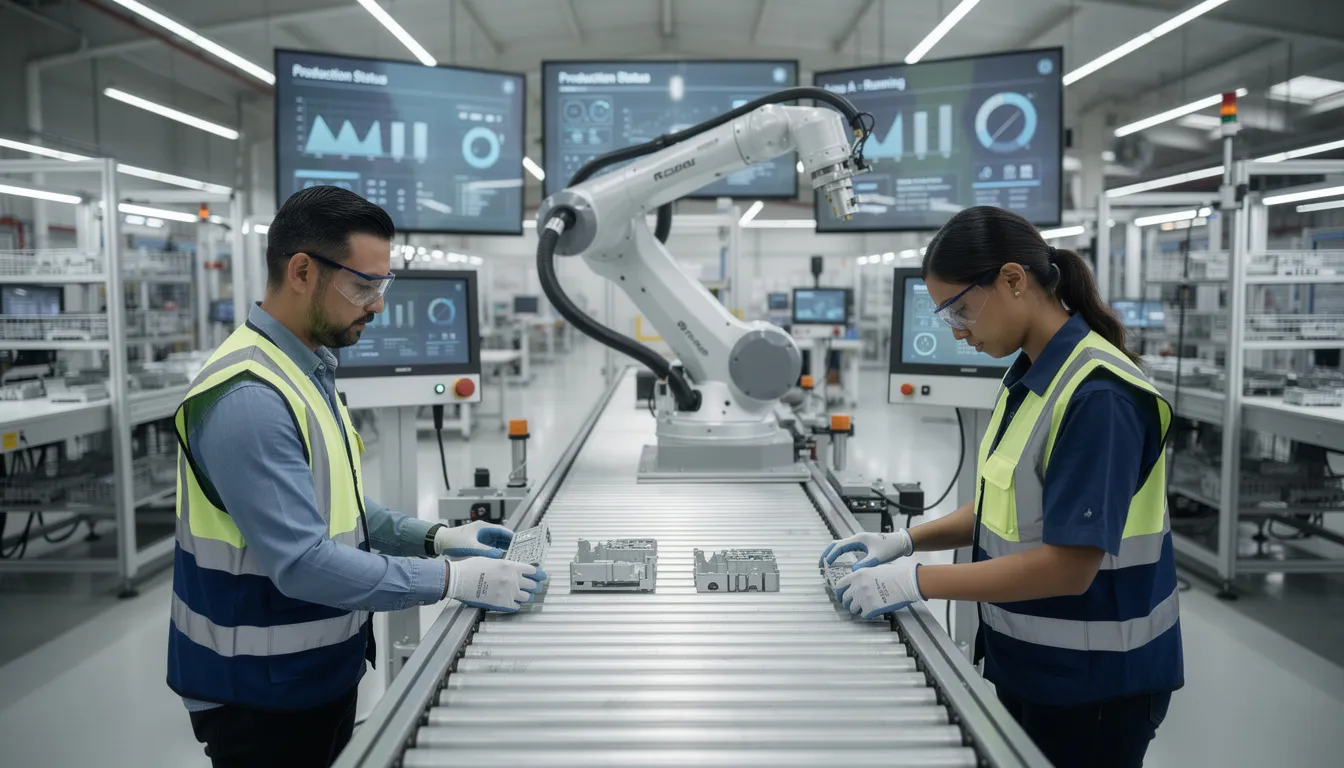
How AI & DS Work Together in Real Projects
Most impactful systems are neither “pure AI” nor “pure DS” but a combination where each discipline helps data science and AI capabilities reinforce each other.
A Typical End-to-End Workflow
Data Science phase: Collecting multi-year behavioral data, cleansing it to handle inconsistencies, performing EDA to understand distributions, and identifying key predictors through statistical analysis.
Modeling phase: Building and validating machine learning algorithms using curated datasets. This includes feature selection, model training with cross-validation, and evaluation using metrics like precision, recall, and AUC.
AI phase: Deploying those models inside applications that react in real-time-recommending products, flagging anomalies, or generating responses without human intervention.
Real-World Examples (2022-2024)
Streaming platforms like Netflix:
Data science teams process billions of viewing events daily with Spark on Hadoop
They compute engagement metrics, cohort retention rates, and content performance
AI via collaborative filtering and deep neural networks delivers personalized recommendations
Result: 20-30% retention boost according to their engineering blogs
Healthcare systems:
Data scientists analyze electronic health records to study outcomes like post-surgery readmission rates
They apply survival analysis and causal inference to identify risk factors
AI deploys CNNs for radiology triage, achieving 90%+ accuracy in detecting conditions like pneumonia
Validated in 2022-2024 studies from The Lancet Digital Health
Banking and lending:
Data analytics teams build logistic regression and gradient boosting models for credit scoring
AI engineers implement real-time inference systems that auto-approve or flag applications
This connects data science insights directly to automated customer experiences
The CRISP-DM framework (business understanding → data understanding → data preparation → modeling → evaluation → deployment) structures both DS and AI initiatives, providing a shared methodology.
As of 2024, generative AI adds a new feedback loop: data science teams monitor usage metrics and biases, then AI teams retrain or fine-tune models using techniques like LoRA adapters to cut inference costs 90% on consumer hardware.
Careers and Roles in AI & DS
The job market for AI and data science remains exceptionally strong. The US Bureau of Labor Statistics projects 36% growth in data scientist roles by 2032 (from 168,900 in 2022), with median salary at $108,020. AI/ML engineer roles are growing 40%+ globally per LinkedIn 2024 data, with salaries averaging $150K+ in US tech hubs.
Data Science-Oriented Roles
Role | Primary Focus |
|---|---|
Data Analyst | Dashboards, descriptive statistics, reporting in Tableau/Power BI |
Data Scientist | Predictive modeling, experiments, statistical inference |
Data Engineer | ETL pipelines, data architecture, handling petabyte-scale systems |
Business Analyst | Translating business questions into analytical requirements |
AI-Oriented Roles
Role | Primary Focus |
|---|---|
Machine Learning Engineer | Turning models into production systems with 99.9% uptime |
AI Engineer | Integrating LLMs and AI APIs into products |
Software Developer (AI focus) | Building reliable systems that incorporate AI capabilities |
AI Product Manager | Defining intelligent features and ethical considerations |
Many teams operate as cross-functional pods, with AI & DS specialists collaborating with software engineering teams, domain experts, and compliance staff. About 80% of Fortune 500 companies use this model per Gartner 2024.
Staying current without burning out is a real challenge. KeepSanity AI curates only major weekly developments-new model releases, regulation shifts, large funding rounds, key research breakthroughs-instead of daily noise that wastes your time.

Skills You Need for AI & DS
AI and data science share a core technical foundation but diverge as careers advance. Here’s the skillset required at different levels.
Foundational Technical Skills
Programming in Python (essential for both paths)
SQL for querying structured data
Linux basics and Git for version control
Understanding of programming languages beyond Python (R, Julia, or Scala can be valuable)
Data Science-Centric Skills
Statistical inference, hypothesis testing, and A/B testing
Data visualization and storytelling with non-technical stakeholders
Working with tabular and time-series data for forecasting
Exploratory data analysis techniques
Probability theory and experimental design
Data mining for pattern discovery
AI-Centric Skills
Understanding ML algorithms, neural networks, and evaluation metrics
Familiarity with frameworks like TensorFlow, PyTorch, and Hugging Face tools
Prompt engineering and chain-of-thought techniques (boosting LLM accuracy 20-50%)
Fine-tuning methods like PEFT that reduce trainable parameters by 99%
Deep learning architectures for complex problems
Reinforcement learning basics for decision systems
Soft Skills
Communicating complex ideas clearly to non-technical audiences
Problem solving across ambiguous business challenges
Project management basics for coordinating data initiatives
Ethical awareness: privacy, fairness, and explainability expectations
70% of data projects fail on communication issues per PMI research. Technical skills get you in the door; soft skills determine your impact.
Practical skills matter more than credentials. Many professionals successfully transition from non-math degrees by steadily filling gaps over 6-18 months through focused study. Consider AI courses from platforms like Coursera, fast.ai, or university certificate programs to build a strong foundation systematically.
Where You’ll See AI & DS in Everyday Life
AI and data science aren’t abstract concepts-they power tools and services you use daily. Understanding this helps data science professionals and AI practitioners see how their work connects to real human experiences.
Consumer Technology
Personalized feeds on social media and music apps use data driven insights from your behavior combined with recommendation AI.
Thompson sampling and multi-armed bandit algorithms test content variations continuously.
This technology predates 2020 but gets refined every year.
Finance
Real-time fraud detection and credit scoring systems analyze data from millions of transactions.
Machine learning algorithms flag suspicious patterns, automatically blocking an estimated $40B in losses yearly across the industry.
Healthcare
Hospitals use data science to optimize bed allocation (critical during COVID surges).
AI analyzes radiology scans and provides decision support in electronic health records.
These systems interpret data faster than humans alone can manage.
Retail and Logistics
Demand forecasting combines statistical methods with ML to predict inventory needs.
Dynamic pricing uses reinforcement learning-Amazon attributes 35% of revenue to AI-powered recommendations.
Route optimization for delivery fleets reduces costs and emissions.
The 2023-2024 Generative AI Surge
Code assistants in IDEs like GitHub Copilot write approximately 40% of code, saving 55% development time per studies.
Text and image generators reshape marketing workflows and creative industries.
These AI applications have moved from experimental to essential in under two years.
Because AI & DS are increasingly embedded in products, staying informed about major changes (new foundation models, regulatory updates) helps professionals anticipate what will change in their own tools and workflows.

How KeepSanity AI Helps You Track AI & DS Without Burning Out
Most AI newsletters are designed to waste your time. They send daily emails-not because there’s major news every day, but because they need to tell sponsors “Our readers spend X minutes per day with us.” So they pad content with minor updates, sponsored headlines, and noise that burns your focus.
KeepSanity AI takes a different approach:
One email per week with only the major AI & DS news that actually moved the field or the market. No daily filler to impress sponsors.
Zero ads. Selection is driven by significance, not impressions.
What Gets Covered Weekly
Big model and platform releases (e.g., Llama 3 with 405B parameters in 2024, major LLM updates)
Significant business moves: acquisitions, major funding rounds ($50B+ AI VC in 2024), big product launches
Important regulations and policy updates (EU AI Act enforcement in 2026, GDPR implications)
Key research breakthroughs with links to readable paper versions
Built for Scannability
Smart links to alphaXiv-style readable versions of research papers
Clear categories: business, product updates, models, tools, resources, community, robotics, trending papers
Everything skimmable in minutes, not hours
The goal is a “low-FOMO” approach. Focus on deep understanding of the big shifts in AI & DS, and let KeepSanity AI handle the filtering so you can keep your attention for real work.
Subscribed by teams at Bards.ai, Surfer, and Adobe-organizations that need to stay informed but refuse to let newsletters steal their sanity.
Lower your shoulders. The noise is gone. Here is your signal.
FAQ
Is Data Science part of Artificial Intelligence, or are they separate fields?
Neither is strictly inside the other. Data science can be done without AI-think simple analytics, reporting, and statistical analysis that doesn’t involve intelligent automation.
Similarly, AI can be built on top of data pipelines prepared by data engineers and scientists without requiring advanced DS expertise on the AI engineer’s part.
In practice, they heavily overlap. Most modern AI systems depend on good data science workflows for clean training data and model validation. And many data science projects today use machine learning, which is a subset of AI.
Think of them as two intersecting circles: one focused on understanding data, the other on acting intelligently based on data. The overlap contains machine learning, which both disciplines claim.
Do I need a strong math background to start in AI & DS?
You can begin learning basic tools and coding without advanced math. Python, SQL, and simple data manipulation projects don’t require calculus or linear algebra knowledge upfront.
However, real expertise in AI & DS requires comfort with algebra, probability, and statistics. These aren’t optional for building models you can trust or interpreting accurate results correctly.
A staged approach works well:
Start with Python, SQL, and simple projects to build programming skills and intuition.
Then gradually build math skills as needed for more advanced modeling.
Many professionals successfully transition from non-math degrees by steadily filling gaps over 6-18 months through focused course work and practice.
How is generative AI changing Data Science work?
Since 2023, generative AI tools increasingly automate tasks in data science workflows: writing code snippets, generating basic EDA scripts, creating documentation, and producing simple visualizations. GitHub Copilot and similar tools handle significant boilerplate work.
This shifts the human role toward problem framing, ensuring data quality, rigorous evaluation of results, and communicating business impact.
Data scientists become supervisors and critics of AI-generated work rather than writing every line themselves.
Data scientists who learn to supervise and critique generative tools become more productive instead of being replaced. The value moves upstream to judgment, context, and stakeholder communication-areas where human intelligence still outperforms automation.
Which should I learn first: Data Science or AI?
Start with core data science foundations: Python, SQL, statistics, and basic ML using scikit-learn. These skills transfer well across roles and give you the ability to analyze data and build models independently.
Once comfortable with datasets and baseline models, branch into more AI-focused topics like deep learning with PyTorch or TensorFlow, or LLM work with Hugging Face tools.
Employers in 2024 often value people who can move along the spectrum-from simple analytics to deploying intelligent features-rather than narrow specialization too early. The ability to build models and deploy them gives you options across various industries.
How can I stay up to date on AI & DS without reading news every day?
The risk of burnout and FOMO from daily AI updates is real. Many headlines are minor or repetitive-padded content designed to maximize engagement metrics rather than actually inform.
A weekly rhythm works better: subscribe to a curated newsletter like KeepSanity AI that filters for genuinely important AI & DS news. Spend a focused 10-20 minutes catching up on what actually matters.
Complement that with occasional deep dives-a few key research papers or conference talks per month-rather than constant scrolling through feeds. This approach keeps you informed about cutting edge developments while protecting your focus for work that matters.