Why Is AI Important?
In 2024, over two-thirds of organizations reported productivity gains from AI adoption. That’s not a forecast-it’s already happening. This guide explains why AI is important in today's world and what it means for you.
Whether you're a business leader, professional, or simply curious about technology, understanding why AI is important will help you navigate the changes it brings to work and society. As AI becomes more deeply embedded in our daily lives and business operations, knowing its significance empowers you to make informed decisions, adapt to new tools, and seize emerging opportunities.
Artificial intelligence has moved from research labs into the tools you use every day: the navigation app optimizing your commute, the spam filter protecting your inbox, and the recommendation engine suggesting what you should watch next. But beyond convenience, AI is reshaping how businesses operate, how professionals work, and how society tackles its biggest challenges.
This guide breaks down why AI matters right now, how it’s transforming industries and careers, and how you can stay informed without letting the constant flood of AI news steal your focus.
Key Takeaways
AI automates high-volume, data-heavy work with consistency and speed that human teams cannot match, from processing millions of transactions to analyzing medical images.
Modern AI augments human decision-making rather than replacing it entirely-think GitHub Copilot helping developers write code or risk models guiding investment analysis.
Everyday tools like Google Maps, Netflix recommendations, and smartphone face unlock all run on AI, alongside frontier systems like GPT-4, Claude 3, and Gemini launched in 2023-2024.
Responsible AI governance-transparency, fairness testing, and human oversight- is now a strategic necessity to manage risks like bias, deepfakes, and privacy violations.
A focused AI news source like KeepSanity AI helps professionals track only the major developments without daily noise that burns focus and creates FOMO.
What Is Artificial Intelligence (AI)?
Artificial intelligence is a technology that can mimic human intelligence to solve problems, make decisions, and generate ideas. The most common types of AI include machine learning, natural language processing, and computer vision.
Artificial intelligence refers to computer systems designed to perform tasks that typically require human intelligence. These tasks include understanding human language, recognizing patterns in data, making predictions about future outcomes, and generating new content like text, images, or code.
The term artificial intelligence was first coined at the Dartmouth Summer Research Project in 1956, though the field has evolved dramatically since then. What once seemed like science fiction-smart machines that can analyze data and identify patterns faster than the human brain-is now embedded in nearly every aspect of daily life.
How AI Systems Learn
AI systems learn through three primary mechanisms:
Learning Type | How It Works | Example |
|---|---|---|
Supervised Learning | Systems learn from labeled examples where the correct answer is provided | Medical imaging AI trained on thousands of annotated scans where radiologists marked tumor locations |
Unsupervised Learning | Systems identify patterns in unlabeled data without explicit guidance | Customer segmentation based on purchasing behavior |
Reinforcement Learning | Systems learn through interaction, receiving rewards or penalties for actions | DeepMind’s AlphaGo (2016) and AlphaZero (2017) mastering games through self-play |
These machine learning approaches power most modern AI applications, from fraud detection systems to virtual assistants.
Everyday Examples of AI
You interact with AI technology more often than you might realize:
Navigation apps like Google Maps optimize routes in real time using machine learning models that predict traffic patterns from historical and live data.
Email spam filters use pattern recognition to distinguish legitimate messages from unwanted content, improving over time as users flag emails.
Netflix’s recommendation algorithms analyze viewing patterns and similarity between users to predict content preferences.
Smartphone face unlock uses computer vision and neural networks trained on facial recognition to authenticate users securely.
Generative AI: A Distinct Category
Generative AI represents a specific class within artificial intelligence. Rather than classifying or predicting from existing data, these models create new content: text, images, code, audio, and video.
Key generative AI models include:
OpenAI’s GPT-4
Google’s Gemini
Anthropic’s Claude 3
Open-source Llama 3 (2024)
Large language models like these can generate human language, debug code, and produce creative content that was previously possible only through human effort. Understanding how generative AI learns-by training on vast datasets and learning to predict and produce coherent outputs-helps clarify both its capabilities and limitations.
AI is a broad field spanning machine learning, natural language processing, robotics, computer vision, and more. Most of what people interact with today is “narrow AI,” specialized for specific tasks rather than general-purpose intelligence.
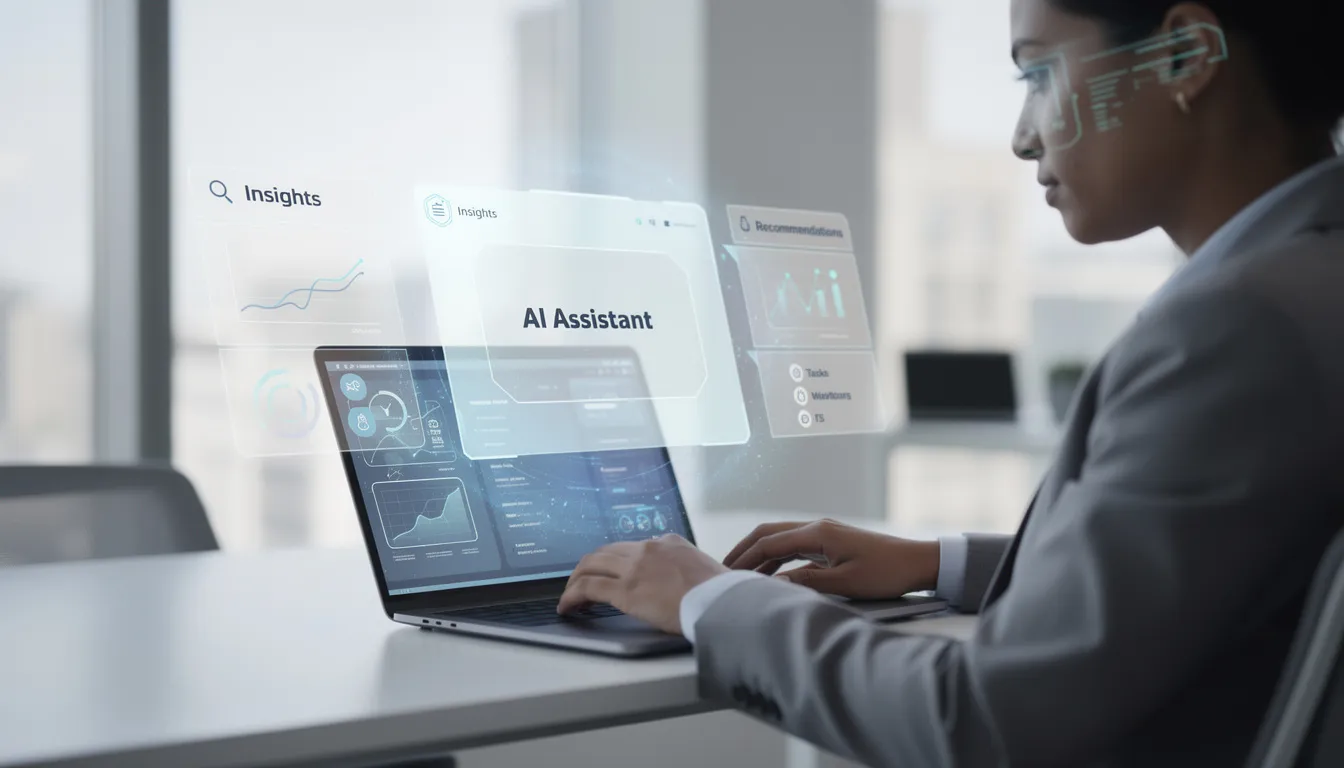
Why Is AI Important Right Now?
Why is AI important in 2024 and beyond? The answer comes down to timing: between roughly 2016 and 2024, AI capabilities moved from academic research environments into mainstream products and workflows that millions of people use daily.
AI is important because it is considered one of the most transformative technologies of the 21st century, enhancing human capabilities, automating complex tasks, and being embedded in daily routines. It is projected to contribute trillions to the global economy by 2030, accelerates research, processes vast amounts of data, and improves products and services across industries.
The launch of ChatGPT in November 2022 marked a pivotal moment. For the first time, a generative AI system was accessible to non-technical users and demonstrated practical value for writing, coding, analysis, and ideation. Subsequent model upgrades in 2023-2024 expanded capabilities across multimodal domains-text, images, audio, and video.
Automation at Scale
AI automates high-volume, data-heavy processes with consistency impossible for human workers:
Medical imaging analysis examines thousands of scans to detect tumors or disease markers.
Financial institutions process millions of transactions with AI algorithms flagging fraud patterns in real time.
Social media platforms moderate billions of pieces of content using AI to identify harmful material.
E-commerce companies analyze customer interactions to personalize recommendations at scale.
The economic value lies not just in individual decisions but in the aggregated effect across millions of data points-reducing fraud losses, improving classification accuracy, and decreasing operational costs.
Augmentation of Human Decision-Making
Modern AI tools operate as decision support systems rather than replacements:
Finance: AI-driven risk models assess credit risk, market risk, and operational risk with sophistication exceeding traditional statistical approaches.
Software Development: Tools like GitHub Copilot and Replit’s AI features help developers write, debug, and refactor code.
Business Strategy: Language models help analyze competitive intelligence, summarize reports, and generate strategic recommendations.
Since ChatGPT’s release and subsequent integrations into Microsoft 365 Copilot and Google Workspace, AI capabilities have become accessible through friendly interfaces. A marketing manager can use AI for audience analysis. An operations manager can use AI for process optimization.
Macro-Level Significance
AI stands out among megatrends for its capacity to transform labor markets and drive productivity. The anticipated wave of AI-driven physical investment is expected to be a powerful force reminiscent of major historical capital expansions like railroad development in the mid-1800s.
Forecasts from institutions like McKinsey and the OECD recognize AI’s transformative potential for the global economy, though the productivity gains are still materializing rather than fully realized across all sectors.
These changes in business and society set the stage for how AI is shaping the future of work.
How AI Is Shaping the Future of Work
AI is transforming workflows in almost every knowledge and operational role, from marketing and software engineering to logistics and customer support. The shift is no longer about whether to adopt AI, but how quickly organizations can translate AI capabilities into sustained business value.
Automation of Repetitive Digital Tasks
Specific categories of work are being automated with measurable impact:
Document classification
Before AI: Manual sorting by human workers
After AI: Automated with higher accuracy
Invoice extraction
Before AI: Manual data entry
After AI: AI pulls key fields from diverse formats
Basic customer queries
Before AI: Dedicated customer service reps
After AI: Chatbots handle routine questions
Call transcription
Before AI: Manual transcription or expensive services
After AI: Real-time AI transcription with sentiment analysis
These computerized tasks reduce time-to-completion and free human workers for higher-value activities requiring emotional intelligence and complex judgment.
The Co-Pilot Work Model
Modern AI tools operate as “co-pilots”-assistants that augment rather than replace human workers:
A professional uses AI to draft initial content, then reviews, refines, and applies domain expertise.
A software engineer uses GitHub Copilot to generate code boilerplate, then reviews and tests the implementation.
A writer uses AI to brainstorm ideas and generate outlines, then creates original analysis.
This co-pilot model significantly compresses time-to-completion for routine work. Development timelines that once took weeks now take hours or minutes for certain tasks.
AI Literacy as Baseline Professional Skill
Knowing how to use AI tools effectively is rapidly becoming expected knowledge, similar to how spreadsheet skills became essential in the 1990s and 2000s:
Understanding AI capabilities and limitations
Writing effective prompts (prompt engineering)
Validating outputs before acting on them
Integrating AI into existing workflows
Employers increasingly expect familiarity with AI tools. By the late 2020s, a majority of large organizations will have embedded AI in core business operations.

Beyond the workplace, AI's impact extends to broader societal and global challenges.
The Role of AI in Society and Global Challenges
AI is not only important for business productivity but also for tackling large-scale societal and scientific challenges. From climate change mitigation to healthcare breakthroughs, AI techniques are enabling solutions at scales previously impossible.
Climate and Energy Applications
AI models are making meaningful contributions to global challenges:
Weather forecasting: AI models forecast extreme weather events with greater accuracy, enabling better preparation and response.
Power grid optimization: AI balances supply and demand in real time as renewable energy sources introduce variability.
Building efficiency: Intelligent controls learn occupancy patterns and adjust heating/cooling to reduce energy waste.
Climate modeling: AI accelerates analysis of complex patterns in climate data.
Healthcare Transformation
AI is reshaping medicine through:
Medical image analysis: Detecting conditions like tumors and diabetic retinopathy from medical images with accuracy matching or exceeding specialists.
Drug discovery: Modeling protein structures and predicting compound efficacy to accelerate development pipelines.
Clinical trials: Identifying eligible patients, predicting adverse outcomes, and monitoring safety signals.
Personalized treatment plans: Using patient history, genetics, and biomarkers to recommend tailored therapies.
Transportation and Cities
Traffic signal optimization reduces congestion and emissions.
Route planning improves efficiency for logistics and public transit.
Predictive maintenance extends infrastructure lifespan.
Companies like Waymo and Cruise continue advancing self-driving cars technology.
Societal Risks to Acknowledge
The same AI capabilities that enable progress also create risks:
Deepfakes can manipulate video and audio for misinformation.
Information manipulation at scale threatens democratic processes.
Surveillance misuse raises privacy and civil liberties concerns.
Environmental costs of training large deep learning models are significant.
These risks are key reasons why governance and oversight matter.
Why Responsible AI Is Critical
Early AI discussions, tracing to Alan Turing’s 1950 imitation game, focused on whether machines could exhibit intelligence indistinguishable from humans. Modern discussions have shifted emphasis to safety, fairness, and accountability as generative AI becomes widely deployed.
The Capability-Risk Connection
Modern AI systems can create convincing essays, images, and voices. This makes misinformation, non-consensual deepfakes, and impersonation scams increasingly feasible if unconstrained. A fraud detection system can protect financial transactions-but generative AI can also help craft more convincing phishing attacks.
What Business Leaders and Citizens Expect
Surveys conducted in 2023-2024 consistently show that large majorities expect AI systems to be:
Transparent: Clear documentation of how decisions are made.
Auditable: Enabling review and oversight.
Subject to human review: Particularly for high-impact decisions.
This represents genuine consensus, not a fringe position.
Key Pillars of Responsible AI
Transparency: Clear documentation, model cards, capability disclosures. Enables informed decisions about AI use.
Fairness: Testing for bias across demographic groups. Prevents discrimination in hiring, lending, healthcare.
Privacy: Strong data protection, minimization, retention policies. Protects sensitive information.
Human Oversight: Humans in the loop for critical decisions. Catches failures before they cause harm.
Companies and policymakers should treat AI governance as part of core strategy, aligning AI deployments with organizational values rather than using AI simply because it is fashionable.
Career Opportunities and Skills in the Age of AI
Artificial intelligence is important for careers both inside and outside the tech industry. Nearly all professions are being reshaped by data processing and automation-creating both disruption and opportunity.
Core AI-Centric Roles
Role | Primary Focus | Key Skills |
|---|---|---|
Machine Learning Engineer | Building systems that learn patterns from data | Mathematics, statistics, programming, model architecture |
Data Scientist | Analyzing and visualizing data for insights | Statistics, domain knowledge, communication |
MLOps Engineer | Deploying and monitoring models in production | Infrastructure, versioning, performance monitoring |
Prompt Engineer | Crafting inputs to generative AI systems | Language skills, systematic testing, domain expertise |
AI UX Designer | Shaping how users interact with AI systems | User research, interface design, AI understanding |
Adjacent Roles Where AI Skills Add Value
Product Managers defining AI-powered features need understanding of AI capabilities and limitations.
Domain Experts (physicians, lawyers, financial analysts) using AI tools safely must know when to trust recommendations and when to override.
AI Policy Specialists navigate regulatory landscapes and shape governance frameworks.
Business Analysts identifying automation opportunities need to understand which processes AI can effectively automate.
Future-Proofing Your Career
Professionals in marketing, HR, finance, and operations can leverage AI tools rather than competing directly against automation:
A marketer using AI for audience analysis becomes more productive than one ignoring these tools.
An HR professional using AI for resume screening becomes more efficient.
A finance professional using AI for investment analysis and predictive analytics becomes more insightful.
Practical Learning Paths
Free online courses on machine learning basics from platforms like Coursera or edX.
Hands-on experimentation with open tools like Jupyter notebooks and scikit-learn.
Building projects that demonstrate capability to potential employers.
Following curated AI news sources to stay aware of major shifts without becoming overwhelmed.
Joining communities focused on specific domains (medical AI, fintech AI, climate AI).

How AI Enhances Products, Services, and Decision-Making
AI is often most important behind the scenes, where it quietly adds intelligence to everyday products and services that billions of people use without thinking about AI at all.
Product Enhancements
Recommendation engines in e-commerce and streaming platforms analyze user behavior to suggest products and content likely to engage individual users.
Smart search and autocomplete in productivity apps predict what users need and offer suggestions.
Personalized learning experiences in education AI platforms adapt difficulty and pacing to individual learners.
AI chatbots handle customer interactions at scale while routing complex issues to human agents.
Data-Driven Decision-Making
AI infrastructure enables organizations to make faster, more informed decisions:
Application | Business Impact |
|---|---|
Demand forecasting | Reduces stockouts and overstock through predictive analytics |
Credit risk scoring | Assesses borrower likelihood of repayment more accurately than manual underwriting |
Churn prediction | Identifies customers likely to leave, enabling targeted retention |
Quality control | Detects defects using computer vision, enabling prevention before shipping |
Customer lifetime value prediction | Guides acquisition and retention spending |
Technical Foundations
At a high level, these capabilities are enabled by:
Neural networks with many hidden layers (five hidden layers or more in deep architectures) extracting hierarchical features from raw data.
Deep learning models that improve as they ingest more new data and computing power.
Reinforcement learning optimizing strategies through trial and feedback.
Competitive Advantage and Risks
Organizations using AI effectively gain competitive advantage-better targeting, lower costs, faster innovation. However, over-reliance on opaque AI models creates risk:
Systematic failures can propagate undetected without human review.
Optimization objectives may misalign with desired outcomes.
Global supply chains managed by AI require monitoring to catch failures.
Businesses must balance AI benefits with robust testing and monitoring to avoid creating machines that optimize for the wrong outcomes.
Staying Sane While Staying Informed About AI
The pace of AI news since 2022 has become genuinely overwhelming. New models, tools, funding rounds, and regulatory proposals occur almost daily. This creates a real problem: staying informed requires significant time investment, yet falling behind on major developments creates competitive disadvantage.
The Problem with Most AI Newsletters
Most AI newsletters and feeds operate with perverse incentives:
Publishers measure success by daily active users and time-on-site.
This creates pressure to generate daily content rather than reporting when genuinely major developments occur.
Sponsored content blurs the distinction between genuine news and promotional material.
Multiple daily notifications create notification fatigue and FOMO.
The result? Readers invest significant time and mental energy without developing coherent understanding of how the AI landscape is actually evolving.
The KeepSanity AI Philosophy
A more sustainable approach applies genuine editorial judgment:
One email per week with only developments that actually materially changed what teams can build or how they should plan.
Zero ads cluttering your reading experience.
Curated from the finest AI sources with real editorial judgment.
Scannable categories covering business, product updates, models, tools, resources, community, robotics, and trending papers.
Smart links (papers → alphaXiv for easy reading).
For everyone who needs to stay informed but refuses to let newsletters steal their sanity: lower your shoulders. The noise is gone. Here is your signal.
What Gets Included vs. Excluded
Included | Excluded |
|---|---|
Launch of new frontier models (GPT-4, Claude 3, Gemini) | Minor feature updates |
Key open-source releases that become standard infrastructure | Incremental performance improvements |
Landmark regulations affecting deployment decisions | Promotional content |
Notable research breakthroughs shifting understanding | Shallow coverage of non-events |
Notable funding events signaling strategic direction | Daily noise optimized for engagement |
Practical Implementation for Teams
Organizations can implement similar discipline internally:
Designate a team member to monitor the AI landscape and highlight major developments monthly or quarterly.
Schedule regular team meetings to discuss implications of significant developments.
Establish protocols for evaluating whether new tools merit adoption.
Create internal documentation of approved tools and implementation patterns.
AI is important enough that leaders and practitioners must stay informed-but in a way that preserves focus and mental bandwidth rather than succumbing to constant hype.

FAQ
Is AI going to replace my job entirely?
AI is more likely to change how most jobs are done than to eliminate all roles outright. Tasks that are repetitive and rule-based face the highest automation risk, while roles combining domain expertise, human judgment, and interpersonal skills tend to be augmented rather than replaced.
Research shows employment levels in AI-vulnerable occupations are about 3.6% lower in regions with high demand for AI skills-suggesting disruption is real but mitigated where complementary skills exist. Focus on learning how to use AI tools as leverage so you’re directing automation rather than competing against it.
Historically, major technologies like the internet and spreadsheets shifted job content and created new categories of work rather than simply reducing total employment.
Do I need a technical background to benefit from AI?
A deep technical background is not required to benefit from AI in most roles. Contemporary tools expose user-friendly interfaces-ChatGPT, Claude, and Gemini are accessible to anyone literate. No-code AI automation platforms enable building workflows without programming.
The critical capabilities are “AI literacy”: understanding capabilities and limitations, learning to write effective prompts, understanding when human review is essential, and knowing privacy and security intelligence guidelines. Start with practical use cases in your own workflow-drafting, summarizing, analyzing data-rather than trying to master underlying theory first.
What are the biggest risks of AI I should watch for?
Several concrete risks deserve attention:
Biased outputs emerge when AI systems train on data reflecting historical discrimination.
Hallucinated information occurs when language models confidently state false information.
Privacy violations happen when sensitive data is uploaded to unvetted AI tools.
Generative AI misuse includes creating deepfakes, phishing emails, and synthetic misinformation.
Responsible use involves verifying critical outputs before acting, avoiding uploading confidential data to public AI services, and favoring platforms transparent about data handling. Organizations should develop clear internal guidelines for AI tool evaluation and approved use.
How can I stay updated on AI without getting overwhelmed?
Limit information sources to a small set of high-quality, curated channels rather than attempting comprehensive coverage. Most individuals cannot reasonably follow every model release, research paper, and industry announcement-the volume is genuinely unsustainable.
KeepSanity AI offers a once-per-week briefing that filters out minor updates and sponsor noise, allowing you to quickly scan the real breakthroughs and business-relevant changes. Set aside fixed time weekly (60-90 minutes) for reading and experimentation, making it a scheduled commitment rather than constant low-level distraction.
Why is artificial intelligence important for small businesses?
Small businesses can leverage AI to compete with larger organizations by automating tasks that would otherwise require additional staff-customer service through AI chatbots, data science through accessible analytics tools, and marketing through personalized content generation.
The democratization of AI capabilities means that most transformative technologies are now accessible through affordable subscriptions rather than requiring enterprise-scale investment. A small business using AI effectively for operational efficiency can match the responsiveness of competitors many times its size.